
Scientists confirm: This is the most effective way to get your cat’s attention, according to new research
Elderly Couple Refuses Reserved Seats—Viral Train Standoff Sparks Fiery Debate on Courtesy
Last year, the Redmagic Astra caught me by surprise. In a market dominated by the iPad mini, it offered a credible Android alternative that was both powerful and well-built. This year, Redmagic introduces the Astra 2, which sports several upgrades: a faster display, the new Snapdragon 8 Elite Gen 5 processor, and a liquid cooling system that literally allows you to see the cooling fluid moving at the back.
Technical Specs
| Specifications | Redmagic Astra 2 | Redmagic Astra (2025) |
|---|---|---|
| Display | OLED, 9.06″, 185 Hz, 2400 x 1504 pixels, 16:10 | OLED, 9.06″, 165 Hz, 2400 x 1504 pixels |
| Brightness | 1600 nits (peak), 1100 nits full screen | 1600 nits (peak HDR) |
| Processor | Qualcomm Snapdragon 8 Elite Gen 5 | Qualcomm Snapdragon 8 Elite |
| Dedicated Chip | RedCore R4 | RedCore R3 |
| Cooling | AquaCore 2.0: liquid circuit, Liquid Metal 3.0, vapor chamber | ICE-X 13 layers, active fan |
| Configurations | 12 GB + 256 GB, 16 GB + 512 GB | 12/16/24 GB, up to 1 TB |
| Battery | 8300 mAh | 8200 mAh |
| Charging | 75 W wired, reverse charging | 66 W (35 W in Europe) |
| Connectivity | Wi-Fi 7, Bluetooth 6.0, 2 USB-C ports | Wi-Fi, Bluetooth 5.4 |
| Dimensions and Weight | 207.1 x 134.2 x 6.9 mm, 363 g | 207 x 134.2 x 6.9 mm, 370 g |
| Software | Redmagic OS 11.5 (Android 16) | Redmagic OS 10.5 (Android 15) |
| Price | Starting at 699 € | Starting at 499 € at launch |
The unit tested, a 16 GB RAM and 512 GB storage version, was provided by Redmagic. It is a prototype: the retail version may differ in some aspects, especially software.
A Refined Design with a Twist
Redmagic doesn’t radically change its design formula, and that’s a good thing. The Astra 2 retains the sleek design that I appreciated in the first generation: flat chassis, clean back, prominently displayed Snapdragon logo. It has a gaming identity without the usual visual excess. The aerospace-grade aluminum frame maintains the 6.9 mm thickness of the first Astra, but the tablet is lighter by 7 grams (363 g versus 370 g). Two colors are available: Eclipse (black) and Starfrost (silver). The back remains completely flat, with no camera bump, and is protected against dust and splashes with an IP54 rating.
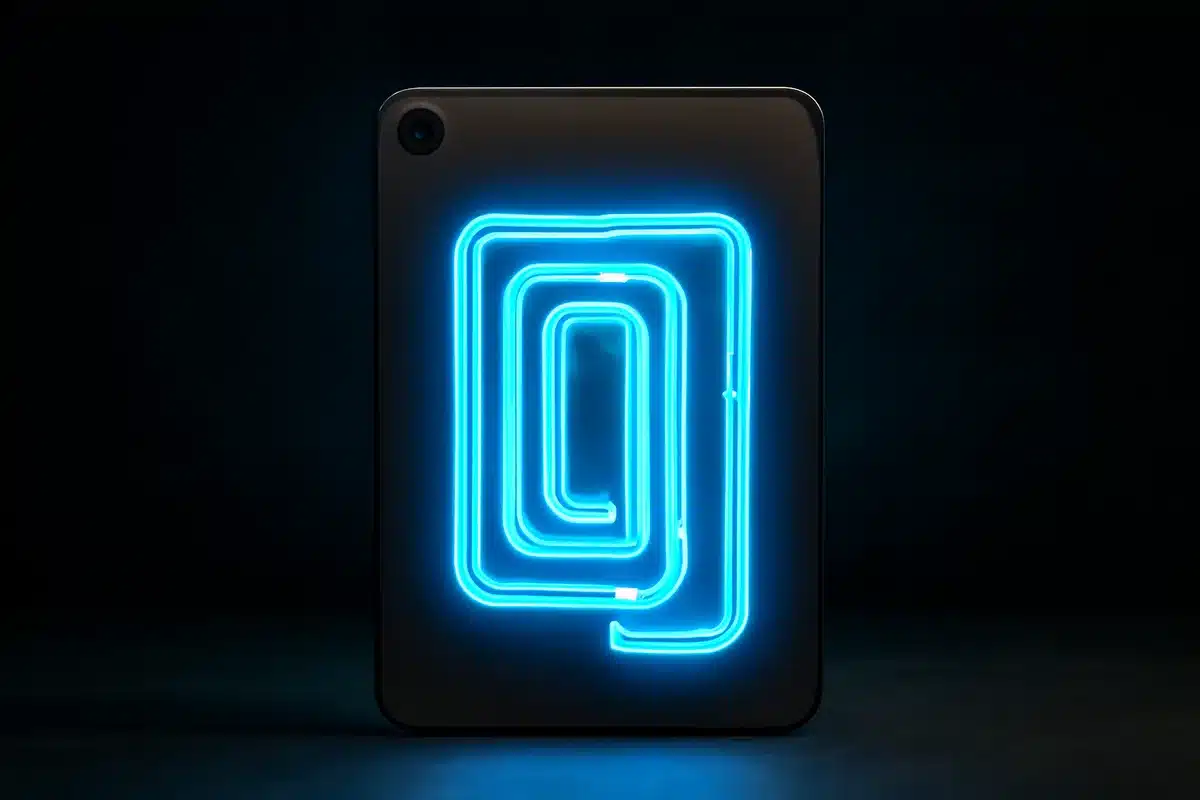
The real novelty is the rear window that reveals the cooling liquid. A blue fluid flows before your eyes when the system is activated, and I must admit: it’s quite a visual treat.
Why You Should Never Reheat These Foods in the Microwave – The Hidden Dangers Experts Warn About
I tried the top 5 guard dogs—here’s what makes these breeds the ultimate protectors
Combined with the fully customizable RGB light strip (intensity, flashing, notifications, charge indicator), it gives the tablet a unique appeal. Those who prefer subtlety can deactivate all the lights.
Handling the 9-inch tablet remains, for me, the main selling point of this range. It’s easy to hold with both hands, fits in a small bag, and is a perfect complement to a compact smartphone for watching movies, taking notes, or gaming.
Display: 185 Hz on 9 Inches
The 9.06-inch OLED display keeps the 2.4K resolution (2400 x 1504 pixels, 16:10 format) of the first Astra but increases the refresh rate from 165 Hz to 185 Hz. Redmagic claims a peak brightness of 1600 nits, 1100 nits in full screen, and a color fidelity DeltaE of about 0.7. These are manufacturer’s figures that I will verify with a sensor. It’s certainly one of the most impressive displays in this format. I will update the article accordingly, and the gap with the iPad mini and its 60 Hz LCD screen remains significant.
The 4.9 mm bezels allow for a 90.1% screen-to-body ratio, and protection is provided by Gorilla Glass 3. Redmagic also highlights a Synaptics S3930T touch chip, with an average touch sampling rate of 300 Hz that can spike to 2000 Hz momentarily.
In terms of DRM, my initial checks with a dedicated app show the presence of Widevine L1 (the highest security level), a ClearKey CDM version 14, and even Apple FairPlay in the list. Widevine L1 is good news: it’s what allows high-definition playback on Netflix, Prime Video, or Disney+.
Performance: Powerful but Unstable Under Heavy Load
Snapdragon 8 Elite Gen 5 and Geekbench
Under the hood, there’s the Snapdragon 8 Elite Gen 5, built on a 3 nm process with third-generation Oryon cores (2 performance cores and 6 efficiency cores, up to 4.6 GHz).
It is supported by the dedicated RedCore R4 chip, which manages 2K super-resolution in games, image interpolation up to 120 FPS via the Frame Rate Boost function, and display effects. On Geekbench 6, I scored 3636 points in single-core and 11,111 points in multi-core. These scores place the Astra 2 among the most powerful tablets on the market, simply put.
| Benchmark | RedMagic Astra 2 | Difference | RedMagic Astra |
|---|---|---|---|
| Frandroid Index | 65,632 | +13.6% | 57,792 |
| AnTuTu 10 — Total | 3,420,399 | +34.6% | 2,541,568 |
| AnTuTu 10 — CPU | 712,299 | +21.8% | 584,944 |
| AnTuTu 10 — GPU | 1,272,121 | +23.4% | 1,030,635 |
| AnTuTu 10 — Memory | 809,256 | +54.9% | 522,574 |
| AnTuTu 10 — UX | 626,723 | +55.4% | 403,415 |
| 3DMark Wild Life Extreme | 7,763 | +43.2% | 5,421 |
| 3DMark WL Extreme — FPS (fps) | 46.49 | +43.2% | 32.47 |
| Geekbench 6 — Single | 3,636 | +22.2% | 2,975 |
| Geekbench 6 — Multi | 11,111 | +56.6% | 7,097 |
| Geekbench 6 — GPU Vulkan | 28,146 | +14.8% | 24,515 |
Compared to the first Astra, the gains are real in raw benchmarks: +22% in single-core, +57% in multi-core, and +43% on 3DMark Wild Life Extreme. Our Frandroid index, which is more representative of overall usage, increases more modestly by 13.6%. In practice, the first Astra was already powerful: owners of the original model clearly have no reason to upgrade.
Liquid Cooling: A Mosquito-Like Noise
Named AquaCore 2.0, the system combines three stages: an active liquid circuit driven by a piezoelectric ceramic micropump, an enlarged vapor chamber (called “4D” because it uses protuberances on both sides), and Liquid Metal 3.0 to transfer heat from the processor. The system is managed by the Energy Cube 3.0 thermal management, which distributes CPU, GPU, and cooling resources depending on the game. Redmagic claims it’s the first mass-produced tablet with a liquid cooling system, using a fluorinated fluid borrowed from AI servers, described as watertight, non-conductive, and operational from -40 °C to 70 °C. The pump automatically activates during benchmarks and certain games, manually via settings, and even during fast charging to maintain power.
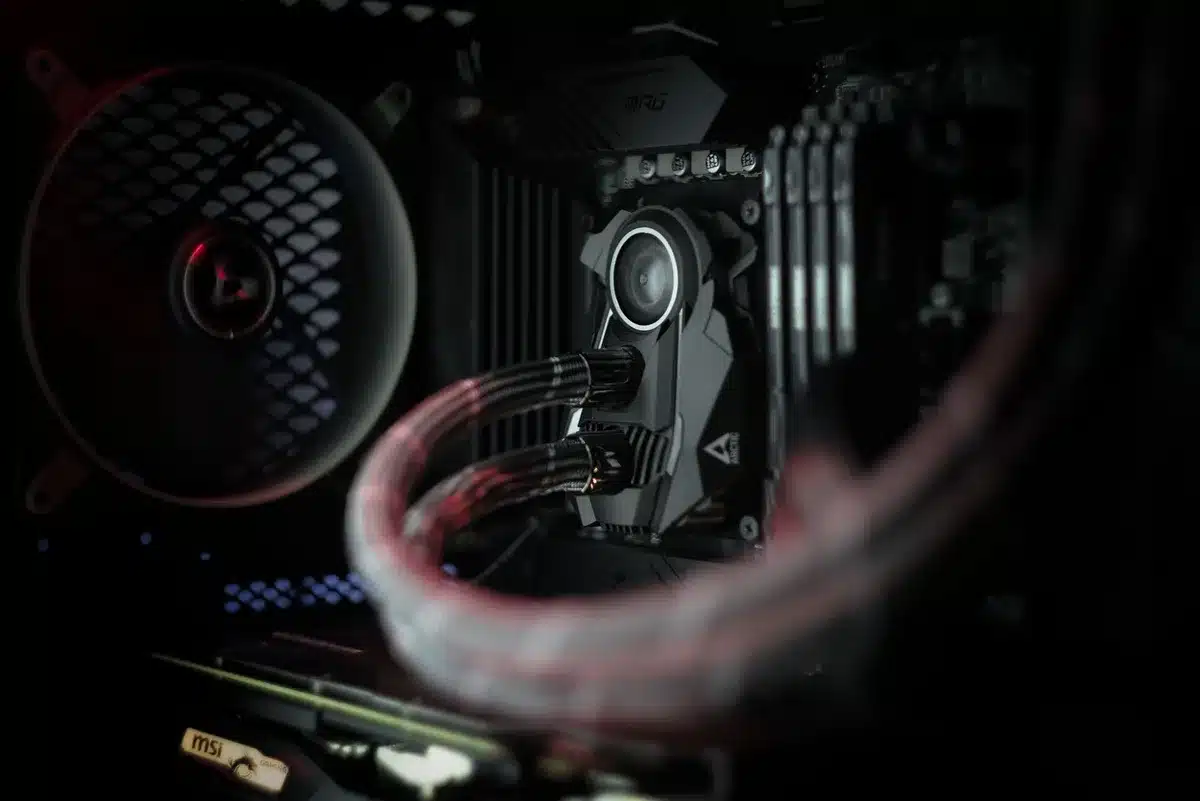
And here’s where I mention a problem: the pump noise is really noticeable. A high-pitched whining, a true mosquito noise, which I find quite unpleasant. The turbo mode, which speeds up the liquid circulation, doubles or even triples this noise level. Since the pump is tiny, it apparently runs at high speed, and Redmagic has clearly not worked on its acoustics. My advice: disable the option during charging if the tablet is sleeping near your bed.
Stress Test: Significant Throttling
I subjected the CPU to a prolonged load test to observe its behavior beyond a few minutes. Without active cooling, the tablet maintains 100% of its performance for only about ten seconds, then drops and stabilizes between 58 and 60%.
With liquid cooling activated, the performance initially rises to 80 to 90%, then drops back down to around 50%, with a rather unstable curve. After a few minutes, performance slightly increases and stabilizes above 240 GIPS, which is still a high level in absolute terms.
These figures need to be put into perspective: a one-hour stress test does not reflect any real usage, and the tablet loads specific performance profiles for games, capable of maintaining the pace for longer. This throttling behavior protects the components, which is its role. But with a cooling system so heavily marketed, I honestly expected a more stable curve.
Software: Android 16, But Still Too Many Preinstalled Apps
Redmagic OS 11.5
The Astra 2 runs on Redmagic OS 11.5, based on Android 16. The interface, derived from that of Nubia (Redmagic’s parent company), is generally clean and pleasant. There’s the Game Space accessible via the physical Magic Key slider, with its game profiles, CPU/GPU management, and network prioritization.
A minor gripe about localization: the French translation is incomplete, with entire paragraphs appearing in English in some menus. It’s not a dealbreaker, but it’s always odd for a product marketed in Europe.
The Magic Key, a small slider switch on the edge, can launch gaming mode, the voice recorder, the flashlight, or the camera. On my unit, the five available functions are fixed: it’s impossible to assign the app of your choice. The press guide, however, mentions a customizable button, including face-to-face translation or switching to silent mode. Since my test unit is a prototype, I will check this feature on the retail version.
A Flood of Bloatware
This is my main software complaint: the tablet comes loaded with about twenty pre-installed apps. Games (Mahjong Blast, Bubble Pop, Word Connect, etc.), services like AliExpress, Booking.com, or Instagram. Redmagic has partnerships with publishers and earns money from these preloads, a common practice in the Chinese Android ecosystem. Fortunately, everything can be manually uninstalled, but the cleanup operation is tedious and detracts from the first impression.
Redmagic AI: More of a Gimmick
The in-house artificial intelligence layer, powered by Google Gemini according to Redmagic, is underwhelming. Live translation, voice recording transcription, AI notepad: these are functions that third-party apps already do, often better. I’m not even sure these tools really leverage the processor’s NPU. Their use remains very limited in their current state.
The manufacturer also announces AI assistants integrated into Game Space: a real-time tactical coach (limited to Delta Force), a performance analysis (limited to Mobile Legends), and an in-game voice assistant called Mora Mouthpiece. I couldn’t validate these functions on my prototype, and their real-world relevance remains to be demonstrated for popular games in France.
Battery and Charging: 75 W on the Agenda
The battery capacity has increased from 8200 to 8300 mAh. It’s decent for this size, but not groundbreaking: when Honor manages to fit 10,000 mAh into some smartphones thanks to new silicon-carbon cell technologies, one could have hoped for more in a 9-inch tablet.
However, wired charging has improved to 75 W, a significant upgrade from the 35 W limit imposed on the first Astra in Europe, with the addition of bidirectional reverse charging, a first for Redmagic. The manufacturer promises a full charge in 57 minutes via the USB 3.2 Gen 2 port, and announces 9.6 hours of daily use or 9 hours of Genshin Impact at full throttle. These figures align with our observations, with a measured 74.2 W during rapid wired charging.
Good news on the connectivity front: the tablet includes two USB-C ports, one of which is USB 3.2 Gen 2 (10 Gbit/s) with DisplayPort output up to 4K at 144 Hz or 8K at 60 Hz. This allows for charging while playing or connecting the tablet to an external monitor. Wireless connectivity has been upgraded to Wi-Fi 7 and Bluetooth 6.0.
However, it’s now official: the Astra 2 is available only in a Wi-Fi version, with no cellular model. Like its predecessor, it will have to rely on wireless networks or tethering while on the move.
Price and Availability: 699 Euros Announced
Redmagic officially announced the Astra 2 on July 17th, with a starting price of 699 euros for the 12 GB + 256 GB version. The price increase is noticeable: the first Astra launched at 499 euros in the same configuration, 200 euros less. At this level, the Astra 2 even surpasses the price of the iPad mini 7.
Redmagic Astra 2
at the best price
Similar Posts
- Top Gaming Tablet Alert: 9-Inch OLED Android Outshines iPad Mini
- Android Rival to iPad Mini: RedMagic Astra 2’s OLED Display Is a Game-Changer!
- Redmagic 10s Pro Review: Discover the Most Powerful Smartphone on the Market!
- Redmagic Astra Review: Compact Tablet Challenges the iPad Mini
- RedMagic 11 Air Unveiled: Divine Price Set to Unleash Your Gaming Demon

Maya Singh is a senior editor covering tablets and hybrid devices. Her work explores how these tools reshape digital productivity and learning. She also contributes to feature editorials on emerging tech.