
Scientists confirm: This is the most effective way to get your cat’s attention, according to new research
Elderly Couple Refuses Reserved Seats—Viral Train Standoff Sparks Fiery Debate on Courtesy
DS Automobiles has seen better days: the brand experienced a 23% drop in sales in Europe in 2025. Refreshing the DS 7, their flagship SUV, is crucial to rejuvenating sales.
Enter the DS N°7, which embraces multiple energy types in hopes of replicating past successes. At launch, the model features 48-volt hybrid engines, soon to be joined by plug-in hybrids and fully electric variants.
Following an initial static overview, I took the helm of the E-Tense FWD Long Range version, which boasts the greatest autonomy with up to 740 km per charge. Here’s my take on this French electric SUV.
Technical Details
| Model | DS N°7 |
|---|---|
| Dimensions | 4.66 m x 1.63 m x 1.90 m |
| Power (HP) | 245 HP |
| 0 to 100 km/h | 7.8 s |
| Autonomy Level | Semi-autonomous driving (level 2) |
| Max Speed | 190 km/h |
| Main Screen Size | 16 inches |
| Car-side Connector | Type 2 Combo (CCS) |
|
Try it out |
Product Details |
Design: DS Embraces Boldness
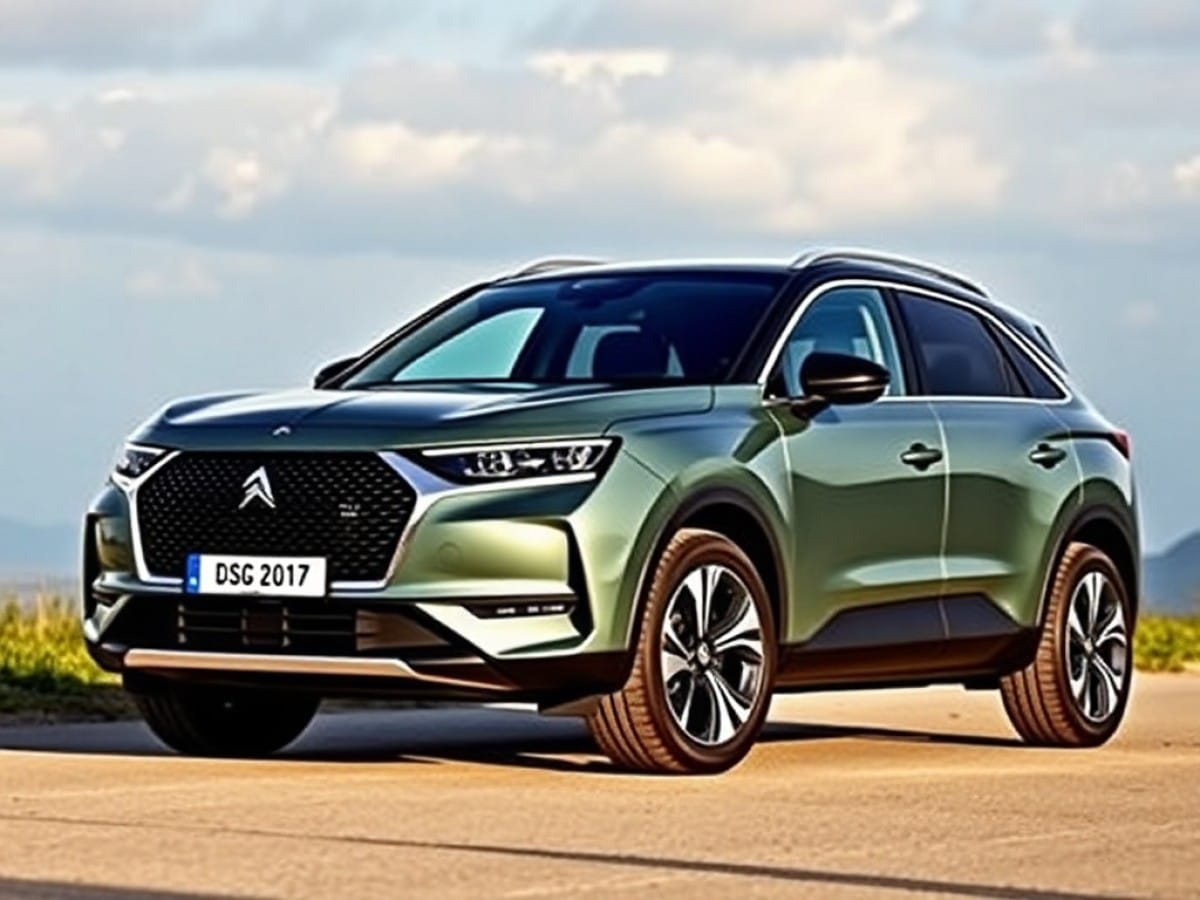
Similar to the elevated sedan DS N°8, the DS N°7 stands out with a unique style. Thierry Metroz’s design team has outdone themselves. The DS N°7 features a large backlit grille, reminiscent of the Skoda Enyaq, a backlit logo, and a vertical light signature.
The DS N°7 does not include the rotating diamonds in the headlights seen in the original DS 7 Crossback and DS 9.
From the side, a longer and straighter hood asserts the DS N°7’s style. The front door handles are integrated into the body and deploy as the vehicle approaches. The rear door handles are integrated into the C-pillar, further streamlining the silhouette.
The roof is black, extending slightly over the rear fenders, integrating the rear lights. This two-tone color can be extended with a black hood as well.
At the rear, DS opted to replace the brand logo with the name spelled out. The rear window is small due to a sloping roofline.
Regarding dimensions, the DS N°7 measures 4.66 m long, 1.90 m wide, and 1.62 m high. The wheelbase is 2.79 m. The drag coefficient (Cx) is 0.26.
The DS N°7’s bold style sets it apart from the typically serious premium German production. This style is ultimately DS Automobiles’ signature, and it extends even further into the interior.
Interior: Bold, Possibly Overloaded
If the DS N°7’s exterior is uniquely designed, calling the interior the same would be an understatement. The steering wheel alone, with its daring four-spoke design, is divisive.
The dashboard is enveloping, with brushed metal inserts extending into the door interiors and integrating the Focal speakers from the audio system. Raised patterns can also be found on the door panels.
The high central console includes backlit motifs, the gear selector, and an induction phone charger. Beneath this console is a storage space and USB-C ports, which are somewhat inaccessible. The upholstery may still feature the distinctive DS watch strap effect.
The rear bench is quite welcoming, comfortably accommodating an adult who can enjoy the light from the panoramic roof.
The trunk volume is stated to be 515 liters, expanding to 1,525 liters with the seats folded.
The cabin is spacious and well-finished with high-quality, well-chosen materials, though it might be a bit divisive in its design.
Infotainment: Slightly Outdated
While most brands are transitioning to infotainment systems based on Android Automotive, which uses Google Maps for navigation and route planning, DS sticks to a proprietary Stellantis operating system. The interface feels a bit dated, and some commands can be slow to respond, but overall, it works.
In practice, the system is mostly used for media playback or smartphone mirroring, which is wireless for Android Auto and Apple CarPlay.
However, the 16-inch central screen has an unusual 21:9 aspect ratio, unlike the more conventional 10.25-inch display, which offers three main display styles.
Route Planner
The route planner is specific to Stellantis group vehicles. For this road-oriented range, it is integrated directly into the vehicle’s infotainment system, unlike the city cars of the group, which must use the manufacturer’s app to access it.
This is the same planner I experienced on my Nice-Paris trip in the Citroën ë-C5 Aircross. You can adjust the charge level at intermediate stops and the destination. The predictions are, from my experience, accurate.
Driving Assistance
DS offers a semi-autonomous driving system. To be honest, I didn’t try it during this drive in the Var mountains, as the terrain isn’t suitable.
The system is at least equivalent to that of the Citroën ë-C5 Aircross, featuring adaptive and predictive cruise control that adjusts to speed limits. Lane keeping is satisfactory, and it offers lane change assistance, which is not essential.
Driving Experience: Unexpectedly Impressive
Having previously driven the Citroën ë-C5 Aircross on the same roads, I expected to find a vehicle that prioritizes comfort over dynamism. What if I told you that DS found the right balance? It may sound cliché to say it strikes a good balance between comfort and dynamism, but let me explain.
Indeed, the Comfort mode uses the front camera to scan the road and adjust the suspension to the surface and bumps, a feature already found on the DS 7. It’s hard to say if it’s truly useful, but the car is very comfortable in this driving mode.
In Sport mode, the suspension becomes slightly stiffer without discomforting the occupants. Body roll is well controlled, and I was able to drive at a good pace on the mountain roads between Var and Alpes-Maritimes, which I had previously navigated with the Hyundai Ioniq 5 N. The comparison with the latter ends here!
However, I can compare it to the Polestar 2, which I tested on these same roads, and I find the DS N°7’s balance superior! Honestly, I am pleasantly surprised by the work done for a car weighing 2,131 kg. With such weights, vehicles are either too stiff to contain the weight or too soft if the focus is on comfort.
The steering might be too assisted in Comfort or Eco mode for this type of road, so switching to Sport mode increases throttle responsiveness.
In this case, you fully benefit from the 245 horsepower, or 280 horsepower in Boost mode during kickdowns (when the accelerator pedal is floored). The 0 to 100 km/h is achieved in 7.8 seconds, which isn’t exceptional. If you’re looking for more thrills, there’s the 375 horsepower E-Tense AWD version.
The paddle shifters allow for adjusting the strength of the regenerative braking across three levels. A button on the central console activates the One-Pedal driving mode.
The vehicle is well insulated, featuring double glazing at the front on the windows and windshield. Thus, wind noise is minimized, and road noise is barely noticeable. This creates a great environment to enjoy the Focal audio system from the Saint-Étienne brand.
I can’t find any significant flaws in the DS N°7’s driving experience, maybe apart from slightly limited rear visibility in the central mirror. To mitigate this, DS installed a camera-based rearview mirror, which takes some getting used to. It’s possible to deactivate it and switch to a traditional mirror.
Range, Battery, and Charging
This section is a bit complex, as the lineup isn’t straightforward. And I’m not even touching on the hybrid versions.
At the entry level, the DS N°7 E-Tense FWD features a front motor with 230 horsepower, or 260 horsepower in Boost, equipped with a 73.7 kWh NMC battery for a WLTP range of 543 km. This battery is the same as those used in the Peugeot E-3008 and Citroën ë-C5 Aircross, also based on the STLA Medium platform. This version is likely to be the bestseller as it qualifies for the ecological bonus.
The core of the lineup is the DS N°7 E-Tense FWD Long Range version I tested, with 245 horsepower or 280 horsepower in Boost. This time, the NMC battery is 97.2 kWh for a WLTP range of 740 km, which is an excellent result! This is also the same battery used by its French cousins in their Long Range versions.
Finally, a top-tier E-Tense AWD Long Range version is offered. It combines the large 97.2 kWh battery with two motors. The combined power output is 350 horsepower, or 375 horsepower in Boost. The range is slightly lower, announced at 679 km, still with the large 97.2 kWh battery.
As you can see, the DS N°7 doesn’t suffer from range issues. However, its charging times are a bit long due to a still 400-volt architecture, while some competitors, including Hyundai, Kia, and Xpeng, are moving to 800 volts for very short charging times.
Using a maximum charging power of 160 kW, which is the limit tolerated by the DS N°7, it takes 31 minutes to charge from 20 to 80% for the smaller battery and 27 minutes for the larger battery. For comparison, the Xpeng G6 takes 12 minutes to go from 10 to 80%, with a range comparable to the DS N°7 E-Tense FWD.
Regarding consumption, they start at 16.9 kWh/100 km according to DS. For this Long Range version, they will be very close to what I observed with the Citroën ë-C5 Aircross between Nice and Paris, which was 20.1 kWh/100 km after 1,000 km of driving.
Price, Competition, and Availability
While the DS N°7 E-Tense FWD qualifies for the ecological bonus with a starting price of 46,990 euros, the lineup is not limited to this.
Indeed, prices can climb to much higher spheres depending on the motorization and trim level. Just opting for the Pallas trim with the same motor increases the price to 58,420 euros!
My test version, in Étoile trim with the Long Range motor, is offered at 67,820 euros! This is approaching the price of a BMW iX3, which uses an 800-volt platform! The dual-motor version is priced at 71,520 euros and even climbs to 77,520 euros in the La Première launch edition (excluding options).
There is thus a 30,000 euro gap between two electric versions of the same model, indicating DS’s broad targeting with this DS N°7. The Hybrid 145 (48 volts) version starts at 43,900 euros.
A note on the price of batteries, since the data is provided by DS Automobiles. It costs 27,400 euros for the 73.7 kWh battery and 35,600 euros for the 97.2 kWh battery. I wish you no issues after the 8 years or 160,000 km of Stellantis motor and battery warranty, even though numerous studies on the topic prove that batteries generally age very well.
Similar Posts
- Dacia Spring Review: Is France’s Cheapest Electric Car Still Overpriced?
- Tested: Citroën ë-C5 Aircross – A Cheaper, More Comfortable Alternative to Peugeot 3008 Electric
- Discover the Polestar 4 Electric: A Game-Changing Car Missing One Key Feature!
- We Tested the New Dacia Spring: Cheapest Electric Car, But at What Cost?
- I Drove 1000 km in a Polestar 2: Here’s Why It Beats the Tesla Model 3

Maya Singh is a senior editor covering tablets and hybrid devices. Her work explores how these tools reshape digital productivity and learning. She also contributes to feature editorials on emerging tech.