

Scientists confirm: This is the most effective way to get your cat’s attention, according to new research
Elderly Couple Refuses Reserved Seats—Viral Train Standoff Sparks Fiery Debate on Courtesy
The Pixel 11 stands out as Google’s latest addition to its smartphone lineup for two reasons. First, because of its compact screen size, and second, due to its pricing strategy, positioning it as a less advanced model compared to its bigger siblings, the Pixel 11 Pro, Pixel 11 Pro XL, and Pixel 11 Pro Fold (the foldable one).
Like Samsung, the American manufacturer has made several more or less significant changes to its new “entry-level” model:
- A new Tensor processor
- An optical unit with a new design
- A wide-angle photo sensor touted as more effective
- Android 17 and a software environment that continues to heavily integrate AI
- Faster wireless charging.
Why You Should Never Reheat These Foods in the Microwave – The Hidden Dangers Experts Warn About
I tried the top 5 guard dogs—here’s what makes these breeds the ultimate protectors
The 5x telephoto lens, first introduced with the Pixel 10, also makes a return.
But is that enough to keep the Google Pixel 11 competitive against its rivals, priced at €1000? Let’s delve into the details.
Technical Specifications
| Model | Google Pixel 11 Pro |
|---|---|
| OS Version | Android 17 |
| Manufacturer Interface | Stock Android |
| Screen Size | 6.3 inches |
| Resolution | 2856 x 1280 pixels |
| Pixel Density | 497 ppi |
| Display Technology | OLED |
| SoC | Google Tensor G6 |
| Internal Storage | 256, 512, 1024 GB |
| Rear Camera |
Sensor 1: 50 MP Sensor 2: 48 MP Sensor 3: 48 MP |
| Front Camera | 42 MP |
| Video Recording Resolution | 8K@30fps |
| Wi-fi | Wi-Fi 7 (be) |
| Bluetooth | 6.0 |
| 5G | Yes |
| NFC | Yes |
| Fingerprint Sensor | Under screen |
| Connector Type | USB Type-C |
| Battery Capacity | 4850 mAh |
| Colors | Black, Green, Orange |
|
Product sheet
See the test |
Design
One thing is clear, Google does not intend to revolutionize the look of its smartphones. Thanks to the original design of their optical unit, the visual identity of the Pixels has been well-established for several years.
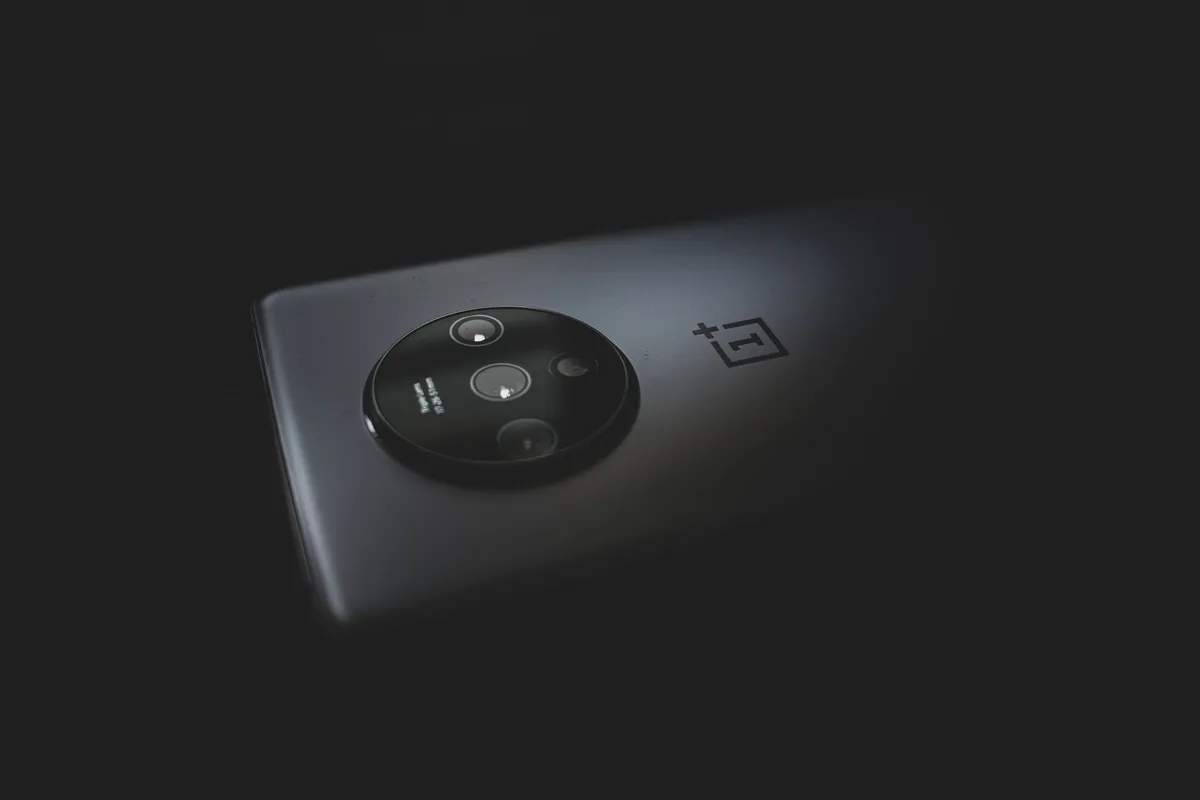
The Google Pixel 11 doesn’t change much compared to last year’s model. In fact, it has exactly the same dimensions as the Pixel 10, including a thickness of 8.6 mm.
And it’s not the slight reduction in weight from 204 grams to just 197 grams that will significantly impact user experience. The manufacturer at least has the decency not to boast about this somewhat trivial weight loss, unlike Samsung, which slightly emphasized the 8 grams shed by its Galaxy Z Flip 8 compared to the Z Flip 7.
In contrast, Google highlights the aesthetic change of the optical unit. Indeed, the flash is no longer separated from the rear lenses, as on the Pixel 10. It is now integrated behind the glass plate.
Moreover, the optical unit is less protruding than those of other Pixels, like the 11 Pro (as shown in the photo below), or even the Pixel 10. While this aesthetic detail may seem minor to some users, it nevertheless reflects commendable attention from the manufacturer.
However, more users would likely have appreciated the HiLight feature, which uses the LED flash to provide certain visual indications. Unfortunately, this feature is reserved for the Pro models, probably to justify the upgrade.
Otherwise, the finishes of the new Pixel are always impeccable. The Pixel 11 is available in four colors:
- Black
- Pale Mauve (leaning towards gray!)
- Bright Pink (fuchsia)
- Pistachio (green)
The smartphone’s aluminum edges are very slightly curved, ensuring a comfortable grip. These do not feature the same glossy finish as the Pixel 11 Pro. And that might not be a bad thing, considering the photo above (with fingerprints on the edge).
Like its predecessor, the Google Pixel 11 is fully waterproof (certified IP68) and its screen, as well as its back face, are protected from scratches by the Corning Gorilla Glass Victus 2 coating.
Unlike the Pixel 11 Pro, which features a matte surface, the base model Pixel 11’s back is glossy.
Moreover, it includes a way to easily attach various accessories by magnetism. This is what Google calls Pixelsnap (also known at Apple as MagSafe). Recall that this was one of the novelties of the Pixel 10.
Finally, for security, we find – unsurprisingly – a fingerprint reader at the bottom of the screen (facial recognition is also possible to unlock access to the smartphone).
Screen
The Google Pixel 11 is equipped with a small screen, featuring a 6.3-inch OLED panel. Among the competing smartphones of this size, we can mention the Samsung Galaxy S26, the Xiaomi 17, or the Oppo Reno 16 Pro.
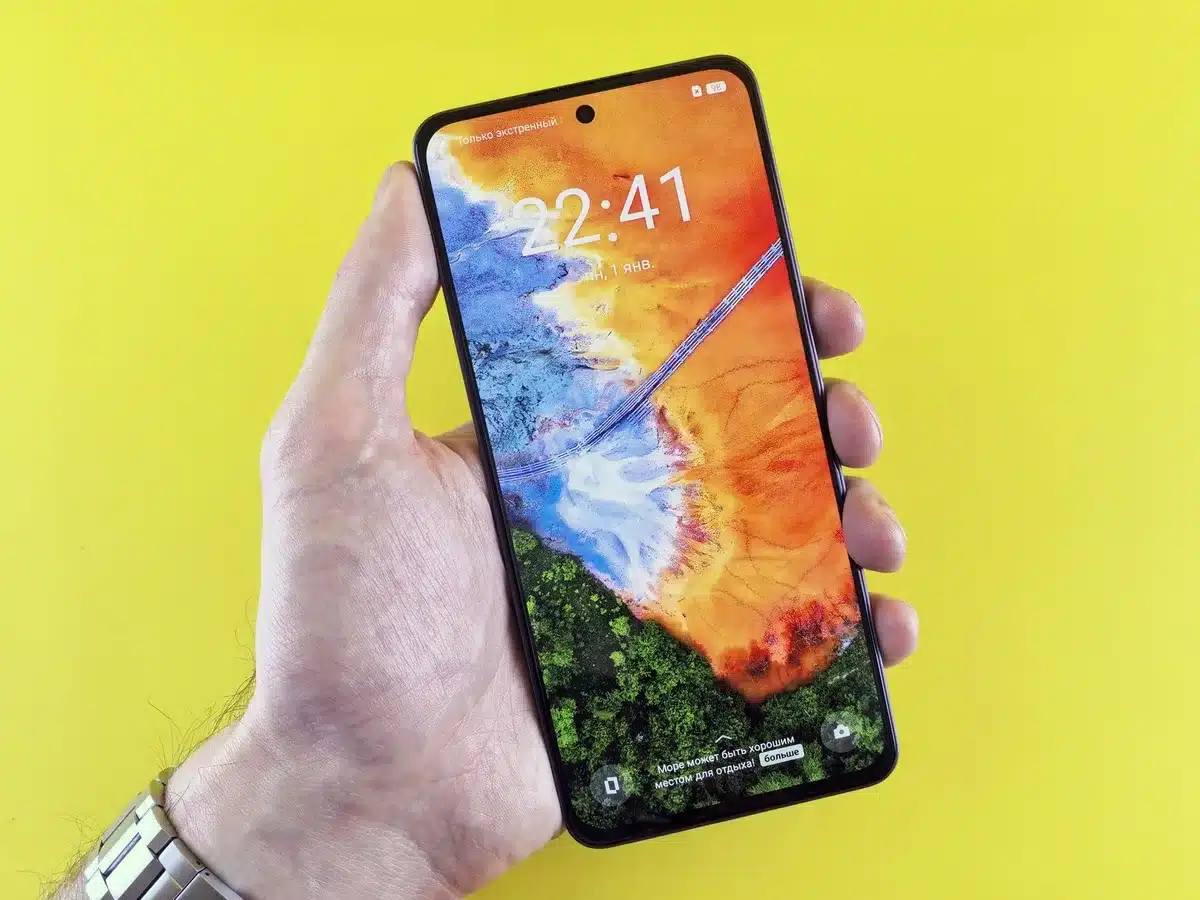
Unlike its bigger brothers, the entry-level smartphone from Google does not display images in high resolution (2856 x 1280 for the Pixel 11 Pro, for example). Here, the resolution is limited to 2424 x 1080 pixels. While the Samsung Galaxy S26 supports the same display mode, the two aforementioned Chinese smartphones can display more precise images, like the Pixel 11 Pro.
Purely from an aesthetic point of view, it is regrettable that the screen bezels are quite thick (quite removed from current standards).
Moreover, although the screen supports a maximum frequency of 120 Hz, it does not utilize LTPO technology. This is reserved for the Pixel 11 Pro, equipped with a “Super Actua” screen, which can therefore vary the refresh rate between 1 Hz and 120 Hz (this technology is also supported by the Samsung Galaxy S26).
It is also noted that, by default, the minimum frequency (60 Hz) is used by Google. However, it is possible to activate the Smooth Display mode, to benefit from a refresh rate of 120 Hz, in some cases.
In terms of performance, Google announces a brightness of 2000 nits in peak HDR, and up to 3000 nits when the Automatic Brightness mode is activated. If this value is verified, it would ensure perfect readability in full sunlight.
The good news is that, according to our measurements, carried out using our probe and the CalMAN Ultimate software from Portrait Displays, the display is indeed very bright (it was already the case with the Pixel 10’s screen).
Thus, the standard brightness is established at 750 nits. And if you find yourself in a very bright place (outdoors, under the sun, for example), just activate the Automatic Brightness option, to see the screen reach (almost) the values announced by the manufacturer (2090 nits in SDR and 2718 nits in HDR).
These values allow for perfect readability, regardless of the environment in which you find yourself. You just have to manage the problem of the (high) reflectivity of the OLED panel. This does not argue in favor of using Android’s dark mode, due to the many reflections that are visible in the dark areas of the display.
Finally, of the two colorimetric profiles offered in the display-related settings, it is the one called Adaptive Colors that offers the best performance.
Indeed, the average SDR Delta E measured there is 3.58 (although a value below 3 would have been preferred, this result is not fundamentally bad) and 6.96 in HDR. On its part, the average color temperature indicates that the colorimetry is perfectly neutral (6457 K).
Only the reproduction of the BT709, DCI-P3, and BT2020 color spaces leaves us somewhat wanting, with respective scores of 112%, 75%, and 50%. Indeed, at present, some manufacturers offer smartphones with screens capable of displaying the entire DCI-P3 gamut.
All these results – almost identical to those obtained last year – show that the manufacturer has contented itself with reusing, on the Pixel 11, the screen that equipped the Pixel 10. And even if its performances are rather satisfactory, one cannot help but think that Google could have made an effort to optimize the display, or even – let’s be crazy! – improve it.
Performance
Since the introduction of its first Tensor processor, it has been clearly stated that raw power was not Google’s main concern. This is probably why the manufacturer never provides details about its internal structure (cores, frequencies, etc.). And the new Google Tensor G6 processor, present in the Pixel 11 (and the other three Pixels of this year), apparently does not deviate from the rule.
We just know that it is a seven-core model (compared to 8 for processors from other manufacturers), including one called “high performance”. On the other hand, the manufacturer indicates that the TPU (Tensor Processing Unit) of the chip, called everywhere else NPU (Neural Processing Unit), is 50% faster than the old model. But, of course, this claim is not easily verifiable.
And, for the anecdote, contrary to the so-called leaks that preceded the launch of the Pixel 11 series, the Tensor G6 processor does not benefit from a 2 nm TSMC etching process. We are indeed still on 3 nm.
In short, the manufacturer swears that its new chip is capable of performing AI-related tasks more quickly, while consuming less energy, in order to maximize the smartphone’s endurance.
If we just analyze the results obtained with the various benchmarks, we see that the Tensor G6 is slightly faster than the Tensor G5 of the Pixel 10. Phew!
However, the Tensor G6 has (theoretical) performances very inferior to those of Samsung’s Exynos 2600, but also to those of the Snapdragon 8 Elite of 2025 that equips the Honor 600 Pro.
Despite this, in practice, there is nothing to complain about regarding the behavior of the Pixel 11 when it comes to performing everyday tasks (email, social networks, Web, auto guidance, photo editing, etc.) or those related to AI. We note that it still takes a few seconds for the smartphone to generate several images, using AI, from a photo.
The smartphone also copes adequately if you decide to play a few games of Fortnite. You then benefit from quite good playability, even if jolts sometimes disrupt the fluidity of the animations. In any case, the game does not want to go beyond 60 frames per second, even if the Smooth Display mode (up to 120 Hz) is activated.
These jolts can be explained by a surprisingly high throttling. Indeed, a few minutes of intensive calculations are enough to see the processor’s performance drop by 40% (or more if you persist).
Yet, if the rise in temperature is undeniable, it is not unbearable, or at least not as high as on some Xiaomi smartphones (like the Xiaomi 17) that we have recently tested.
Software
As expected from Google, the Pixel 11 has the advantage of running on a perfectly streamlined (no bloatware) version of Android 17.
Small regret, the Pixel HiLight function, which we have already mentioned at the beginning of this test, is reserved for purchasers of a Pixel 11 Pro.
The big novelty for 2026 lies in the arrival of Gemini Intelligence, which allows Google’s intelligent assistant to be accessible from all corners of the operating system, in order to offer various contextual services.
For example, the new Rambler function allows you to automatically clean up voice messages that you dictate, thanks to Gboard, in all discussion apps, like SMS or WhatsApp. Conveniently, it automatically removes hesitations (the “uhhhs”) and rewrites certain confusing sentences, according to what Gemini understood.
We also find the automatic translation: you speak in French, and the Pixel reformulates if necessary the text, translating it in the process into the desired language.
In Google Photos, it is possible to edit your photos very simply, just by telling Gemini what you want it to do, like replacing the background or adding objects. Then, very quickly, several images appear, showing different possibilities.
The magic capture is a new function that automatically generates several photos from a video. These are selected (and optimized) by AI based on their “importance”.
The system is also able to apply 3D effects to images from the library, in order to obtain animated home and lock screen wallpapers.
Finally, the array of AI functions used in the photo editing module is still as complete. Thus, it includes the Best Shot function and the Top Shot mode (automatic burst mode with selection of the best photo).
Similar Posts
- Google Pixel 10 Pro Listed Early on Classifieds Site: See the Exclusive Images Now!
- Google Pixel 10 Pro XL: Not a Powerhouse, But Does it Matter?
- Pixel 10 Pro Fold Tests Reveal: Don’t Expect Record-Breaking Performance!
- Samsung Galaxy S25 Ultra vs Google Pixel 9 Pro XL: Discover the Ultimate Smartphone Champion!
- Pixel 10 and Pixel Watch 4 Prices Leak in Europe: Get the Scoop Before the Official Reveal!

Maya Singh is a senior editor covering tablets and hybrid devices. Her work explores how these tools reshape digital productivity and learning. She also contributes to feature editorials on emerging tech.