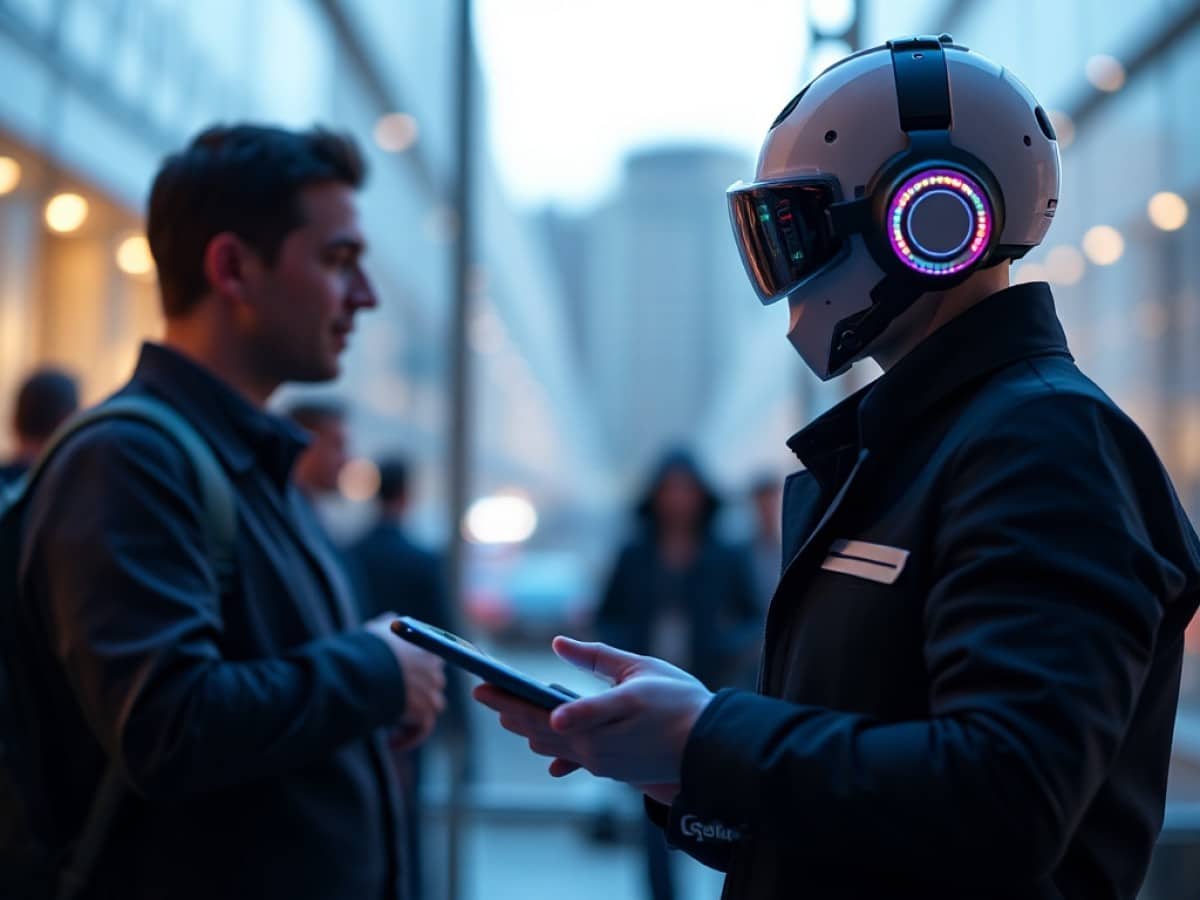
During its Relate event in Denver, Zendesk unveiled the Autonomous Service Workforce, a new framework where AI agents are integrated as full team members.
Scientists confirm: This is the most effective way to get your cat’s attention, according to new research
Elderly Couple Refuses Reserved Seats—Viral Train Standoff Sparks Fiery Debate on Courtesy
At this week’s annual Relate conference in Denver, Zendesk announced a major overhaul of its strategy concerning artificial intelligence. The company introduced the Autonomous Service Workforce, a framework in which AI agents are positioned as full-fledged "team members," working alongside humans.
In conjunction with this, Zendesk rolled out several new products, including a no-code interface for building custom agents, a multilingual extension for its voice agents, and the implementation of the Model Context Protocol (MCP). All these are offered under an expanded pricing model based on verified resolutions.
Breaking Away from Traditional Chatbots
The core concept of this year’s Relate event goes beyond adding features. Zendesk is transitioning from its Resolution Platform launched in Vegas last year. “The era of the chatbot, characterized by frustration and deflection, is over. We are entering the age of the autonomous service workforce,” declared Tom Eggemeier, CEO of Zendesk, in the official press release. By “deflection,” the company refers to the traditional bot logic designed to divert customer contact rather than genuinely resolving their issues. Instead, Zendesk aims to deploy specialized AI agents capable of operating across all channels and handling end-to-end use cases.
The promise is based on the Resolution Learning Loop, a proprietary mechanism that captures lessons from each customer interaction to fill knowledge gaps and continually improve automated responses. The platform leverages about 20 billion historical ticket interactions to train its models. Tom Eggemeier elaborated on his vision: “These agents will be more than just code. They will be team members, held to the same standards of accountability as any human.”
During the product presentation, Peter Gillon, Group Manager of product marketing, highlighted the differentiation from competitors: “While most of the industry still sells generic bots and assistants, at Zendesk, we provide our clients with an autonomous service workforce.”
Agent Builder and Extended AI Agents: The Core of the Promise
To materialize this ambition, Zendesk introduces Agent Builder, a no-code interface that allows businesses to build, test, deploy, and optimize AI agents tailored to their specific policies, workflows, and business logics. The tool covers front, middle, and back-office operations and offers centralized governance from a single interface to oversee all deployed agents. It is available in early access.
Zendesk’s AI agents themselves have evolved. They now operate on messaging, email, LLM, and voice, with a shared context across channels. This new generation was partly built on technology acquired from Forethought in early 2026. During the product presentation, the company mentioned that beyond the Zendesk ecosystem, this technology now enables deploying AI agents on other platforms like Salesforce or Intercom— a cross-platform extension claimed as unique in the market.
The Voice AI Agents now support over 60 languages, with the ability to switch languages mid-conversation while maintaining context. General availability is expected later this quarter.
Why You Should Never Reheat These Foods in the Microwave – The Hidden Dangers Experts Warn About
I tried the top 5 guard dogs—here’s what makes these breeds the ultimate protectors
For employee service, addressing internal colleagues rather than end customers, Zendesk announces fully autonomous AI agents, powered by the acquisition of Unleash. These agents operate within Slack and Microsoft Teams, search across enterprise systems, and apply permissions at the source level to ensure that employees only receive the responses they are authorized to access. The scope is significant: according to figures shared on stage, the employee service offering already counts 17,000 corporate customers, including Google, serving 55 million employees daily. Availability is scheduled for early access during the summer.
To support these announcements, Tom Eggemeier shared some metrics on the sidelines. Zendesk resolves 60% of its own service interactions via AI, with a 20% increase in customer satisfaction. As for clients, the streaming service Britbox reports 47% automated resolution, a 30% reduction in volume escalated to humans, and its highest historical CSAT (customer satisfaction) score.
MCP, Copilots, and Quality Score: The Technical Layer
Zendesk also launches its support for the Model Context Protocol (MCP), the open standard conceived by Anthropic in late 2024 to connect AI models to external tools and data. Two distinct components are announced. An MCP Client, which allows Zendesk agents to connect to external systems and automatically extend their capabilities as new MCP tools are added. And an MCP Server, which will allow third-party AI systems to access Zendesk data in a governed manner. The Client is available for immediate early access, and the Server is expected by the summer.
The Copilot suite, these AI assistants designed for human teams rather than end customers, is also enhanced with several new features:
– **Agent Copilot** is positioned to handle at least 30% of tickets from day one, connecting to internal and external sources.
– **Admin Copilot**, which helps administrators identify operational issues and apply real-time workflow changes, moves to general availability.
– **Knowledge Copilot** identifies gaps, outdated content, and inconsistencies in the knowledge base from actual customer conversations, in early access.
– **Analyst Copilot** identifies trends and their underlying causes through a new AI-driven analysis interface, in early access.
Zendesk introduces Quality Score alongside, an automated and continuous quality assurance mechanism that analyzes 100% of interactions, both human and AI, from the Suite Professional plans onwards. Context Graph, presented as an operational memory layer, captures past analyses, agent reasoning, and performance context to enhance future recommendations. The Knowledge Graph expands with new connectors to SharePoint, Google Drive, Notion, Guru, Contentful, and Document360. Action Flows for AI Agents finally allow for the building of integrated workflows directly within Action Builder, with a library of 40 new connectors including Okta, Claude, and OneDrive.
Extended Pricing, Validated by an Independent AI Model
Zendesk further extends its outcome-based pricing model, as opposed to a per-user subscription. Each billed resolution is now subject to a double verification: by the AI agent that resolved the interaction end-to-end, and then by a dedicated and independent AI evaluation model. Exchanges considered as spam or routine interactions are excluded. Customers thus only pay for resolutions that are effectively and independently confirmed as such. This approach aligns with Zendesk’s promise of AI agents held to human-like standards of accountability.
Similar Posts
- Adrian McDermott, Zendesk CTO: Transforming Customer Service in the AI Agent Era
- GitHub Boosts AI Integration: Welcomes Claude and Codex to Its Platform
- Zendesk and OpenAI Revolutionize Customer Service: A Game-Changing Partnership!
- GitHub Unveils Agent HQ: Central Hub for AI Web Development Agents
- Google Strikes Back at OpenAI: Launches Interactions API and Enhanced Deep Research

Jordan Park writes in-depth reviews and editorial opinion pieces for Touch Reviews. With a background in UI/UX design, Jordan offers a unique perspective on device usability and user experience across smartphones, tablets, and mobile software.