

Scientists confirm: This is the most effective way to get your cat’s attention, according to new research
Elderly Couple Refuses Reserved Seats—Viral Train Standoff Sparks Fiery Debate on Courtesy
Some iPhone generations stir more excitement than others, and the iPhone 17 is undoubtedly in the spotlight. This brand-new model aims to revolutionize the industry with a fresh design, replacing the iconic camera module that has defined the iPhone’s identity in recent years, among other features. Here’s everything you need to know about the iPhone 17.
- iPhone 17 Plus phased out in favor of iPhone Air
- Release dates for iPhone 17
- Pricing for all iPhone 17 models
- A new camera module for iPhone 17
- Finally, a 120 Hz display on the standard iPhone 17
- More RAM for AI?
- What is the battery life of the iPhone 17?
- Improved selfie camera quality?
- A software revolution with iOS 19?
- An invisible, yet welcome, new feature
- Comments
Why You Should Never Reheat These Foods in the Microwave – The Hidden Dangers Experts Warn About
I tried the top 5 guard dogs—here’s what makes these breeds the ultimate protectors
Is 2025 the year of renewal for Apple? The release of the iPhone 16 in 2024 was somewhat underwhelming, with its most notable new feature being the integration of Apple Intelligence. However, Apple’s AI capabilities are still not available in our region and have not lived up to expectations in the USA, not to mention the delay in rolling out the new version of Siri.
But with the upcoming iPhone 17 generation, we finally have something substantial to chew on in terms of hardware and design, with significant changes. The Apple brand has already surprised us earlier this year with the iPhone 16e, and they still have a few tricks up their sleeve. Major design changes are announced for the iPhone 17 Pro, while a new, slim, and light iPhone Air model replaces the iPhone Plus. Read on for more details.
iPhone 17 Plus Discontinued in Favor of iPhone Air
After months of speculation, it’s official: there will be no iPhone 17 Plus. This model, which replicated the basic iPhone’s specs in a larger format, was the least successful at Apple. It replaced the iPhone mini, which only lasted two generations due to its lack of popularity.
The replacement is a sleek, lightweight device known as the iPhone Air. It’s part of the iPhone 17 series but isn’t numbered, likely to emphasize that it’s a new product.
When will the iPhone 17 be released?
Apple typically doesn’t shake up its release schedule. The iPhone 17 series was announced during the keynote on September 9, 2025. As usual, the company starts pre-orders the Friday following the conference, leading us to September 12, 2025 (at 2 PM Paris time), and the phones will be available 10 days after their announcement, on September 19, 2025.
How much do all the iPhone 17 models cost?
With the iPhone 16, Apple did not raise prices compared to the iPhone 15. However, the situation with the iPhone 17 is mixed. The elimination of the 128 GB storage options has increased the starting price (except for the basic iPhone 17). However, Apple has reduced the prices of different configurations by a few tens of euros for the same internal memory. The most expensive iPhone nearly reaches 2,500 euros with a new 2 TB storage capacity for the 17 Pro Max.
iPhone 17:
- 256 GB: 969 euros
- 512 GB: 1,219 euros
iPhone Air:
- 256 GB: 1,229 euros
- 512 GB: 1,479 euros
- 1 TB: 1,729 euros
iPhone 17 Pro:
- 256 GB: 1,329 euros
- 512 GB: 1,579 euros
- 1 TB: 1,829 euros
iPhone 17 Pro Max:
- 256 GB: 1,479 euros
- 512 GB: 1,729 euros
- 1 TB: 1,979 euros
- 2 TB: 2,479 euros
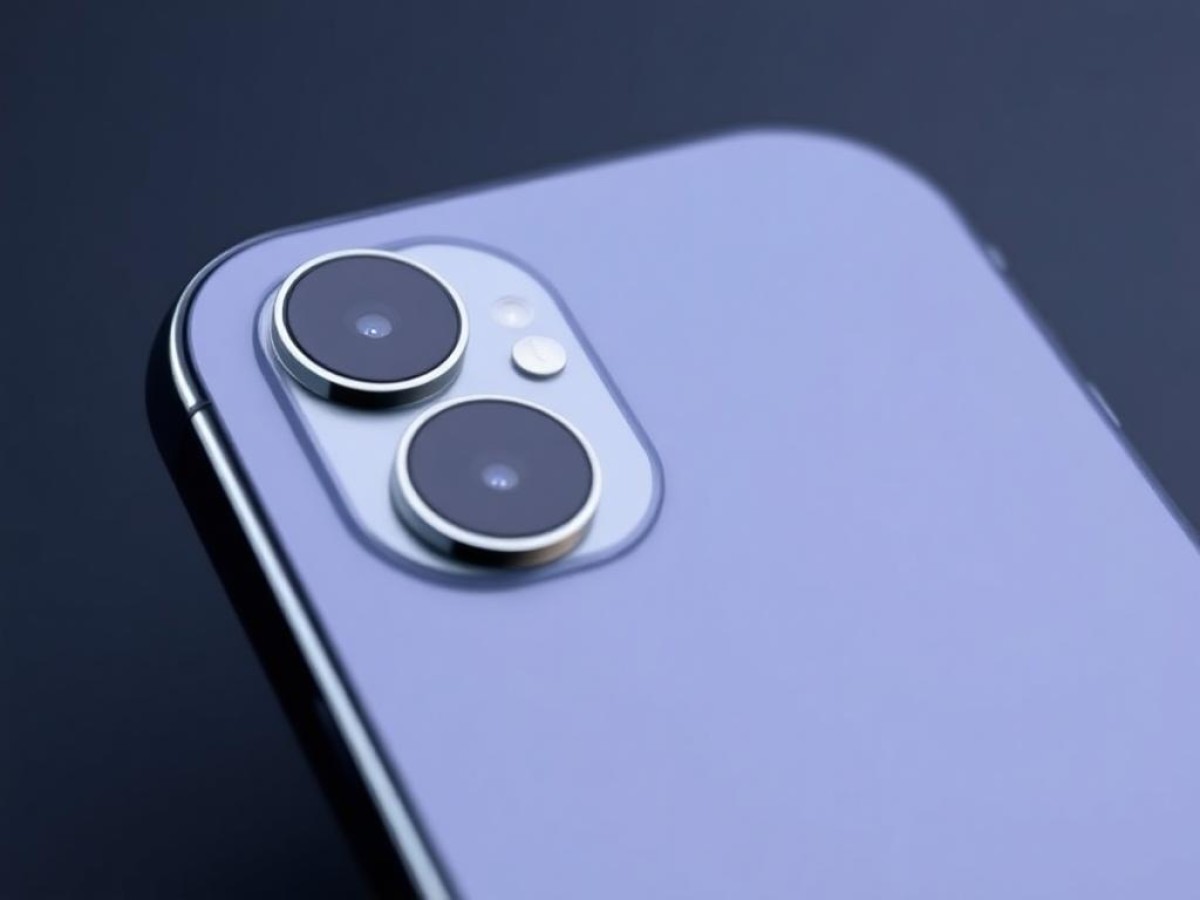
A New Camera Module for the iPhone 17
The most anticipated changes in this generation clearly relate to the design of the smartphones. For the basic iPhone 17, the evolutions should be the most modest. Apple compensates for the disappearance of the iPhone Plus by increasing the screen size of the iPhone 17. The display size thus increases from 6.1 to 6.3 inches. A similar increase had already been made with the iPhone 16 Pro, whose screen had gained 0.2 inches compared to the iPhone 15 Pro.
The iPhone Air has a screen size of 6.5 inches, positioning it between the iPhone 17 and the iPhone 17 Pro (6.3 inches) and the large iPhone 17 Pro Max (6.9 inches) in terms of size. However, its slim design and lightweight are what will make this mobile attractive. The iPhone Air is only 5.6 mm thick, making it the thinnest iPhone ever released by Apple. That’s 0.2 mm less than Samsung’s Galaxy S25 Edge. The iPhone Air is also very light, weighing just 165 g, but hopefully, the camera does not create too much imbalance in weight distribution.
The iPhone Air introduces a brand-new design element to house the optical part: a horizontal bar that spans the entire width of the back panel. This bar houses not only the mobile’s single photo sensor but also other components, such as the SoC. Apple takes advantage of the increased thickness at this level to incorporate elements that are more difficult to fit into the rest of the device’s body.
In the iPhone 17 Pro and 17 Pro Max, we also have a large camera block that occupies the entire width at the back. The three camera sensors, however, retain their 2+1 arrangement.
The two iPhone 17 Pro models no longer have a titanium coating. Apple returns to an aluminum chassis for this generation and also removes the tempered glass at the back. We end up with a Unibody all-aluminum housing. It’s also noticeable that the visual appearance is very different compared to the previous two generations, and it even seems to lose a certain premium effect. The frame of the iPhone Air, however, is indeed made of titanium.
The action button and the photo button make a return on all the iPhone 17 series models, including the iPhone Air, which thus does not lack physical buttons. To save space, the iPhone Air lacks a slot for a SIM card, requiring users to subscribe to an eSIM with their carrier.
Finally, a 120 Hz Display on the Standard iPhone 17
In terms of display as well, Apple changes the game. The iPhone 17 and iPhone Air both feature the same OLED LTPO screen technology used for the iPhone 16 Pro. This means that for the first time, a ProMotion display with a variable refresh rate between 1 and 120 Hz is available on the less expensive models of the series. The 60 Hz displays of the basic iPhone and iPhone Plus were one of the biggest criticisms addressed to these products.
The transition to a ProMotion display also allows the iPhone 17 and Air to benefit from Always-On Display technology, which keeps certain information (time, notifications, battery) constantly visible on the screen. Apple aims for a similar resolution for all its models, around 460 pixels per inch.
The standard iPhone 17 sees its maximum brightness increase to 3,000 nits, a significant improvement. Apple protects the screens of all four mobiles with a new generation of mineral glass called Ceramic Shields 2, which promises even greater resistance to impacts, falls, and scratches.
More RAM for AI?
The iPhone 17 is powered by an A19 chip, while the iPhone 17 Air, iPhone 17 Pro, and iPhone 17 Pro Max are equipped with a slightly more powerful A19 Pro chip. There is a performance boost at the CPU, GPU, and NPU levels compared to the previous generation’s chips. For example, the A19’s GPU is about 20% faster than that of the A18.
Both SoCs are based on a 3 nm manufacturing process by TSMC. There are no major changes at this level, although some improvements are expected with the N3P process, which offers better energy efficiency and a higher transistor density. TSMC plans to launch its first 2 nm node in 2025, but it will be at least until the iPhone 18 before such technology is seen in Apple’s mobiles.
The iPhone 17 Pro and 17 Pro Max include a vapor chamber for more efficient cooling. Such a system is common on high-end Android smartphones, but Apple had not yet used it for its iPhones. With better heat dissipation, the devices should avoid suffering from overheating, which can cause performance instability, with power being throttled when the temperature is too high.
Historically stingy with RAM (iOS optimization compensating for this material shortcoming), iPhones have seen an increase in RAM lately. This is due to all the AI features and local language models now integrated into the devices, which require a lot of resources to function. We explained earlier that Google’s Pixel 9a lacks advanced and multimodal AI options due to its insufficient RAM. Apple has not officially confirmed the information yet, but the iPhone Air, iPhone 17 Pro, and iPhone 17 Pro Max are expected to go up to 12 GB of RAM. The iPhone 17 alone remains stuck at 8 GB of RAM.
If Apple remains (for now) loyal to Qualcomm for the modems of the iPhone 17, 17 Pro, and 17 Pro Max, it is a new in-house C1X modem that ensures the connectivity of the iPhone 17 Air. This one is 30% more energy-efficient. This should not draw too much on the device’s battery, which is necessarily less generous in capacity than that of its counterparts due to its thinness.
What is the battery life of the iPhone 17?
Apple never reveals the battery capacity of its iPhones at their announcement. In the case of the iPhone 17, 17 Pro, and 17 Pro Max, it should be equal or slightly superior to previous models. The brand promises better battery life for this generation, with devices that easily last a whole day under standard use. Optimizations and a less power-hungry chip would contribute to this.
The battery of the iPhone 17 Air has a lower capacity due to its size, even though Apple assures that it has worked on the energy density to not make too many sacrifices. Its autonomy should be slightly lower than that of the iPhone 17, which itself is less enduring than the Pro models. Proof that Apple is not entirely confident in the autonomy of its iPhone 17 Air, it presented a new MagSafe external battery that wirelessly recharges the device at the same time as the smartphone.
Good news, efforts have been made to accelerate the charging speed. For the iPhone 17, Apple announces 0 to 50% battery in 20 minutes of wired charging at a power of 40 W, double what the iPhone 16 supported. MagSafe wireless charging reaches up to 25 W with a 30 W adapter, except on the iPhone 16 Air, which is limited to a power of 20 W. This is probably to limit heating, a significant issue for such a thin device, for which heat evacuation is more complicated.
Improved Selfie Camera Quality?
The front camera, for selfies, has meanwhile been granted a most interesting overhaul on all four models. This Center Stage photo sensor, with automatically centered framing for photos and video calls, goes from a resolution of 12 to 18 MP. But more importantly, the sensor adopts a square format rather than rectangular as traditionally. This allows for capturing images in Portrait or Landscape mode without having to rotate the mobile. AI intervenes to switch from one to the other depending on the scene.
There is no significant evolution for the main 48 MP sensor of the iPhone 17, nor for the 12 MP ultra-wide angle. However, Apple uses its Fusion system to combine the two sensors and obtain ultra-wide angle shots of 48 MP instead of 12. Still no telephoto lens, we make do with a digital (but announced lossless) x2 zoom.
The iPhone 17 Air makes do with a single 48 MP wide-angle photo sensor, equipped with the same x2 zoom. The absence of an ultra-wide angle deprives it of macro photo/video functions and spatial photo/video.
As for the iPhone 17 Pro and 17 Pro Max, we have three 48 MP modules: a wide-angle, an ultra-wide-angle, and a telephoto lens. The latter grants an optical zoom x4, as well as a hybrid x8 zoom by cropping digitally within the x4 zoom. The RAW format remains exclusive to the Pro models.
A Software Revolution with iOS 19?
During WWDC 2025, Apple introduced the innovations brought by iOS 19. The iPhone 17 will benefit from a completely new interface design called Liquid Glass. This brings effects of translucent glass, replacing the transparency and shadow effects that existed until now. It is likely that this type of aesthetic will soon be imitated by many Android brands.
Apple is catching up a bit in terms of AI with this new software version. Language models operate locally at the device level. One of the most interesting features is Visual Intelligence, which allows sharing one’s screen with an AI assistant to ask questions related to what is displayed. This is equivalent to Gemini Live on Android.
Apple does not communicate the duration of software support for its mobiles, but always offers about 7-8 years of iOS system updates, as well as security patches. It is one of the most serious players in this area.
An Invisible, Yet Welcome, New Feature
During the presentation of the new smartphones, Apple did not address a novel aspect unique to the iPhone 17 at all. The brand has nonetheless worked for 5 years to develop it. It is what they call Memory Integrity Enforcement (MIE), or memory integrity reinforcement in English.
In summary, it prevents even the most sophisticated spyware from installing on your iPhone. Very confident, the brand with the bitten apple believes that this system will “disrupt many of the most effective exploitation techniques of the past 25 years and completely redefine the landscape of Apple product memory security.”
Similar Posts
- iPhone 17 Lineup Revealed: Prices, Specs, Release Date – See All the Rumored Features!
- iPhone 17 May Finally Feature This Samsung Tech From 2013: Will It Be a Game Changer?
- iPhone 17: The Complete Comparison of All Models to Finally Know Which One Is Right for You
- iPhone to Feature 200MP Sensor by 2027: Is This Apple’s Next Big Move?
- Is the New Foldable iPhone Even More Compact Than Expected? Unveiling Surprising Details!