
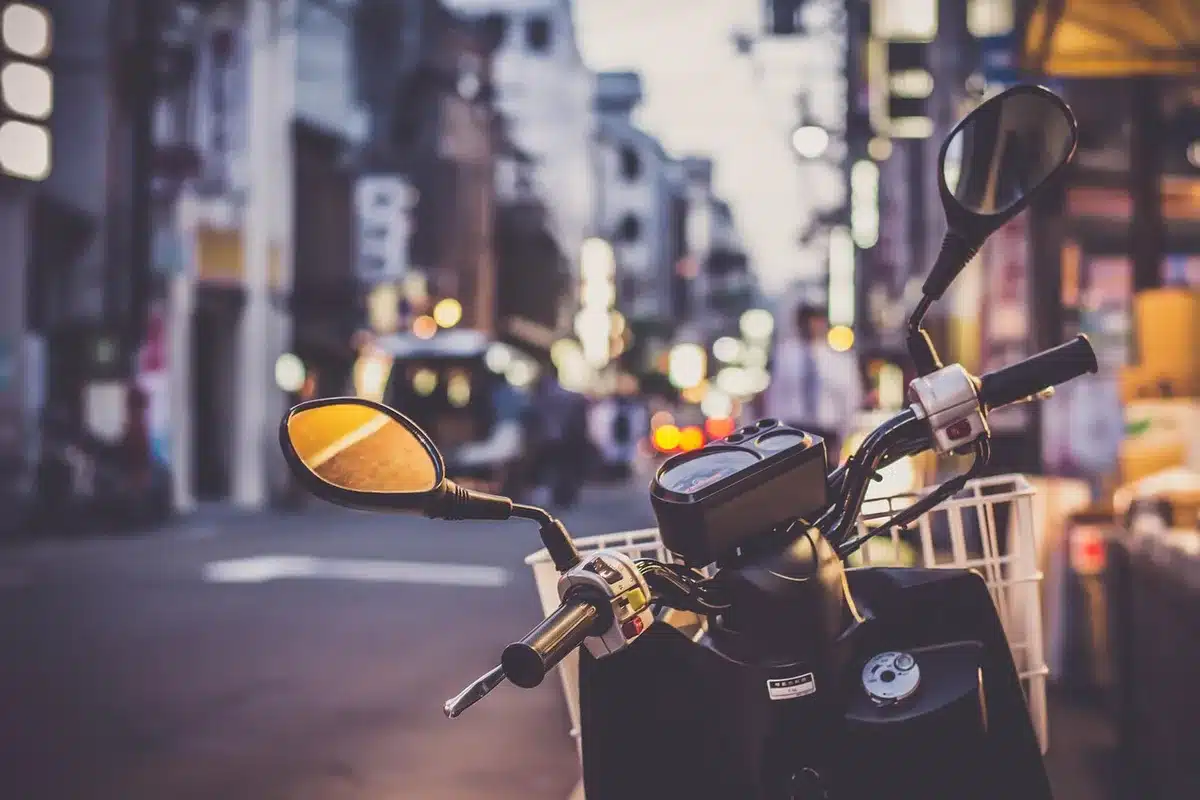
Silence made a name for itself with the successful S01, and the company is back with a new iteration called the S02. This latest model targets city commuters with a more compact footprint and a lower stance. Below is a full, rewritten review of how it performs day to day.
Scientists confirm: This is the most effective way to get your cat’s attention, according to new research
Elderly Couple Refuses Reserved Seats—Viral Train Standoff Sparks Fiery Debate on Courtesy
Following the well-received S01 and its sportier S01+ variant, the Barcelona-based brand has launched the S02: a nimble, urban-focused electric scooter. It retains some practical features from its predecessor while introducing fresher styling and a smaller, more city-oriented package. That reduction also affects peak performance—by design, the S02 is better suited to urban and suburban use than to high-speed roads.
The S02 name isn’t entirely new to Silence: the company previously sold a more powerful S02 equivalent to a 125 with a 7 kW motor (9 kW peak), a 0–50 km/h time of 3.9 seconds and a launch price of €5,300. The 2026 generation unveiled in France in June goes the other way—less power but a significantly lower price tag.
There are two variants of the new S02: one restricted to the 50 cc equivalent class and the other tuned to the 125 cc equivalent. We tested the 125-equivalent version. The 50-equivalent model is limited to 45 km/h and can be ridden from age 14 with an AM licence; mechanically it’s essentially a restricted unit (2.9 kW, 4 kW peak) aimed at riders without an A1 licence or the seven-hour training, and it starts at €3,280.
Below I compare the S02 with other electric scooters in the 125 equivalent class, keeping in mind that this model is engineered primarily for city streets rather than motorway use.
Silence S02 (2026) — Specifications
| Item | Silence S02 (2026) |
|---|---|
| Dimensions | 202.6 cm × 80 cm × 127.1 cm |
| Motor power | 4 kW (continuous) |
| Drive modes | 3 |
| Battery technology | Li‑Ion |
| Manufacturer range (claimed) | 138 km |
| Declared full charge time | 420 minutes |
| Removable battery | Yes |
| Battery slots | 1 |
| Battery weight | 41 kg |
| Bluetooth | Not specified |
| GPS | Yes |
| Digital display | Yes |
| Required licence | A1 |
| Available colours | White, Green, Grey |
| Product sheet |
Silence S02 (2026) — Contemporary, compact styling
The S02 blends Silence’s visual language with updated touches and a noticeably compact silhouette. At the front, the brand’s signature lighting is present: a central headlight encircled by an LED ring. On either side, lit chevrons trace the fairing and make the S02’s kinship with the S01 obvious. A short windshield above the headlight smooths the profile, and the exposed metal fork gives the scooter a tougher, more mechanical look.
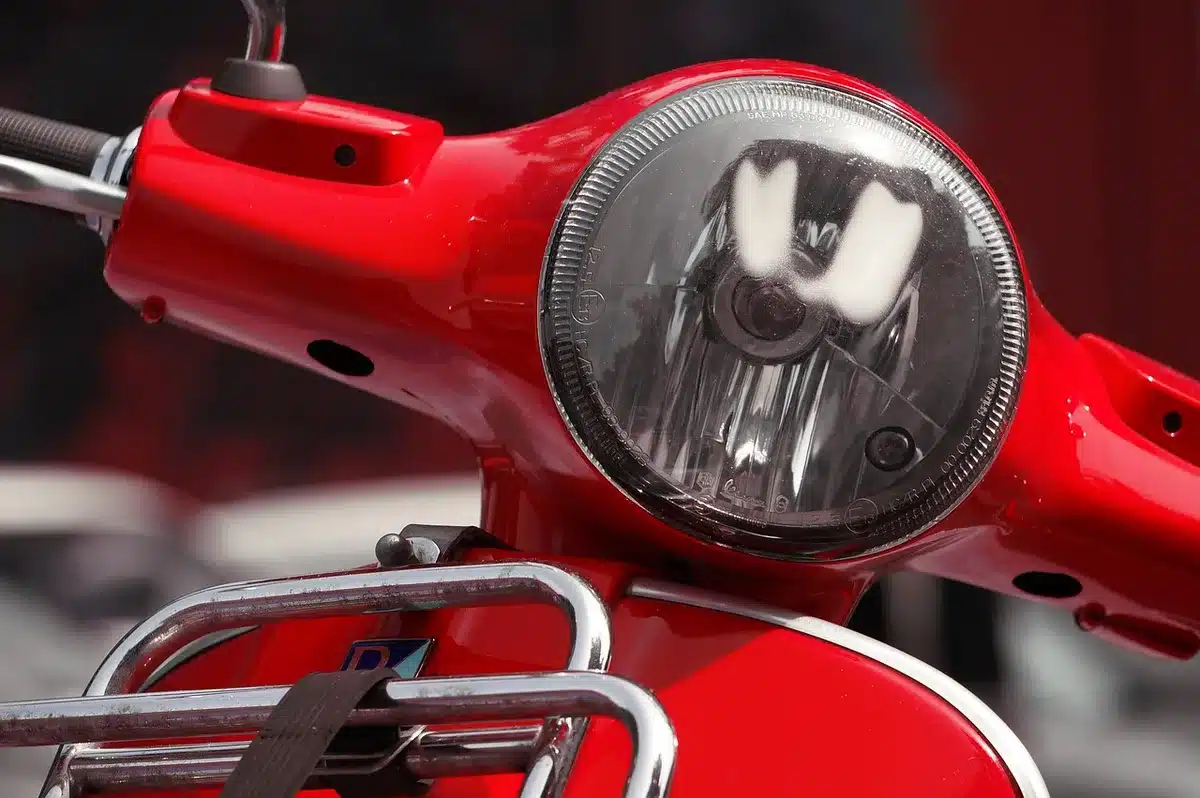
Viewed in profile, you’ll spot the circular motif on both flanks: on the right it’s rendered as a graphic, while on the left the ring is part of the removable battery’s design. A plastic strip matching the body colour runs above and carries an S02 decal.
The rear treatment is restrained: a slim, wide taillight spans the back and integrates the indicators. The rear suspension is visible—a black coil spring that reinforces the scooter’s muscular visual theme.
Wheel design receives attention as well. The 16‑inch front rim is star‑shaped and open, topped by a colour‑matched front mudguard. The driven rear wheel is a 14‑inch unit; although the motor is enclosed there is still a stylised rim that nods to a sportier aesthetic. The chrome wheel nuts are conspicuous against the otherwise black finish. The rear mudguard is always black, creating a contrast with the coloured front end.
The seat is split into two sections: the rider’s portion lifts to reveal a small storage cubby, while the passenger seat is fixed. The rider’s seat is reasonably comfortable, but footwell space is limited because of the scooter’s compact dimensions. Passenger comfort is minimal: grab bars are positioned at the rear rather than on the sides, the passenger seat is short—so much so that a rear passenger ends up partly sitting on the luggage rack—and the footrests are high, producing an awkward seating posture on longer rides. While the S02 isn’t designed primarily for two-up riding, carrying a passenger is far from ideal.
Riding position itself is fine for urban trips despite the tight floor area. The handlebar layout is well considered, with buttons that feel better built than on the S01. To the left are horn, reverse, indicators and a flash ring; to the right are the mode selector, hazard switch and an info button for cycling display readouts. The placement avoids having to operate reverse and throttle with the same hand and makes it easy to trigger hazards in traffic without letting go of the grip. Brake levers sit well under most hands but are not adjustable as they are on the S01—personally I found them a little wide for my taste, though you quickly adapt.
Regarding luggage capacity, the S01 was exceptional for under‑seat room, so I expected the S02 to fit two helmets. Instead, the under‑seat compartment only swallows a half‑jet helmet; a full jet will not fit. Despite Silence’s product page indicating space for a helmet, the reality is disappointing, and a top‑case becomes almost mandatory if you need to carry your helmet.
Overall build quality is good: the assembly is neat, materials are of decent quality and panel gaps are well controlled.
Silence S02 (2026) — Connectivity included, but not cutting edge
Like other Silence models, the S02 comes with integrated connectivity and a dedicated app that displays core information: battery state of charge, estimated remaining range, scooter location and recent trip details.
The alarm system is managed via the app too—you can trigger the alarm sound remotely if you misplace the scooter or deactivate it if needed. If the alarm trips, you receive a push notification to your phone so you can react quickly.
Remote starting is available in the app, but the feature hasn’t evolved much since the S01. You can run the scooter without the physical key, but you still need to open the app and perform a long press to start. The system does not electronically control the steering lock (Neiman), so you cannot lock or unlock the handlebars from your phone. It’s a pity, because some rivals already provide genuine keyless operation combined with an electronic steering lock.
The instrument cluster uses a segmented display that shows drive mode, speed, battery percentage, estimated remaining range, time and outside temperature. The info button toggles between odometer, two trip meters and component temperatures.
Practical features include both USB‑A and USB‑C sockets in the glove box for charging a smartphone while riding.
Silence S02 (2026) — A smooth, easy riding experience
The 125‑equivalent S02 tested here uses a brushless motor rated at 4 kW continuous (6.3 kW peak), with a top speed of about 85 km/h.
Silence provides three driving modes: Eco, City and Sport. On the S02, Eco is almost redundant—the scooter feels so restrained in that setting that acceleration is sluggish even when riding solo. Eco caps speed at 45 km/h, which can be adequate for inner‑city travel if you’re prepared to accept very limited acceleration.
City and Sport are significantly more usable: City permits speeds up to around 70 km/h, while Sport lets you reach the claimed 85 km/h. The two modes mainly differ in throttle response, with Sport delivering a little stronger acceleration but nothing dramatic. Silence quotes a 0–50 km/h time of 4.65 seconds in Sport—adequate for urban riding but not particularly quick when labelled “Sport.”
Where the S02 excels is manoeuvrability. It slips through traffic easily, with mirrors that don’t overly widen the profile and a tight steering angle that makes lane filtering straightforward. It stays composed in corners and its light curb weight—91 kg without the battery, 132 kg with it—makes it simple to handle. On faster roads it feels stable without noticeable vibration. However, the low ground clearance becomes a downside at higher speeds and when cornering: with two occupants the belly pan scrubbed on road surfaces and speed bumps even at modest speeds.
Braking is strong; on our test machine the calipers felt powerful and we used them conservatively while bedding them in. Depending on the version, the S02 is equipped with combined braking (CBS) or an ABS system, with ABS now appearing for the first time on a Silence model.
Suspension tuning could use refinement: the set‑up yields a rather harsh ride over city imperfections such as potholes, cobbles and speed humps—there’s a noticeable “jolt” quality that undermines comfort.
Parking and manoeuvring benefit from the scooter’s agility plus an integrated reverse gear that simplifies tight moves. You can park on the standard side stand or the centre stand—both are fitted as standard equipment.
Silence S02 (2026) — Range and charging
The S02 shares Silence’s removable lithium battery format. The pack is 5.6 kWh and weighs 41 kg; it is mounted in a trolley‑style housing with small wheels so you can roll it out and move it to a charging point. Removing it is straightforward: release the lever under the seat and pull the battery out using its handle.

The onboard charger is rated at 600 W and accepts a standard C13 cable, the kind used for desktop PCs or monitors, so you can plug the battery into a regular 230 V socket. Alternatively, you can plug the same cable into a socket under the seat to charge the scooter with the battery left in place—the seat can be shut thanks to a small cable pass‑through.
Real‑world mixed‑use range is around 130 km—slightly below Silence’s WMTC figure of 138 km but broadly consistent. That is a strong result for such a compact machine. Silence also operates a network of battery swap stations (about a dozen in Paris and inner suburbs) where, with a subscription, you can exchange a depleted pack for a full one in roughly 30 seconds.
The main drawback is charging speed. With a 600 W onboard charger, a full recharge takes roughly 6–8 hours (Silence quotes 7–9 hours), which is fine for overnight charging but slow if you need a quick turnaround during the day. A faster charging option—even as an extra—would have been welcome.
Silence S02 (2026) — Price and availability
The 125‑equivalent S02 is offered in two purchasing options. With the battery included it’s listed at €3,990 on Silence’s website. Bought without the battery and tied to a battery subscription plan, the scooter’s upfront price drops to €2,650—a very low entry point for an electric two‑wheeler, though you must factor in the monthly battery rental fee.
For comparison, Silence lists the S01 at €4,990 and the S01+ at €5,990 with battery included. That places the S02 about €1,000 cheaper than the S01 in exchange for a lower top speed (reduced from 110 to 85 km/h) and a much smaller under‑seat storage compartment. Among competitors, the NIU MQi GT 100 starts at about €2,999, offers a 100 km/h top speed but claims a shorter range (around 100 km) than the S02.
In short: the Silence S02 is a strong urban performer—light, very manoeuvrable and offering roughly 130 km of practical range in a compact package. Its trade‑offs are clear: tiny under‑seat storage that fits only a half‑jet helmet, weak passenger accommodation, firm suspension and limited ground clearance when ridden by two. For a city dweller who usually rides alone and is willing to add a top‑case, the S02 is a sensible, affordable choice—especially if you opt for the battery‑free purchase price to lower the initial outlay.
Similar Posts
- Nakamura Crosscity+ Review: Best Electric Cargo Bike for Kids on the Market?
- Segway E250S Electric Review: Perfect Scooter Alternative to Escape Traffic Without Breaking the Bank!
- Xiaomi Electric Scooter 6 Max Review: Discover the Balance and Power of This E-Scooter!
- We Tested the UTO PRO20 (Formerly Eovolt): A Near-Perfect Foldable Electric Bike
- Tested: Ritmic Duo Electric Car – Perfect City Companion with Massive Range!

Maya Singh is a senior editor covering tablets and hybrid devices. Her work explores how these tools reshape digital productivity and learning. She also contributes to feature editorials on emerging tech.