
Scientists confirm: This is the most effective way to get your cat’s attention, according to new research
Elderly Couple Refuses Reserved Seats—Viral Train Standoff Sparks Fiery Debate on Courtesy
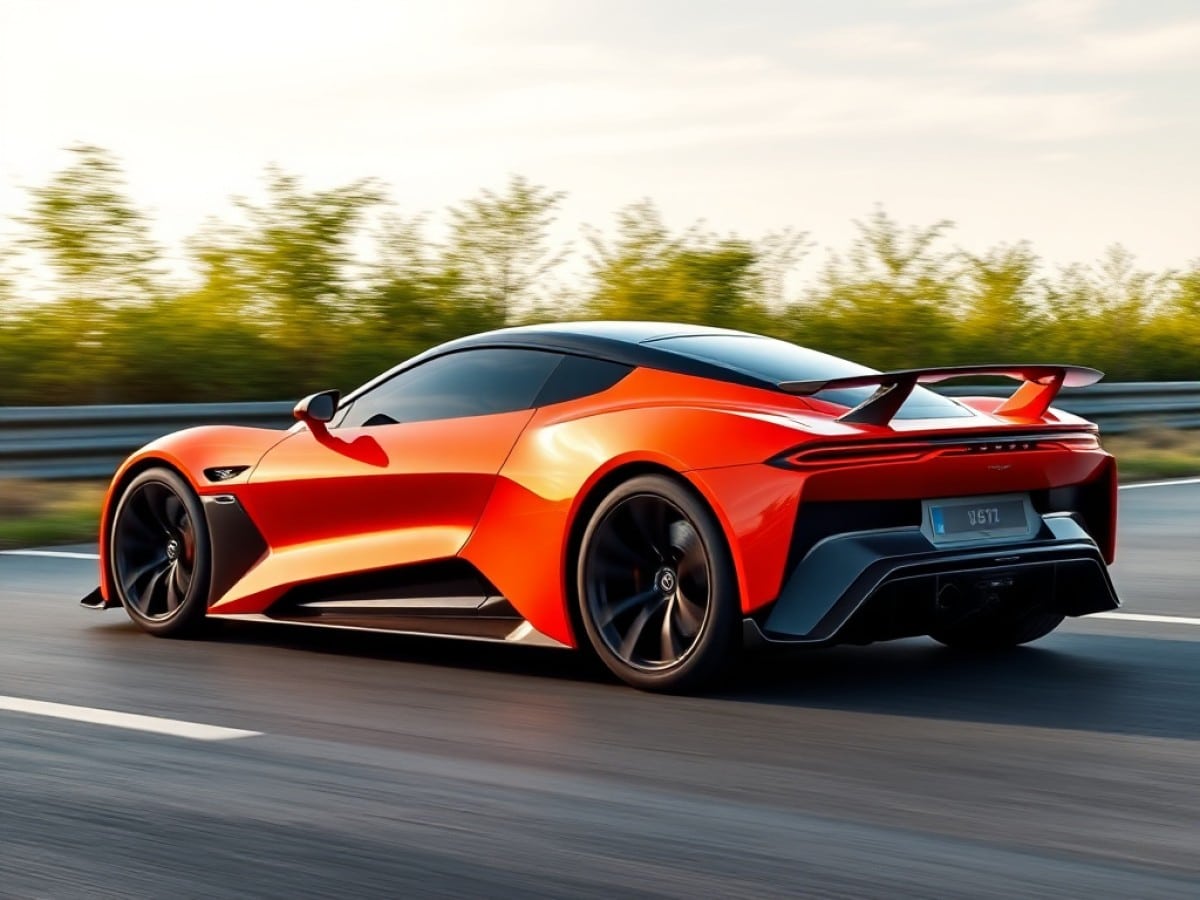
In its homeland of Beijing, I encountered this impressive machine. The SU7 Ultra is more than just a concept; it’s an extreme version of the standard Xiaomi SU7, enhanced with hormones and carbon fiber. Xiaomi has spared no effort in entering the electric hypercar arena.
Xiaomi has transcended its reputation as just an excellent smartphone maker. With the SU7 Ultra, this Chinese tech giant has unleashed an electric sedan boasting 1,548 horsepower, which impressively clocked a lap time of 7 minutes and 4 seconds on the challenging Nürburgring track.
We took the wheel of this tech powerhouse in Beijing, on both open and closed roads, to see what it really had to offer under the hood.
It’s safe to say that traditional manufacturers, including Tesla, might need to watch out. Here’s our detailed review.
It’s worth noting that the standard version of the Xiaomi SU7 shares many similarities with the Ultra variant. This also allowed us to form a more comprehensive opinion on the SU7 model in general, not just the Ultra version.
And if you’re curious about factories, we also toured the Xiaomi SU7 production plant in Beijing. It was more robots than humans!
Why You Should Never Reheat These Foods in the Microwave – The Hidden Dangers Experts Warn About
I tried the top 5 guard dogs—here’s what makes these breeds the ultimate protectors
Xiaomi SU7Video Overview
Xiaomi SU7Technical Specifications
| Model | Xiaomi SU7 |
|---|---|
| Category | Sedans |
| Horsepower | 299 horsepower |
| 0 to 100km/h | 5.28 s |
| Autonomy Level | Autonomous Driving (level 3) |
| Top Speed | 210 km/h |
| Onboard OS | Xiaomi HyperOS |
| Main Screen Size | 7.1 inches |
| Car-side Plug | Type 2 Combo (CCS) |
| Length | 4.99 m |
|
Try it out |
Product Sheet |
This is the spec sheet for the classic Xiaomi SU7. Xiaomi China lent us a Xiaomi SU7 Ultra for a day in Beijing.
Xiaomi SU7Design: Bold Aggression (and a bit showy)
At first glance, the SU7 Ultra makes a bold statement. While it shares its overall silhouette with the standard SU7, which is becoming a common sight in China, this “Ultra” version features very distinct aerodynamic elements.
The front bumper incorporates a large splitter to slice through the air, while the rear boasts a massive 1.56-meter-wide carbon fiber wing and an active diffuser.
If the standard SU7 already had hints of the Porsche Taycan or McLaren, the Ultra version pushes the aggressiveness to the max.
This isn’t just for show: Xiaomi claims an aerodynamic downforce of up to 285 kg, which is essential when you’re reaching speeds up to 350 km/h.
In terms of size, it’s quite a beast. At 5.11 meters long with a wheelbase (the distance between the front and rear wheels) of 3 meters, this car is practically a limousine. It weighs in at 2,360 kg, despite extensive use of carbon fiber.
From the side, the huge 21-inch wheels reveal massive yellow brake calipers. It’s very expressive, almost divisive, and it’s hard to go unnoticed in the city, unlike a Tesla Model S Plaid, which looks far more subdued.
Xiaomi SU7Interior and Spaciousness: Sporty yet Comfortable
Inside, Xiaomi has struck an interesting balance between sportiness and comfort. Far from the austerity seen in some competitors, the atmosphere exudes premium, even luxury, with plenty of Alcantara and carbon. The bucket seats provide firm support, and the yellow stitching (matching the seat belts) adds a personalized touch that’s much appreciated.
The space inside is ample. Thanks to the 3-meter wheelbase, rear passengers have plenty of legroom, even for 1000 km trips. There are two USB-C ports, and, cleverly borrowing from the Xiaomi ecosystem, there are magnetic mounting points on the backs of the front seats for clipping on tablets (iPad or Xiaomi Pad), and even on the dashboard for attaching smartphone or GoPro mounts, to record your drives.
As for luggage, the 454-liter rear trunk isn’t the largest in its class due to its traditional trunk opening (rather than a hatch), but it’s supplemented by a front trunk (the famous frunk) of 105 liters.
This front storage is spacious – falling between that of a Model 3 and a Model S – and benefits from being motorized. A simple press of a button or from the app allows it to be opened and closed, a practical detail for everyday use.
Xiaomi SU7Infotainment: Xiaomi Sets the Bar
This is where Xiaomi delivers a blow to the traditional automotive industry, and even to some tech players. The central screen, over 15 inches, is smooth, responsive, and designed much like a smartphone interface.
The OS supports genuine multitasking: you can display three apps at once, resize windows, and move them around with a swipe. It’s intuitive and feels very natural. The system also supports “screen mirroring”: you can project any app from your Xiaomi phone directly onto a tile of the main screen. Missing Waze in the store? No problem, just project it from your mobile.
This is where you realize Xiaomi didn’t just put an iPad in a car. They integrated their ecosystem. Apple should have done this. If the Apple Car existed, it would look like this.
For the driver, a small instrumentation screen behind the steering wheel displays the essentials, complemented by a very comprehensive head-up display (HUD) that even projects navigation. Once you’ve experienced it, there’s no going back (hello Model 3).
In the rear, Xiaomi has planned attachments for securing tablets (MiPad or even Apple iPads). These aren’t just passive screens: they connect to the car’s system, allowing rear passengers to manage their air conditioning or change the music.
Xiaomi SU7Driving Aids and Technologies
The SU7 Ultra is equipped with an array of sensors. It offers level 2 semi-autonomous driving, similar to Tesla’s FSD or Advanced Autopilot. In China, you enter the address, and the car manages much of the journey.
Although we couldn’t test this feature, we did appreciate the performance of the adaptive cruise control coupled with lane centering.
The 360-degree camera system is particularly well-executed. The modeling is precise and allows, for example, to see exactly where the front wheels are placed to avoid “scraping” those beautiful 21-inch wheels against a curb. Essential given the size of the machine.
Xiaomi SU7Driving and Performance: Is 1500 Horsepower Really Necessary?
Let’s talk about performance, which is simply outrageous. The SU7 Ultra is based on a three-electric motor architecture: one in the front (288 kW) and two in the rear (425 kW each). The combined power reaches 1,548 horsepower with a tremendous torque of 1,770 Nm.
Having two independent motors at the rear allows for what is known as torque vectoring. The system can deliver more power to the outer rear wheel during a turn to help the car pivot more dynamically, making this 2.3-ton behemoth feel much lighter than it appears.
The 0 to 100 km/h time is completed in 1.98 seconds. When activating “Launch Control” mode, the car leans forward (like a cheetah ready to pounce, a posture similar to that of the Model S Plaid) before catapulting you with a breath-taking force.
Yet, what’s most surprising is its behavior during gentle driving. Thanks to its dual-chamber pneumatic suspensions, the car remarkably smooths out road irregularities in “Comfort” mode.
An additional interesting detail: the bucket seats are active. In a tight turn, the side supports inflate in a fraction of a second to keep your body in place. Ultimately, you have a very docile car in the city that transforms into a true supercar on the track with just a touch on the screen.
Xiaomi SU7Consumption, Autonomy, and Recharging: An Unexpected Strength
To power these three motors, Xiaomi has incorporated a 93.7 kWh battery (the Qilin 2.0 developed by the Chinese giant CATL). The announced range is 630 km according to the Chinese CLTC homologation cycle. It’s important to note that this standard is very optimistic compared to our European WLTP standard.
In our regions, we can estimate the range at around 555 km WLTP (compared to about 720 km for the standard SU7 equipped with a larger battery and fewer motors). This is lower than the 700 km WLTP of a Tesla Model S Plaid, but still very comfortable for long road trips.
It’s in recharging that Xiaomi makes a significant impact. Thanks to an 800-volt architecture and cells capable of handling an extremely high charging power (charge rate of 5.2C), the SU7 Ultra goes from 10 to 80% battery in just 11 minutes.
This is one of the fastest recharge times in the world, far surpassing the 25 minutes required by a Model S Plaid, and matching the best architectures from Porsche or BYD.
Even though the latter has recently done better, with a 10 to 80% in 7 minutes, on specific models, just like its competitor Zeekr.
We observed a very impressive recharge curve on a 250 kW station, with a power of 250 kW almost from 50 to 80% before dropping to 100 kW at 90% and 50 kW at 100%. In other words: even a full recharge is very quick.
Xiaomi SU7Pricing and Availability
All this technology comes at a price, but it defies local competition. In China, the Xiaomi SU7 Ultra was launched at 529,900 yuan, which is about 70,000 euros at a rough exchange rate. For comparison, the entry-level SU7 is marketed around 30,000 euros there.
Even at this “Ultra” price, the price/performance ratio is unbeatable compared to a Porsche Taycan Turbo GT or a Model S Plaid. Lei Jun, Xiaomi’s CEO, even acknowledged last year that the company was losing money on each base model sold. It’s highly likely that this Ultra version, positioned much more premiumly, allows the brand to finally turn a profit.
For now, the Xiaomi SU7
Similar Posts
- Discover the Tesla Model Y Performance: Why It’s the Top Electric Car Right Now
- Xiaomi 15T and 15T Pro Launch Date Revealed: Here’s What We Know!
- Tested: The Exclusive Mercedes CLA Electric for China – Here’s Our Verdict!
- This Electric Car Might Just Outdo My Tesla: Testing Smart #5’s Fastest Charge in France
- Xiaomi 17 Price Leak Reveals Big Difference: European Cost Compared to Chinese Version

Maya Singh is a senior editor covering tablets and hybrid devices. Her work explores how these tools reshape digital productivity and learning. She also contributes to feature editorials on emerging tech.