
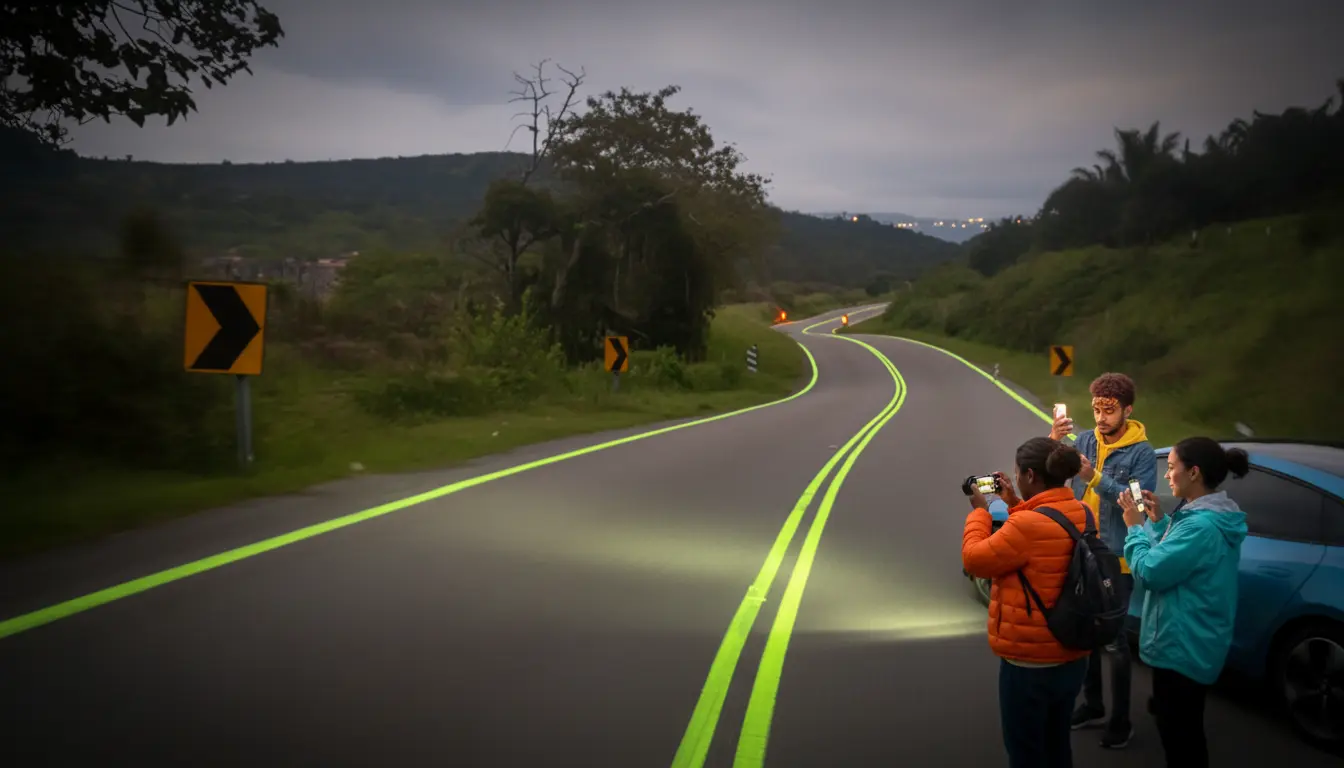
At first glance, Malaysia’s idea sparkled with ingenuity: what if instead of dotting dark roads with costly bulbs and reflective markers, you simply painted the way forward—literally—with glowing paint? A pilot in Hulu Langat gleamed with promise. So, what made Malaysia slam the brakes on this luminous road revolution?
Scientists confirm: This is the most effective way to get your cat’s attention, according to new research
Elderly Couple Refuses Reserved Seats—Viral Train Standoff Sparks Fiery Debate on Courtesy
The Grand Debut: Lighting Up Hulu Langat
For anyone who’s ever squinted down a pitch-black stretch of tarmac, the notion of glow-in-the-dark roads sounds almost like a scene out of a sci-fi film (minus the flying cars and melodramatic orchestras). In 2023, Malaysia bravely took the lead by launching phosphorescent markings along a 245-meter section in Hulu Langat district. According to the Straits Times, these glowing markings, designed to improve nighttime road safety, appeared to tick all the right boxes: more visible, even in foul weather, and less reliance on power-hungry bulbs.
Prior to this innovation, many rural stretches and public road segments lacked proper lighting infrastructure, making night journeys more adventure than most motorists hoped for—sometimes even downright perilous. Motorists responded with enthusiasm. Finally, here was a solution dedicated to their after-dark safety. Out went reflective studs and electric bulbs. In came photoluminescent paint, a dazzling idea aiming for safer roads.
The Potential: Safety in a Constant Glow
Malaysia’s Public Works Minister, Alexander Nanta Linggi, sang the praises of this technology. The paint offered a steady, reassuring glow, potentially crucial for rural roads where street lighting was as rare as polite honking at rush hour. Motorists rejoiced over the newfound visibility and security, especially in areas previously deemed tough—or downright hazardous—after sunset.
The pilot project’s immediate impact was clear:
- Consistent luminosity, even during poor weather
- No need to plant more electric bulbs
- A significant upgrade for stretches that previously languished in unsafe darkness
On paper—and, let’s be honest, on the road surface as well—the future seemed aglow (pun intended).
A Blinding Obstacle: Sticker Shock
But there’s a saying in roadworks as in life: the brighter the shine, the steeper the bill. The photoluminescent paint, while dazzling to the eyes, proved equally dazzling to the government’s calculator. According to Paultan’s figures, painting a single square meter set Malaysia back by about 749 ringgits (or roughly 876 euros). For those keeping score at home, that’s about 20 times pricier than traditional road markings, which clocked in at a mere 40 ringgits (47 euros) per square meter.
This wasn’t just a minor blip on the budget radar—it was a full-blown siren. When road stretch after road stretch would have to be covered, the costs ballooned from “Wow, what a brilliant idea!” to “Wait, how much did you say again?”
Despite ongoing tests and motorists’ approval, this eye-watering expense led the government to hit reverse by the end of the year. Scaling up this solution suddenly looked less like progress and more like a fiscal nightmare—certainly not the kind of innovation that leaves politicians sleeping soundly at night.
Why You Should Never Reheat These Foods in the Microwave – The Hidden Dangers Experts Warn About
I tried the top 5 guard dogs—here’s what makes these breeds the ultimate protectors
Striking a Balance: Is Innovation Worth the Price?
The Malaysian case casts a long, glowing shadow over a perennial question facing every government: How do you balance innovation with affordability in public infrastructure? The luminous paint promised heightened safety and rousing public support. But with the cost sitting at an eye-popping premium, leaders hesitated. Was the price justifiable in the name of safety? For now, Malaysia’s answer appears to be a prudent—if slightly disappointed—no.
While the pilot illuminated both roads and imaginations, it also exposed the often harsh realities of upgrading public infrastructure in resource-conscious economies. Even the brightest idea, after all, must survive the harsh glare of financial scrutiny. For Malaysia, the glittering paint has been shelved, at least for now. But perhaps the truest mark left is not on the road, but in reminding policymakers everywhere: if you plan to light up the night, make sure to check the bill—before it’s too late!
Similar Posts
- Black Friday Smart Lighting Deals: Hue Essential Bulbs from €11 & More Hot Offers!
- Drivers Caught by Speed Cameras Get an Unexpected Surprise: Praise From Police Instead of Fines
- Revolutionary tires could soon adapt to any road—and you’ll never need snow chains or winter tires again
- Special AirPods Pro 3 for Year of the Horse in Asia: Celebrate with Exclusive Tech!
- Is Apple’s Big Bet on Vietnam a Game-Changer for Its Future Devices?

Jordan Park writes in-depth reviews and editorial opinion pieces for Touch Reviews. With a background in UI/UX design, Jordan offers a unique perspective on device usability and user experience across smartphones, tablets, and mobile software.