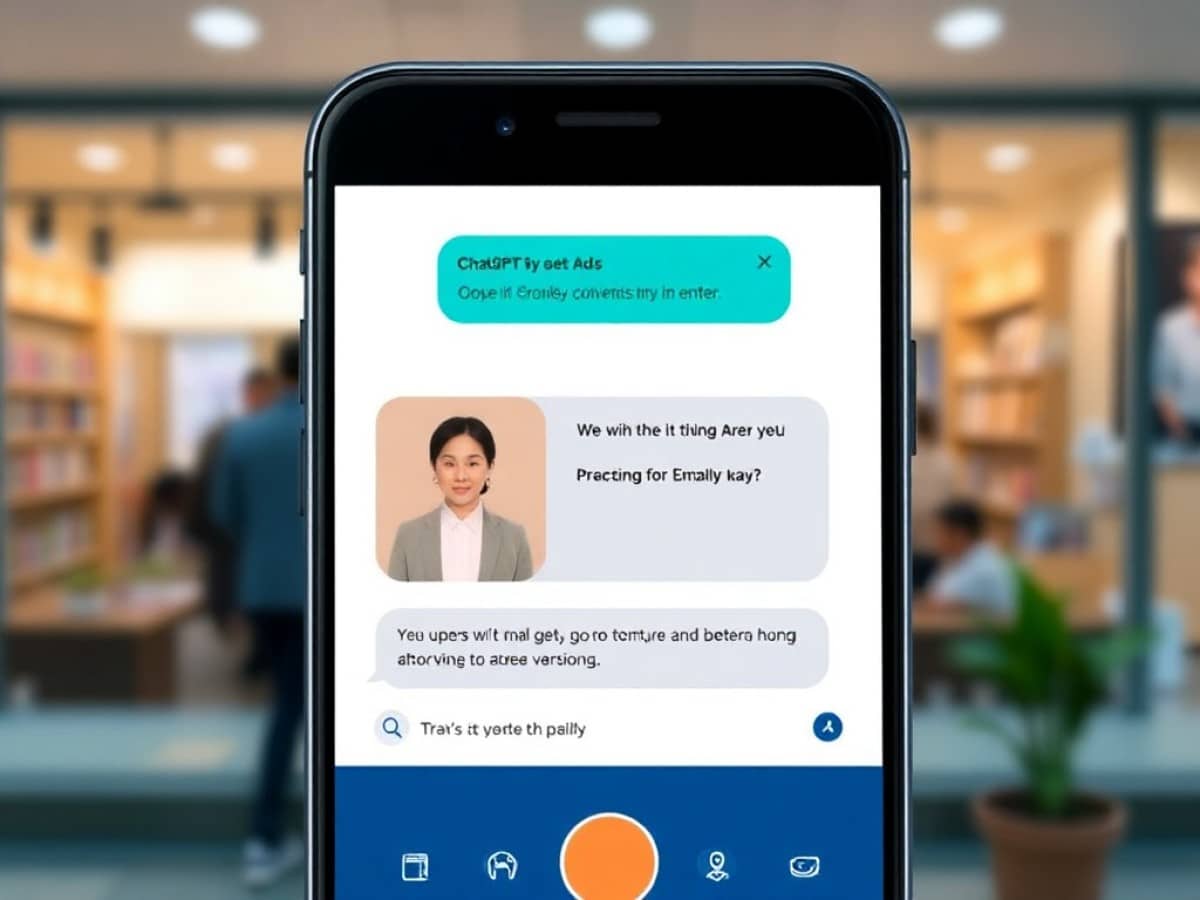
OpenAI has announced that it will start testing advertisements in ChatGPT within the coming weeks in the United States, marking a significant shift in its monetization strategy.
Scientists confirm: This is the most effective way to get your cat’s attention, according to new research
Elderly Couple Refuses Reserved Seats—Viral Train Standoff Sparks Fiery Debate on Courtesy
On Friday, January 16, 2025, OpenAI confirmed its plans to introduce advertising into ChatGPT. Led by Sam Altman, the company will begin integrating sponsored ads in the coming weeks in the United States, specifically targeting the free version and the newly launched $8 per month ChatGPT Go subscription. This introduces a major strategic pivot for the conversational assistant, which boasts 800 million weekly users.
The announcement coincides with the rollout of ChatGPT Go in the United States and globally. Already available in France for several weeks, this entry-level subscription offers more features and higher limits than the free version. It aligns with the ad-supported subscription model that Netflix popularized in 2024.
Advertisements in ChatGPT, But Distinct from AI Responses
Why You Should Never Reheat These Foods in the Microwave – The Hidden Dangers Experts Warn About
I tried the top 5 guard dogs—here’s what makes these breeds the ultimate protectors
OpenAI has outlined the specifics of these forthcoming ads in a blog post. The ads will appear at the bottom of ChatGPT’s responses, clearly marked as sponsored content and visually separated from the main response. For instance, a discussion about Santa Fe could trigger an advert for a local hotel, offering users the chance to interact directly with the establishment.
The company assures that “advertisements will never influence the responses provided by ChatGPT”, emphasizing that the responses are “optimized solely for their usefulness” to the user. OpenAI also guarantees the “protection of your privacy in interactions with ChatGPT and does not sell your data to advertisers”.
Users will have several control options: turning off ad personalization, deleting data used for targeting, and the ability to hide ads with feedback, similar to Google’s ad inserts. No ads will be shown to users under 18 or on sensitive topics such as health, mental health, or politics.
A Diversified Economic Model in Response to Massive Investments
The introduction of advertising is a critical economic step for OpenAI. The company needs to fund substantial investments in computing infrastructure, estimated to cost hundreds of billions of dollars over the next few years. With 95% of its users accessing the free service as of April 2025 according to The Information, the company is looking to diversify its revenue streams beyond just paid subscriptions to offset significant losses.
Internal projections from OpenAI, as reported by the American media, estimate advertising revenue to reach $1 billion by 2026, escalating to $29 billion by 2029, which would represent 20% of its total revenue. These forecasts have since been adjusted upwards. To steer this strategy, OpenAI has hired Fidji Simo, a former executive at Meta and Instacart, known for her successful monetization of the grocery delivery app.
Premium subscriptions will remain ad-free: ChatGPT Plus, Pro, and the Team and Enterprise offerings will not display any ads.
Google, Meta, and Perplexity Adopt Similar Models
ChatGPT is joining a trend already set by its competitors. On January 11, Google permitted the inclusion of direct sponsored deals in AI Mode and is testing advertising formats in AI Overviews (both features are currently unavailable in France). Since mid-December, Meta has been using interactions with its AI assistant to refine ad targeting on Instagram and Facebook. Perplexity is also monetizing its chatbot through advertising, and Elon Musk has mentioned considering this route for Grok on X.
The widespread shift of conversational assistants to advertising aligns with their massive adoption: Gemini has 650 million monthly users, and ChatGPT nearly 900 million. In response, the French Competition Authority has taken it upon itself to investigate the integration of advertising in these tools.
This commercial turn by OpenAI contrasts with past statements made by Sam Altman. In 2024, he expressed a dislike for advertising, considering it a last resort. Although the company claims it does not aim to maximize user engagement time on its platform, unlike social networks, it finds itself compelled to adopt this model to ensure its economic viability.
Similar Posts
- ChatGPT Evolution: What’s Changing in the Coming Months?
- WhatsApp to Start Showing Ads: Here’s What Will Change in the App
- Meta’s Controversial Update: Your AI Chats Soon to Be Advertising Data!
- Meta Considers Ad-Free WhatsApp: But It Will Cost You!
- It’s Official, OpenAI Is Launching A New ChatGPT Go Subscription For Less Than $5 Per Month

Jordan Park writes in-depth reviews and editorial opinion pieces for Touch Reviews. With a background in UI/UX design, Jordan offers a unique perspective on device usability and user experience across smartphones, tablets, and mobile software.