

Scientists confirm: This is the most effective way to get your cat’s attention, according to new research
Elderly Couple Refuses Reserved Seats—Viral Train Standoff Sparks Fiery Debate on Courtesy
Peugeot has brought back one of the brand’s most legendary nameplates with the new e-208 GTi. Those three letters carry weight for an entire generation of drivers. The twist this time is that there’s no petrol engine beneath the hood — the first GTi in many years is purely electric.
Some purists will call it sacrilege: GTI stands for Grand Tourisme Injection, which sounds at odds with an electric drivetrain — there’s no fuel injection to speak of. Yet Peugeot didn’t half‑measure this revival: 281 hp on tap and, crucially, a mechanical limited‑slip differential. This is proper hardware, not just a software tune added to a regular model.
I spent a few hours behind the wheel around Glasgow and the shores of Loch Achray in Scotland, tackling secondary roads, tight village lanes and bumpy country tracks. Two constraints colored the day: in the UK you drive on the left, and the tarmac was wet — at times soaked — for much of the outing.
Not ideal for finding the ultimate limits of a hot hatch, but precisely the kind of conditions that reveal how well a front‑wheel‑drive, 281‑hp car can put its power down.
Before diving into the details: we’ve already tested the standard e-208, so I won’t repeat every basic specification here. For a more everyday perspective on packaging and comfort, refer to that review. This piece focuses on what makes the GTi special.
Peugeot e-208 GTiTechnical specification
| Model | Peugeot e-208 GTi |
|---|---|
| Dimensions | 4.10 m x 1.405 m x 1.77 m |
| Power | 281 hp (207 kW) |
| 0–100 km/h | 5.5 s |
| Driving assistance level | Semi‑autonomous driving (level 2) |
| Top speed | 180 km/h |
| Vehicle charging inlet | Type 2 Combo (CCS) |
| Starting price | €42,900 |
| Try it | Product sheet |
Peugeot e-208 GTiWhy bringing back the badge is a gamble
To grasp what Peugeot is risking, you have to go back to the 1980s. The 205 GTi — followed by the 309 GTi — were light, playful, and enthusiastic little rockets that democratized performance for many drivers. They became icons and a piece of French automotive heritage.
With tightening emissions regulations, Peugeot shelved the GTi emblem for a while. The modern 208 and 308 lost their hot gasoline variants.
By pinning GTi on an electric car, Peugeot is courting controversy: if the brand dilutes the heritage, it risks alienating die‑hard fans. On the other hand, every small Peugeot since the 104 in 1974 has had a sporty version, so this move also has historical logic. The current 208’s styling already leans aggressive; not offering a performance edition would have felt incomplete. It was risky, but almost necessary.
Peugeot is frank about its intent: this GTi exists largely to bolster the brand’s image rather than to move huge volumes. Alain Favey, Peugeot’s CEO, says the car should help rejuvenate the marque’s appeal and that success will be judged more by image than sales. He expects markets like France, the UK and Germany to account for about 80% of demand.
Peugeot e-208 GTiA successful design, with a sleeper attitude
Visually, Peugeot largely succeeded. I already liked the regular 208, and the GTi trim adds the extra bite it needed.
The grille turns black with small red accents; the Peugeot badge gets a red ring, echoed at the center of the wheels. From the side, the fenders are widened and highlighted by a red pinstripe. This is not mere decoration: track widths grow by 56 mm at the front and 28 mm at the rear, which bodes well for roadholding.
The 18‑inch “Belchamp” diamond‑cut wheels sit flush with the arches and their pattern clearly nods to the classic 205 GTi design.
At the rear there’s a glossy black spoiler with a red inner face and a new diffuser that gives the car a sporty stance. One of my favourite touches is the “208 GTi” badge on the rear quarter pillar — a direct wink to the 205 GTi era.
The overall look is assertive without being flamboyant. In town, you won’t always turn heads — which is exactly the sleeper vibe some buyers will love: outwardly discreet, but surprisingly quick off the line.
Paint choices are seven in total, all with a black roof. The entry colour, Okénite white, is free but not my favourite — it risks making the car look like a tradesman’s sporty van. Greys, black, a yellow/green, and a blue cost €900, while the special Elixir red is €1,100 — and it’s very striking. My test car wore Selenium Grey, a metallic finish that suits it well.
Peugeot e-208 GTiInside: red accents, Alcantara and a proper nod to heritage
If you’re familiar with the 208 cabin, the GTi won’t surprise you. Peugeot has peppered the interior with GTi cues: a perforated leather and Alcantara steering wheel, red contrast stitching across the dash, central armrest and doors, aluminium pedals and red seat belts.
There’s also a bold historical reference — very red carpeting. It’s vividly hued and looks great, though in Scotland I managed to muddle it in minutes with wet shoes.
The sport seats are bespoke, with integrated headrests. They sit between semi‑bucket and full bucket: they hold you firmly in corners without becoming torturous on longer runs. The upholstery blends Alcantara with a red central stripe and a woven mesh pattern that evokes the spirit of the 205 GTi fabrics, reinterpreted for a modern car.
The digital instruments have been reworked with red‑on‑black graphics, a “208 GTi” header and dedicated telemetry pages showing power output, battery temperature and more — thoughtful, specific touches.
My main gripe, shared with many Peugeot models, is the user interface: it feels a touch dated next to some Chinese rivals or Tesla. Menus are straightforward but not especially modern, and the multimedia system can be a bit sluggish.
A more significant issue is the compact steering wheel. Its unusual, almost trapezoidal shape and low mounting position can obscure the instruments during sporty seating positions. That’s the downside of Peugeot’s i‑Cockpit layout — and it’s especially frustrating here because the binnacle graphics are unique to this GTi. You eventually find a compromise by adjusting the seat and wheel manually, but at this price point electric adjustments would be welcome.
I like the upgraded materials — Alcantara, red stitching and the vivid interior theme add character — yet hard plastics remain in places, including upper surfaces, a reminder that the base car is an affordable city model originally sold under €30,000.
The cosmetic upgrades don’t transform the car into a different class, but they do the job. The seats themselves feel premium in both touch and appearance.
As expected, rear passenger space and a 309‑litre boot are unchanged relative to the standard 208. It’s not class‑leading, but it’s acceptable for the segment.
One pleasant update: the reversing camera has finally improved versus the earlier e‑208 I tested in 2020, where the image was tiny and nearly useless. The GTi now comes with Visiopark 2’s 360° camera as standard. It’s not ultra‑high resolution, but with 18‑inch wheels so exposed you’ll appreciate the extra visibility when parking.
Peugeot e-208 GTiThe drivetrain: 281 hp and a real limited‑slip differential
The synchronous permanent‑magnet electric motor, built by Emotors in Trémery (Moselle), produces 281 hp (207 kW) and 345 Nm of torque. All the drive goes to the front wheels: this is neither rear‑wheel drive nor all‑wheel drive, which is consistent with the platform’s constraints and GTi tradition.
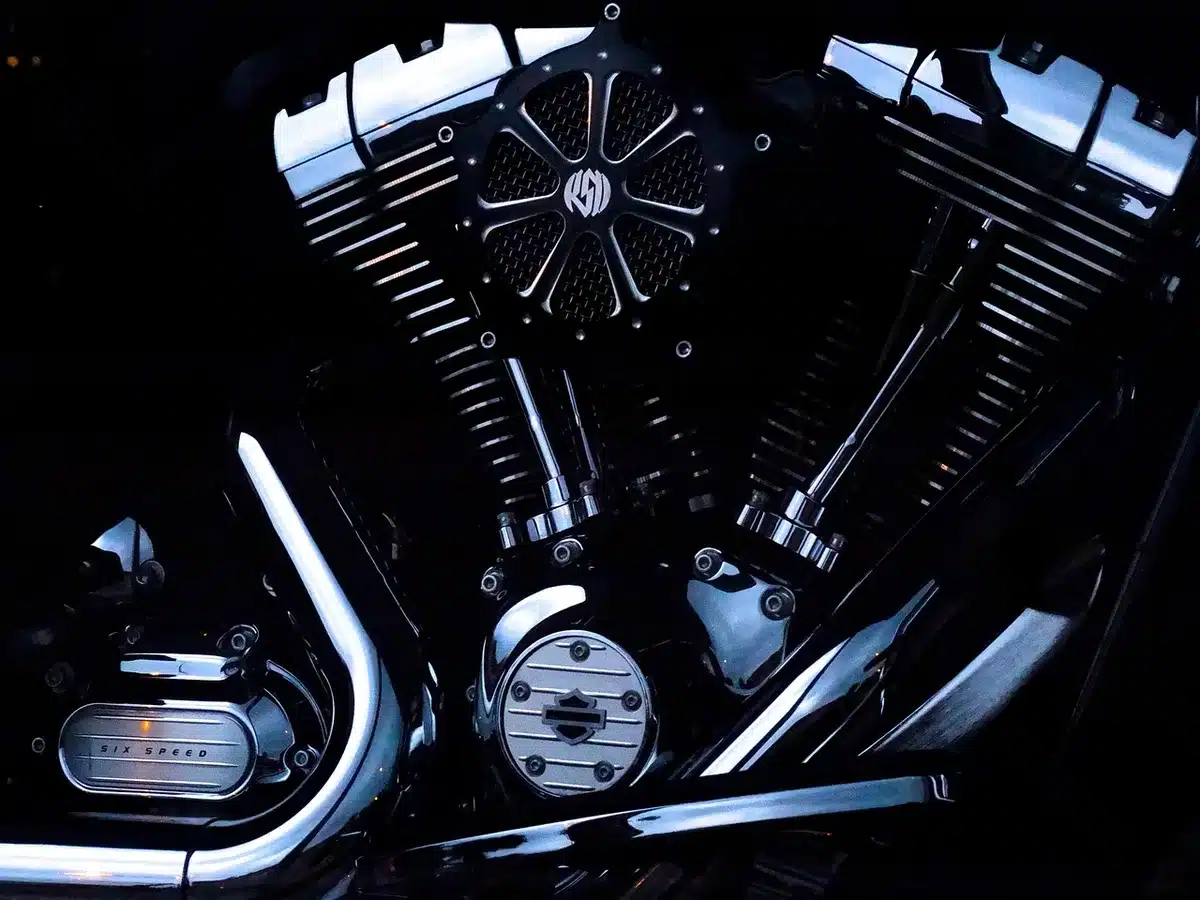
The centerpiece is a mechanical Torsen limited‑slip differential, supplied by JTEKT (part of Toyota Group) and integrated into the reduction gearbox. Put simply: without an LSD, when you get back on the throttle mid‑corner the inside wheel can unload and spin, the steering will tug, the line will open up and you can’t transfer full torque to the tarmac.
The Torsen routes torque to the wheel with the most grip, keeping the front axle precise and helping the car to turn in rather than run wide. That’s genuine performance hardware; many rivals rely purely on electronic braking of a slipping wheel.
Peugeot quotes 0–100 km/h in 5.5 seconds — a brisk figure. Mid‑range pull is important for overtaking; 80–120 km/h in 3.2 seconds is in the same ballpark as my similarly powered Tesla Model 3. A standing kilometre comes in at 25.8 seconds.
Top speed is limited to 180 km/h, which feels conservative — you might expect more than 200 km/h on paper. For most drivers this is fine, but on unrestricted autobahns or fast track sessions it could feel limited.
Peugeot Sport has reworked the chassis comprehensively: ride height lowered by 25 mm; widened tracks (+56 mm front, +28 mm rear); an added rear anti‑roll bar intended to wake up the rear end; revised steering assist for the smaller wheel; bespoke springs and dampers with hydraulic bump stops to preserve some comfort; Michelin Pilot Sport 4S tyres in 215/40 R18 as standard; 355 mm front discs with fixed four‑piston Alcon calipers finished in red.
Weight remains a factor: 1,535 kg unladen and about 1,610 kg ready to drive. Heavier than the sub‑tonne GTIs of the past — the battery alone weighs some 340 kg. That mass sits low in the structure, however, keeping the center of gravity down so the car stays planted despite the heft.
Peugeot e-208 GTiBehind the wheel: yes, it behaves like a GTI
I didn’t hold back on the throttle during the first runs, and the ESP made its presence known immediately on the wet tarmac. First impressions: the seats hold you well, the chassis is notably firmer than a standard 208, and the steering is sharp. You know exactly where the front end is pointing when you turn the wheel.
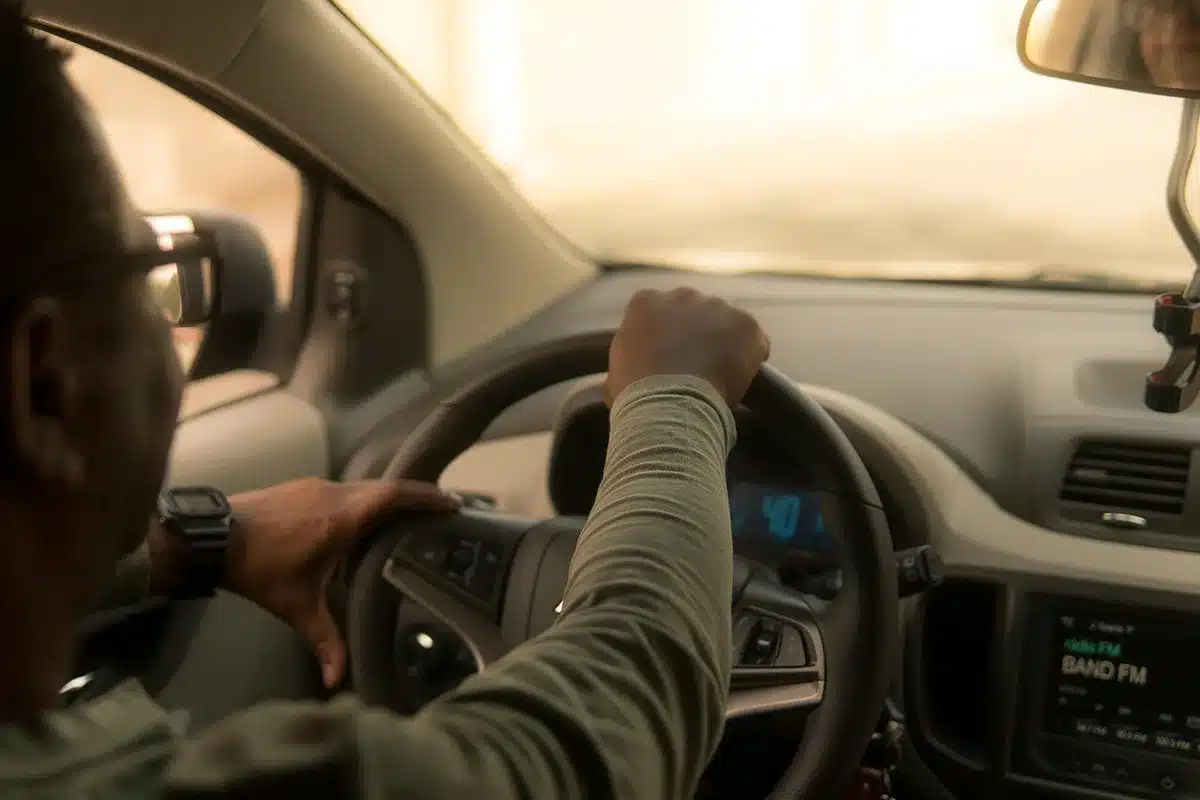
The traction is the biggest surprise. With 345 Nm fed to the front axle on slippery roads, you’d normally expect understeer and wheelspin. Here, on corner exit you can get back on the power early: the car bites and accelerates out of the turn.
On the absolute wettest surfaces it can lose a bit of grip and the steering will wobble slightly. A four‑wheel‑drive setup would perform better in those conditions, but given the platform that’s not an option and I didn’t find it a dealbreaker.
Even with throttle flat and wheels turned in a damp hairpin, the car doesn’t immediately plough: the LSD sends some torque back into the steering, but the line remains composed and predictable.
That mechanical differential is the reason the GTi feels so much better than rivals that rely on electronic traction control. Many colleagues who drove the car on the same roads made the same point: the Torsen differential changes the character of the drive.
In Sport mode the ESC allows more leeway before intervening. I watched the stability light blink a few times on soaked sections but never experienced a harsh power cut. That contrasts with my non‑Performance Model 3, whose traction control is conservative and chops power early. The e-208 GTi offers a safer margin yet more excitement and involvement.
A caveat: the ESC cannot be fully switched off, which some track enthusiasts will lament.
The car’s compact dimensions are another joy: at 4.10 m long, with a short 2.56 m wheelbase and a 10.3 m turning circle, it’s agile and easy to position on tight roads — and a breeze to maneuver in town. My everyday car, a similarly powered Model 3, feels heavier and longer by comparison, so the Peugeot’s nimbleness is immediately apparent.
Comfort isn’t the primary reason to buy a GTi. The suspension is firm and that trade‑off comes through in everyday driving. Nevertheless, it’s not punishing: at low speeds the ride is firm, but when you raise the pace the chassis soaks up bigger bumps and joints well. On the rough Scottish lanes the body remained composed even over harsher compressions.
For purists, Peugeot offers a Sport setting that can disable regenerative braking and rely solely on mechanical friction braking. In electric cars the brake pedal controls two systems: motor regeneration first, then the friction brakes as pressure increases. Switching off regen removes the transition and restores the feel of a conventional brake pedal — a tidy solution for drivers who want a familiar pedal feel during high‑speed driving.
I personally tend to keep strong regeneration active for its pronounced “engine braking” effect when lifting off — but this is one of the better pedal feels I’ve experienced in a Stellantis EV.
The 281 hp is tangible. Overtakes are effortless and seamless thanks to the single‑gear drive from 0 to the electronic top speed. One unavoidable feature of many modern EV hot hatches is synthetic engine sound. Peugeot offers a cabin sound signature — similar to Abarth within the same group — that plays over the interior speakers and can be toggled on or off from the central screen.
My view is mixed: it’s not poorly done, but I’m not blown away — I prefer the Taycan’s aural emulation, for example. The Peugeot sound does have a practical benefit in sporty driving because it links to “rev” information and gives an audible cue without having to look at the dash. Still, I suspect most drivers will switch it off in daily use.
Peugeot e-208 GTiRange, consumption and charging: the Achilles heel
The lithium‑ion battery, sourced from CATL, has a 54 kWh gross capacity and 51 kWh usable, with enhanced cooling to support sustained performance. Peugeot states:
- 352 km WLTP with the standard Michelin Pilot Sport 4S tyres, corresponding to a consumption of 17.1 kWh/100 km
- 375 km WLTP with optional Hankook Ventus S1 Evo3 tyres (no extra charge), corresponding to 15.9 kWh/100 km
That’s about 20 km gained simply by choosing lower rolling‑resistance rubber — so you must pick between grip and theoretical range. And remember this is a GTi: spirited driving uses energy.
At a dynamic pace, under temperatures of around 10–14 °C as on my Scottish drive, expect consumption north of 20 kWh/100 km — translating to around 240 km of real‑world range rather than the WLTP figures, which assume mixed driving. If you really push it, consumption can climb above 35 kWh/100 km and range can drop to roughly 150 km. On the track, Peugeot claims the GTi can complete more than one lap of the Nürburgring without power fade, but for a full day at the circuit you’ll need to manage session lengths.
Charging conforms to current Stellantis norms: up to 100 kW DC, taking the battery from 20 to 80% in about 27 minutes. I estimate 10 to 80% would take slightly over 30 minutes. Not class‑leading, but adequate for a city performance car.
AC charging uses an 11 kW onboard charger that replenishes 20 to 80% in about 3 hours 10 minutes. The system is bidirectional and prepared for V2L use up to 3.5 kW, although the adapter is an optional accessory priced at €349.
For longer trips Peugeot bundles a route planner with charging stop integration. I ran a test route from Glasgow to London and the navigation suggested four stops of 15–23 minutes. The Trip Planner is included free for four years, after which it will cost €9.99/month or €99/year — don’t forget to factor that into ownership costs.
For context, my 2020 Tesla Model 3 lists roughly 400 km WLTP and charges 10–80% in about 25 minutes. The 208 GTi sits a notch below Tesla on raw range and charging speed, but it is far from incompetent. Owners of the first‑generation e‑208 already manage long journeys; the integrated planner simply makes the process more convenient.
Peugeot e-208 GTiPrice: a single, well‑equipped trim
Now the awkward part: pricing. The e-208 GTi starts at €42,900, which is a significant entry price for a small car. There is a CEE incentive (the scheme that replaced the ecological bonus) of at least €3,600 applicable, and Peugeot applies a manufacturer discount of €1,850, bringing the effective price to around €37,450.
Ordering opened in June 2026 during the 24 Hours of Le Mans, and first deliveries are expected before year‑end — so you won’t face a long wait.
There’s only one trim level and it’s generously equipped: adaptive cruise with Stop & Go and lane‑keeping, 360° cameras, heated front seats, wireless phone charging, wireless Apple CarPlay and Android Auto, connected navigation included for four years, and hands‑free access.
Options are limited: paint (from €900, or €1,100 for the Elixir red), the Hankook tyres (at no extra charge), and a panoramic glass roof for €650 — which I recommend because the cabin can feel a bit cramped and extra light helps.
Peugeot e-208 GTiUp against the rivals
Alpine A290. The closest French rival, based on the Renault 5 EV with a retuned chassis, starts at €39,300 before incentives with a 180 hp base output. It’s a close fight on price. Peugeot’s GTi offers 61 hp more than the most potent A290 (220 hp in its top configuration) and, importantly, Alpine doesn’t provide a mechanical limited‑slip differential.
The Alpine has its own appeal and a passionate following, and the little “OV” button on the steering wheel has charm. In packaging, the 208 is roomier: the R5/A290’s rear seats are notably tight; the 208 does a little better in that respect, even if trunk space is similar.
Stellantis siblings. Remember the platform sharing: the e-208 GTi shares its 281 hp motor, battery and Torsen differential with the Opel Corsa GSe and the Lancia Ypsilon HF, and is platform‑related to the Abarth 600e and Alfa Romeo Junior Veloce. The e-208 GTi differentiates itself with steering assistance tuned for the small wheel and unique rear suspension settings.
The Corsa GSe is markedly cheaper — about €39,990 before incentives, roughly €32,100 after the CEE bonus and discount — while offering comparable equipment. With identical power the Peugeot charges a premium for its badge and chassis tuning. Fellow journalists at the drive noted that of the three Stellantis variants they’d sampled, the e-208 GTi felt the most engaging and rewarding to drive.
Volkswagen ID. Polo GTI. VW also resurrected GTI for an EV in 2026, moving away from GTX. The ID. Polo GTI is a direct rival in size and aims for similar buyers: 226 hp, 290 Nm, a 52 kWh battery, 424 km WLTP and 0–100 km/h in 6.8 s. It offers more range but less power and lacks a mechanical LSD. Preorders start in October 2026 with deliveries early 2027, and VW’s initial pricing in Germany is expected just under €39,000. Rumours suggest a Clubsport variant with 286 hp to target the e-208 GTi’s 0–100 number.
Volkswagen ID.3 GTI. On the other end of VW’s lineup, the ID.3 GTI plays a different game: bigger and more powerful with 326 hp and 545 Nm, a 79 kWh battery for up to 601 km WLTP and 183 kW charging. On paper it outguns most competition and VW bills it as the most powerful series GTI in its history. It’s rear‑mounted (rear‑wheel drive) and may be more playful, though its torque vectoring is electronic rather than mechanical. On highways, the ID.3 GTI clearly holds an advantage. But on narrow, twisty B‑roads on a Sunday morning, Peugeot’s targeted GTi package still makes a compelling case.
Similar Posts
- I Test Drove the New Audi RS 5: Feared the Hybrid, Yet Its Electric Engine Triumphs!
- Tested: Peugeot 3008 Dual Motor Electric – Unveiling the French SUV’s 4×4 Version!
- I Tested the Geely E5: China’s Electric Car Giant Hits the French Market
- I Tested the MGS6 EV: Here’s Why It Falls Short on Long Journeys Compared to Tesla Model Y
- We Tested the Peugeot e-5008 Dual Motor: Powerful, But Poor Battery Choice

Maya Singh is a senior editor covering tablets and hybrid devices. Her work explores how these tools reshape digital productivity and learning. She also contributes to feature editorials on emerging tech.