
Scientists confirm: This is the most effective way to get your cat’s attention, according to new research
Elderly Couple Refuses Reserved Seats—Viral Train Standoff Sparks Fiery Debate on Courtesy
Xpeng entered the French market at the end of 2024 with the first generation of its G6 and G9 SUVs. Following a model similar to Tesla, the Chinese manufacturer updates its vehicles through iterations. In July 2025, Xpeng announced new versions of the G6 and G9, with the first deliveries expected in September and November 2025, respectively.
Having previously tested the G9 Performance 2024, and then again, I recently had the opportunity to drive the 2025 model on a long journey, which promised some welcome improvements “under the hood”.
This was a chance to test the newly enhanced rapid charging, among the fastest on the market, the updated semi-autonomous driving capabilities, and to rigorously check whether Xpeng had addressed the issues we had noted in the first version, particularly regarding the infotainment system.
Technical Specifications
| Model | Xpeng G9 (2025) |
|---|---|
| Dimensions | 4.89 m x 1.68 m x 1.94 m |
| Power (Horsepower) | 350 horsepower |
| 0 to 100km/h | 6.4 seconds |
| Level of autonomy | Semi-autonomous driving (level 2) |
| Maximum speed | 200 km/h |
| Main screen size | 14.96 inches |
| Car-side plug | Type 2 Combo (CCS) |
| Starting price | 59,990 euros |
|
Try it out |
Product sheet |
Exterior
At first glance, the Xpeng G9 2025 looks nearly identical to the 2024 model. There are new wheel designs (20 inches) for the RWD Standard Range and RWD Long Range versions, and a new Black Edition for the AWD Performance version. But externally, our gray G9 Performance 2025 is indistinguishable from the G9 Performance 2024 we tested in December 2024.
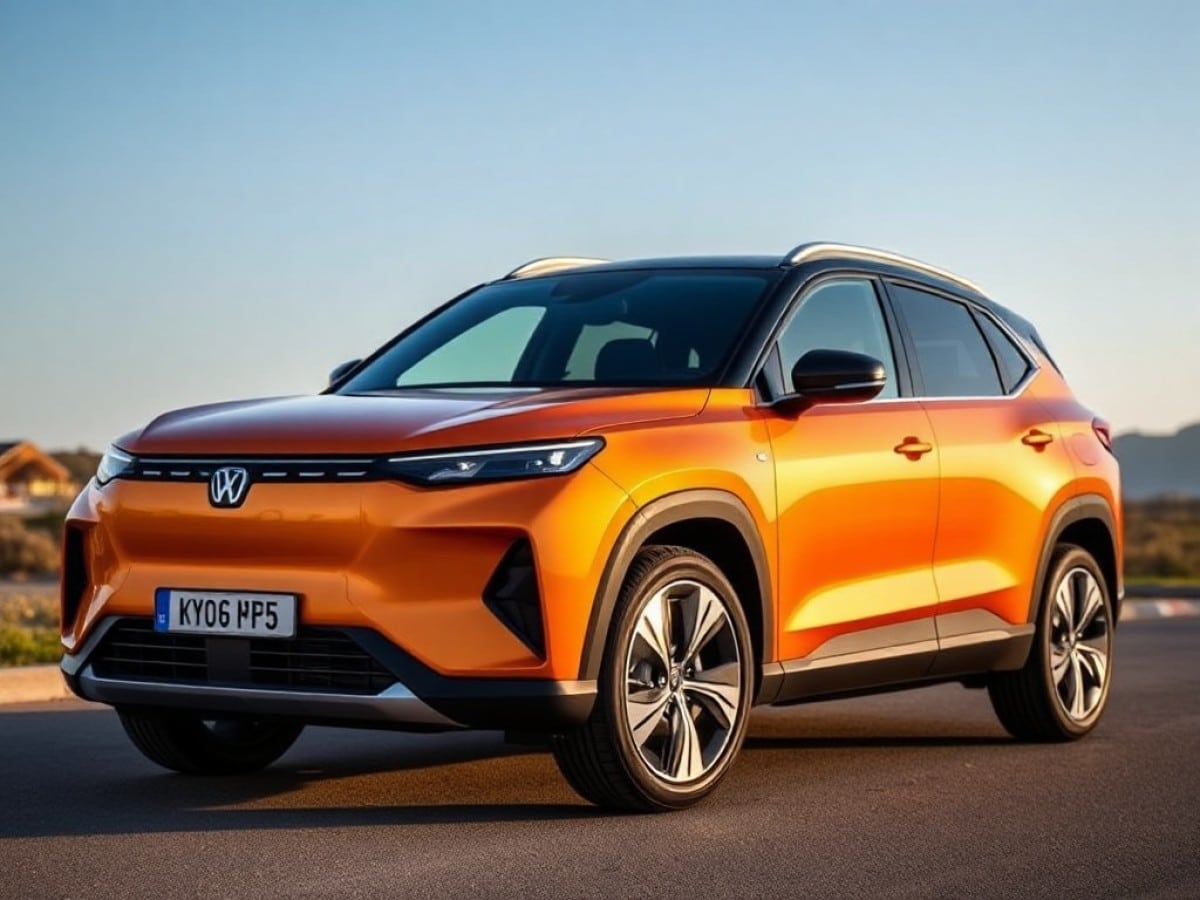
The Xpeng G9 2025 retains a robust appearance, especially from the front, with its distinctive “Robot Face”. Unlike other similarly sized SUVs, like the Peugeot e-5008, which try to mask their bulk with stylistic flourishes (contrasting lower body panels, sculpted bodywork…), the G9 stands out with its long hood and simple lines, reminiscent in some ways of the Range Rover Velar.
The vehicle measures 4.9 m long, 1.94 m wide, and 1.67 m tall, with a weight, depending on the model, of 2235 to 2395 kg.
Interior
The interior also features subtle changes. The G9 2025 introduces new premium massaging seats (optional), a new steering wheel, new levers, new window controls, and a redesigned central console.
The new steering wheel features a simpler design (perhaps too simple?) while retaining actual buttons on either side of its two dials. The central console replaces the fragile glossy black with a covering of (genuine) Nappa leather.
However, it’s still unclear where to place a mount for a smartphone or a Coyote device. Admittedly, the infotainment system largely eliminates the need for a smartphone, and you can individually disable the wireless charging for both supports if you want to manage your battery’s health, which is a clever feature.
Unfortunately, this is where problems start (again). For instance, the design of the new levers means you might accidentally activate the turn signal when trying to initiate the windshield washers. Additionally, the turn signals do not automatically deactivate after changing lanes or taking an exit ramp.
The innovative design of the window controls now features only one stage, instead of the two we’ve been used to for the past 30 or 40 years: a single press triggers full opening or closing. To partially open a window, you must either interrupt a full open/close cycle or press and hold the button. It might seem trivial, but it’s an answer to a question nobody asked, and it’s simply a regression.
Moreover, it took me several days to figure out why I was uncomfortable in the driver’s seat: a bug. The controls along the seat did not completely retract the lumbar support. It was only through the touchscreen that I was able to adjust it. This touchscreen also provides access to a seat depth adjustment not available from the physical controls. Ideally, the screen should suggest accessing the appropriate menu if the manual control is missing.
This is all the more regrettable because, once properly adjusted, the seats are extremely comfortable. The various massage settings, while not as pleasant as those in a German limousine, do offer significant relief for the lower back, and the system can store up to 6 settings per driver profile, which is thoughtful for slightly different settings in city, highway, or dynamic driving, etc.
The rear seats are also massaging, heated, and ventilated, and their length is adjustable. There’s plenty of room inside, both in the front and back seats, as befits a vehicle of this size. However, there are neither screens in the back nor a 7-seater configuration. The front trunk offers a volume of 71 L and the rear trunk a volume of 660 to 1576 L.
Driving
The G9 2025 is primarily a technical evolution of the G9 2024. The main new features are “under the hood”. Starting with the motor, which increases from 550 to 575 hp in the AWD Performance version, resulting in quite impressive standing starts.
However, the “luxury” SUV is still much more comfort-oriented than sporty. The horsepower is buried deep in the accelerator pedal, even in Sport mode, and the torque management appears conservative (power is limited to prevent any skidding).
While you can stiffen and lower the suspensions to reduce body roll, the G9 still doesn’t corner flat like other cars equipped with active suspensions.
You still have 4 levels of regeneration accessible via the screen (but not via steering wheel paddles), including a strange Xpedal setting, which is almost, but not quite, one-pedal driving: it decelerates to 2 km/h, but you need to use the brake pedal to come to a complete stop, and the car creeps at 3-4 km/h when released. There’s no automatic regeneration (which only decelerates when necessary), as offered by other manufacturers.
Autonomous Driving
Another novelty of the G9 2025 is the evolution of its semi-autonomous driving system Xpilot Assist 2.5, although, unlike the model sold in China which has switched to in-house chips, it relies on the same array of 5 radars, 12 cameras, 12 ultrasonic sensors, and the same Nvidia Orin-X chip.
Good news: I did not encounter some of the issues we had with the G9 2024. Notably, over 1000 km driven on various types of roads, I experienced no unexpected braking or deactivations.
But bad news: I encountered other issues, and worse, I encountered issues that should have been corrected.
Like Tesla’s, Xpeng’s semi-autonomous driving is authoritative. For example, Xpilot Assist knows how to change lanes when you activate the turn signal, but if you turn the steering wheel to perform the maneuver yourself, the system triggers, despite the activated turn signal, an alert and anti-crossing maneuver.
The same happens when you shift in your lane to give way to a two-wheeler or an emergency vehicle; sometimes you have to counter the anti-crossing system. I prefer collaborative systems, which allow the driver to temporarily override the lane centering.
It’s a shame, because otherwise the lane centering is now effective. By taking too much inspiration from Tesla, Xpeng has also inherited its flaws!
The cruise control is quite smooth in dense traffic, but it still occasionally starts and brakes too harshly in stop-and-go traffic… just like Tesla’s! Unlike Tesla’s, however, it does not allow for automatic compensation for the significant difference between the speedometer reading and actual speed (135 km/h on the speedometer for 130 km/h actual). It also doesn’t automatically change speed, but that’s better, as it doesn’t account well for road signs, often detecting incorrect speed limits that apply to other vehicle categories or lanes.
Finally, the attention alert is excessively sensitive, even at the least sensitive setting. You don’t have time to read some (admittedly sometimes overly long) alert messages before it activates. This is counterproductive because you can disable it!
There’s no hands-free semi-autonomous driving like Ford’s BlueCruise on the Mustang Mach-E, but the steering wheel is capacitive: you just need to rest your hands on it for them to be detected.
These flaws are all the more frustrating because the automatic parking is the best I’ve ever tested. Indeed, the Xpilot Assist detects all kinds of parking spots — parallel, perpendicular, or diagonal, defined by other vehicles, lines, curbs, those passed by already, but also those a bit further away — and it maneuvers quickly and well, even in very tight spots with obstacles (poles, etc.) at the front of the vehicle.
This is from the inside, where it clearly displays the ongoing maneuvers, but also from the outside, via the car key or the app. It must be said that the 360-degree view is of very high quality. An automatic parking system so effective that even parking experts might use it.
Battery Range and Charging
The third and last major novelty of the G9 2025 is its batteries.
The Extended Range and Performance versions, which were equipped with an NMC battery in 2024, now feature an LFP battery, as was already the case for the Standard Range version. Although less dense (less kWh per kg and per cm³), this chemistry is more durable.
The battery capacity of the Long Range and Performance versions thus decreases from 98 to 93.1 kWh gross, but the Xpeng G9 Performance is even heavier, as its weight increases from 2340 kg in 2024 to 2395 kg in 2025 (+55 kg).
However, its two new, more efficient motors more than compensate for the weight gain: the combined WLTP consumption decreases from 21.3 to 20.1 kWh/100 km, and the WLTP range increases from 520 to 540 km.
In practice, we noted consumptions consistent with the certification: during a round trip from Paris to Nantes with ±15°C, we repeatedly recorded 25.0 kWh/100 km at 130 km/h actual, against 25.4 kWh/100 km in WLTP highway summer certification. That’s 368 km of range on the 80 to 10% range of the 92.2 kWh net battery.
High consumption, but controlled, given the mass and poor drag coefficient (Cx) of 0.272 of the vehicle.
Durin
Similar Posts
- XPeng P7+ Review: This Chinese Electric Car Charges Twice as Fast as a Tesla Model 3!
- We Tested the Skoda Enyaq Electric with 600km Range: Here’s Why It Beats a Volkswagen
- Discover the Tesla Model Y Performance: Why It’s the Top Electric Car Right Now
- I Tested the Geely E5: China’s Electric Car Giant Hits the French Market
- Driving the Xpeng P7+: Experience Tesla Model S Luxury at a Model 3 Price

Maya Singh is a senior editor covering tablets and hybrid devices. Her work explores how these tools reshape digital productivity and learning. She also contributes to feature editorials on emerging tech.