
Scientists confirm: This is the most effective way to get your cat’s attention, according to new research
Elderly Couple Refuses Reserved Seats—Viral Train Standoff Sparks Fiery Debate on Courtesy
Marshall is primarily known for its guitar amplifiers. The British brand has been equipping stages for decades and continues to produce sound amplification systems for guitarists. Expanding from this core business, the company has developed consumer audio products, including headphones, earphones, leisure Bluetooth speakers, and recently, party speakers.
In the speaker domain, Marshall excels. Its portable Bluetooth models are of high quality. The party speakers go a step further. Over the past year, the brand has introduced outstanding models in this category. The Bromley 750 debuted the series, followed by the Bromley 450. These party speakers compete directly with JBL and Sony, offering a rich and balanced sound signature that has proven to be a real success.
The performance of Marshall’s headphones and earphones, however, is more mixed. In recent years, Marshall’s products in this area have been less than perfect. The sound quality does not match that of their own speakers. The Milton ANC follows this trend: it lacks the balance found in the party speakers.
A note on positioning, as it’s significant. The Milton ANC replaces the discontinued Mid ANC and slots between the Major V and the Monitor III ANC. It is the first on-ear noise-cancelling headphone from the brand in eight years. Let’s dive in.
Marshall Milton ANCTechnical Specifications
Why You Should Never Reheat These Foods in the Microwave – The Hidden Dangers Experts Warn About
I tried the top 5 guard dogs—here’s what makes these breeds the ultimate protectors
| Model | Marshall Milton ANC |
|---|---|
| Type | On-ear headphone |
| Active noise cancellation | Yes |
| Driver diameter | 32 mm |
| Battery life with ANC active | 50 hours |
| Headphone weight | 231 g |
| Product details |
This review was conducted with a headphone loaned by Marshall.
Marshall Milton ANCDesign: The Main Attraction of the Milton ANC
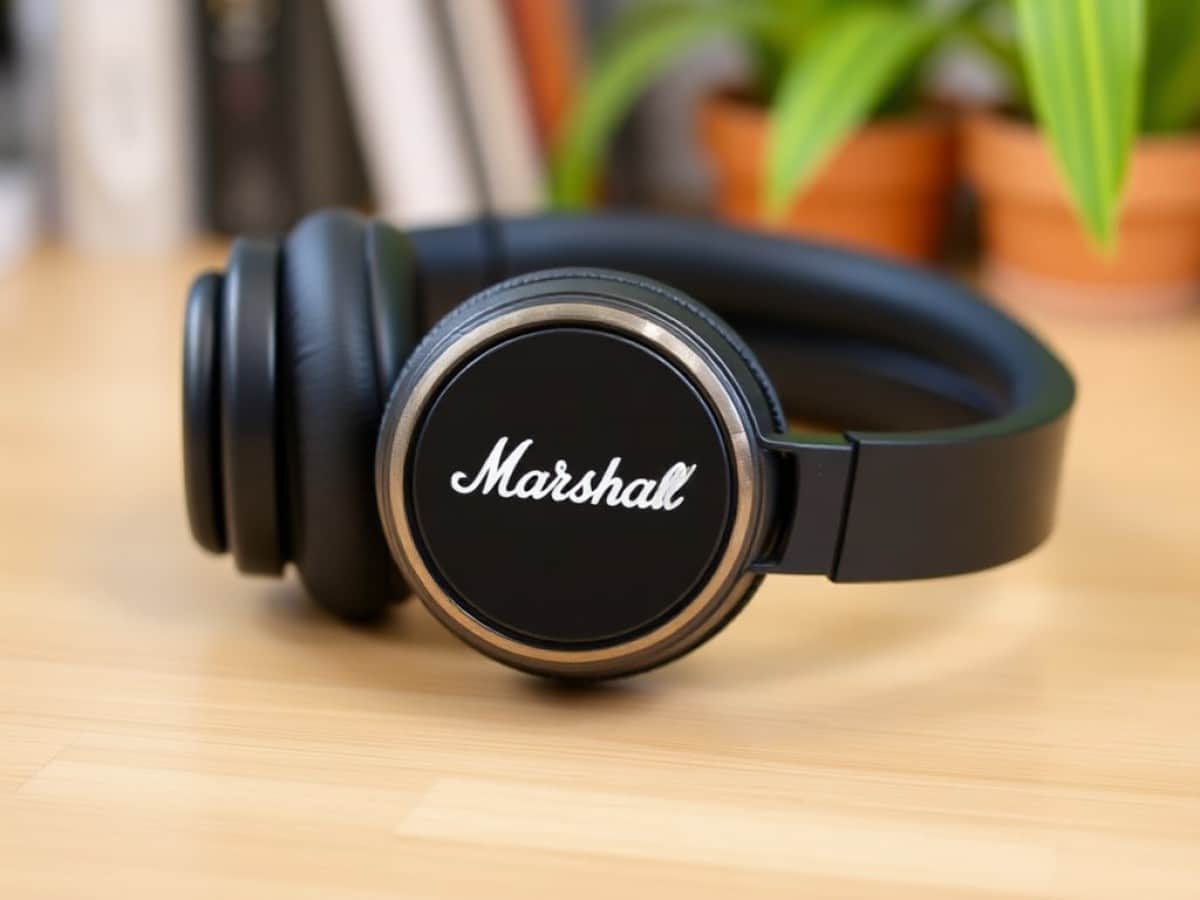
The design of the Milton ANC is its main selling point. It is sleek, compact, charming, and well-crafted. When folded, it hardly takes up any space. The structure is flexible, allowing for robust handling without fear of damage.
The aesthetic is distinctly retro, with visible modulation cables connecting the two ear cups over the headband. Nowadays, almost no manufacturers leave these wires exposed. Marshall embraces this nod to the 80s and 90s when hiding cables wasn’t common. The choice is purely aesthetic here.
There’s a slight risk of snagging it with a sudden move, but with a bit of care, this isn’t a problem. The cable appears durable and securely attached.
The materials exude quality. The synthetic leather is extremely comfortable. It feels premium to the touch and slightly grips the fingers. The overall design is very successful. A brass-colored Marshall logo adds the finishing touch. A small button with the same finish completes the look.
The Milton ANC is an on-ear rather than over-ear headphone. Here, the ear pads rest on the ears, they do not encircle them. The downside with this type of headphone is sometimes the pressure it puts on the ears. Here, however, it is very moderate and the memory foam is soft. Still, the headphones do not move. You can shake your head without them slipping. The comfort is excellent.
The connectivity is limited to a USB-C port for charging and wired listening. A 3.5 mm to USB-C cable is included, for connecting to the audio output of a player or computer. The headphone must be powered on for the analog input to work. Listening from USB-C to USB-C is possible, with sound transmitted losslessly.
Marshall Milton ANCApplication: A Few Surprises
The headphones feature two physical buttons. The brass-colored M button is located on the right ear cup. It’s the famous Marshall multidirectional joystick. You can tilt it horizontally or vertically. You can press it briefly or hold it down. This single small button manages volume, track changes, play, pause, call handling, power, and Bluetooth pairing. It’s very well thought out.
A second button on the other ear cup can be assigned a function of choice in the Marshall app. It toggles noise cancellation, opens the equalizer, activates the Soundstage spatialization (more on that later), or summons the voice assistant.
In terms of Bluetooth, the Milton ANC is up-to-date, featuring a 6.0 standard chip that handles multipoint connections (connecting to multiple sources) LE Audio and the Auracast standard. As for codecs, it supports SBC, AAC, LC3, and LDAC.
Let’s be honest, the argument for LDAC and its minimal compression remains theoretical. The differences between Bluetooth codecs are already slight in absolute terms, and a very high-end headphone is needed to perceive a difference. Here, I do not hear a clear difference between LDAC and the basic SBC used by most smartphones. I notice more between my iPhone and my Poco smartphone. Thus, it’s better to use a premium smartphone with basic Bluetooth transmission (iPhone, Galaxy S…) rather than a lower-end phone supporting LDAC.
A Sparse Equalizer but Some Interesting Features
The Marshall Bluetooth app gives access to adjust the noise cancellation level. This is good news as many manufacturers enforce an automatic (adaptive) mode, not always very responsive to changes in the intensity of surrounding noise. This adaptive mode exists here, but you can override it and set the ANC to high mode.
The app also offers an equalizer. Three presets are available. You can then manipulate the equalization keys. The range remains limited. There are only five bands, which do not affect the very high or very low frequencies. This is insufficient, given that the sound of the Milton ANC needs correction.
Marshall Milton ANCNoise Reduction: Honest, but Not Exceptional
The noise reduction is the big new feature of this Marshall Milton ANC. It’s even the brand’s first adaptive noise cancellation on an on-ear headphone. To achieve this, the Milton ANC relies on six microphones, split between isolation and call handling. Several of these microphones analyze the sound environment in real time and adjust the attenuation level automatically.
In practice, it’s mainly the low-frequency noises that are eliminated, while higher-pitched sounds are only minimally treated by the electronics. They reach the ears attenuated, but perhaps not to the extent one might expect from a 200-euro headphone.
The transparency mode does its job well, even though it retains a slight coloration. You still feel like you’re wearing headphones, with sound passing through the microphones. However, this does not prevent you from following a conversation or staying aware of your surroundings.
Marshall Milton ANCAudio: A Mixed Bag
Now to the listening experience. And here, I must be honest, it’s disappointing. As is often the case with Marshall headphones, the frequency response curve is off, with an excessive emphasis on the midrange.
The curve of the Milton ANC is very uneven. The first issue lies in the upper midrange. There’s a significant presence boost around 2,000 Hz. This is exactly where it shouldn’t be. 2,000 Hz corresponds to the resonance frequency of the auditory canal and when the sound is too loud (and imprecise) in this area, the ear feels it immediately. The output becomes aggressive and unbalanced. Moreover, this boost brings a lot of coloration and masks the highs. The detail in the upper spectrum disappears behind it.
You can use the equalizer to dip the key at 2.5 kHz to its maximum to temper the effect. But even then, the sound remains colored. It’s puzzling why this choice was made, as a response curve can nowadays be modeled easily with onboard electronics.
The bass lacks depth. The volume around 60 and 70 Hz isn’t robust enough. It lacks foundation and impact. On tracks designed for bass, you’re left wanting more (rap, techno). The bass isn’t absent, but it’s lacking. It’s a shame the headphones division at Marshall doesn’t take inspiration from the manufacturer’s party speakers, which have a superb response curve. Here, the magic just doesn’t happen.
There’s also a dip around 300 to 400 Hz, which pushes vocals back.
As for the soundstage, the review is mixed. By default, the stage lacks volume, everything is compressed both in width and depth. This is due to that darned boost in the midrange that sends everything right up to your eardrums. But by playing with the equalizer (completely lowering the key at 2.5 kHz, raising the highest one) and activating the Soundstage mode, you can achieve a much more convincing reproduction. The Soundstage mode simulates the diffusion of sound by speakers in a small, medium, or large room, with fine adjustment of the intensity level of the effect. A bit of reverb is introduced, and it’s quite pleasant. By tweaking the settings, you can make the headphones much more listenable.
Wired listening with a USB-C cable slightly improves things, with a more solid dynamic (normal, as the sound is then transmitted without Bluetooth compression) and a more expansive spatialization.
Listening Impressions
Massive Attack, « Angel ». The track slowly builds tension. The impact of the drums in the opening is powerful but lacks weight. You should feel oppressed, but you don’t, though the bass line is tense and clear. The headphones handle the dynamics well.
Muse, « Hysteria ». Ideal terrain for an amp brand. The saturated bass has bite, the guitars have attack but quickly fatigue the ear. It’s a challenging track for that.
Diana Krall, « The Look of Love ». The timbre of the voice recedes slightly. The double bass remains soft and present. However, the overall sound could use a bit more warmth.
Daft Punk, « Giorgio by Moroder ». The headphones love this kind of track. The synthesizer layers stand out well, the rhythm is engaging, the energy is there. The upper midrange sometimes pushes the higher layers too much.
Nils Frahm, « Says ». The piano and electronic textures require finesse. Detail is perceivable. However, the stage remains tight, the highs lack air. It’s pretty, but not airy.
Marshall Milton ANCPhone Calls: Adequate
The call quality is adequate. Noise around the voice is partly suppressed. There are some pumping effects on the listener’s voice. Despite this, you can make your calls without having to raise your voice. The person on the other end hears you well, and for everyday use, it’s sufficient.
Marshall Milton ANCBattery Life: Over 50 Hours
Battery life is a strong point. Marshall claims up to 50 hours with ANC and up to 80 hours without. These figures are generally accurate. Specifically, with the volume at 50% and ANC active, I measured 53 hours. In short, the headphones hold up well over several days.
The battery is replaceable, according to Marshall, which is rare and commendable. A full recharge takes 3 hours, with a quick charge mode that allows for several hours of use in just 15 minutes.
Marshall Milton ANCPrice and Competition
The Milton ANC is priced at 199 euros. At this price point, the competition is scarce.
The most direct competitor is the JBL Live 670NC, now offered at 99 euros. It is also an on-ear headphone with adaptive ANC, capable of up to 65 hours of battery life. Its finish feels more plastic and less premium, but its acoustic qualities are superior.
Marshall Milton ANC
at the best price
-
Son-Vidéo.com
199 € -
Boulanger
199,99 € -
Cdiscount
199,99 €
See the offer
-
Fnac
199,99 €- Marshall Bromley 750 Review: Meet the New Queen of Party Nights!
- Huge Deal Alert: AirPods Max Drop to €497 from €579! Grab Yours Now!
- Sennheiser Momentum 5 Review: Brand’s Best Portable Headset Yet, By Far!
- AirPods Pro 3 Users Report Annoying Noise: Find Out What’s Causing the Buzz!
- Breaking: Sony’s Newest Noise-Cancelling Headphones: Better Than Ever & Coming Soon!

Maya Singh is a senior editor covering tablets and hybrid devices. Her work explores how these tools reshape digital productivity and learning. She also contributes to feature editorials on emerging tech.
Categories
Latest Articles