
Scientists confirm: This is the most effective way to get your cat’s attention, according to new research
Elderly Couple Refuses Reserved Seats—Viral Train Standoff Sparks Fiery Debate on Courtesy
I have a soft spot for small gadgets that extend the lifespan of an old TV. Instead of replacing a perfectly functioning screen just because its interface is sluggish, you can simply plug in an HDMI stick, giving the device a new lease on life.
This is exactly what the second-generation Xiaomi TV Stick 4K, available for €69.99 on the official website and often cheaper if you look around at retailers, promises. The first version released in 2021 already partially delivered on this promise. However, since then, Google TV has taken over from Android TV, Wi-Fi 6 has become more widespread, and competitors have significantly upped their game.
Five years after the first model, Xiaomi is back with a stick that has the same form factor but features a completely revamped platform. With a new processor, Wi-Fi 6, Bluetooth 5.2, Google TV replacing Android TV 11, and enriched audio codecs, the technical leap forward is substantial on paper. What remains to be seen is how it performs in daily use, hooked up to an old TV that has never experienced HDR.
Xiaomi TV Stick 4K (2nd Generation)Specifications
| Features | Xiaomi TV Stick 4K (2nd Gen.) |
|---|---|
| System | Google TV (Android 14) |
| Processor | Quad-core Cortex-A55 |
| GPU | ARM Mali-G310 V2 |
| RAM | 2 GB |
| Storage | 8 GB (≈ 4.4 GB available) |
| Maximum Resolution | 4K UHD at 60 Hz |
| HDR | HDR10+, Dolby Vision, HLG |
| Audio | Dolby Atmos, DTS:X, DTS-HD |
| Wireless Connectivity | Wi-Fi 6 (2.4 / 5 GHz), Bluetooth 5.2 |
| Ports | HDMI 2.1, micro-USB (power) |
| Dimensions | 107.4 × 30 × 14 mm |
| Weight | 44 g |
| Contents | Stick, remote control, power adapter, micro-USB cable, HDMI extension, manual |
| Official Price | €69.99 |
Xiaomi TV Stick 4K (2nd Generation)General Overview
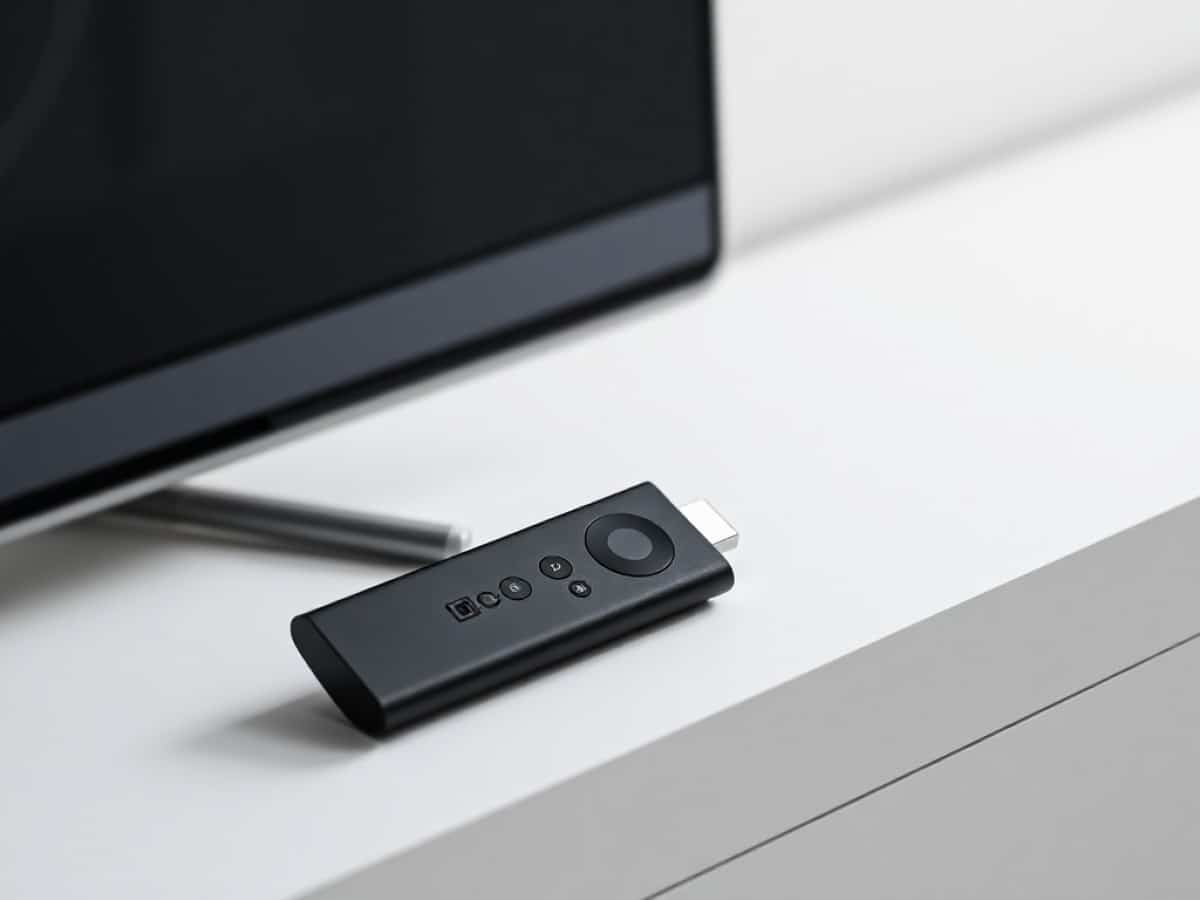
Unboxing the stick presents no surprises: its form factor is strictly identical to the first generation. Same 10.7 cm length, same thickness, same matte black finish.
Xiaomi hasn’t attempted to reinvent a device whose function is, by definition, to be hidden behind the screen. The brand still includes an HDMI extension in the box, which remains essential for TVs where ports are tightly spaced or oriented towards the wall.
Why You Should Never Reheat These Foods in the Microwave – The Hidden Dangers Experts Warn About
I tried the top 5 guard dogs—here’s what makes these breeds the ultimate protectors
The remote control, however, has been slightly revised. It retains the button dedicated to Google Assistant and shortcuts to partner services (Netflix, Prime Video, YouTube), but the feel is slightly more premium than the first generation. An annoying detail noted during testing: the “TV” button on the edge triggers a bit too easily when grabbing the remote, which ends up interrupting playback unintentionally. It’s not a deal-breaker, but the ergonomics could have been refined.
The power supply still uses micro-USB. In 2026, this is frankly dated. Xiaomi probably continues to draw from its stock of connectors and adapters, but on a new product priced at €70, the lack of USB-C leaves a taste of misplaced economizing. Good news, however: if your TV has a USB port capable of providing enough power, you can do away with the provided power adapter and run everything through a single cable.
At the back of the stick, there’s the male HDMI 2.1 port that plugs directly into the TV, and the power port. No Ethernet port, no microSD slot. Given the price segment and form factor, this was obviously not an option. Wi-Fi 6 will have to suffice, and it does so amply in practice.
Setup takes just a few minutes. Plug it in, pair the remote via Bluetooth, connect to your Google account, and the device offers to import apps already installed on other Android devices under the same account. It’s quick, clean, and for someone who has never left the Google ecosystem, it’s up and running in no time.
Xiaomi TV Stick 4K (2nd Generation)Performance
The first thing that’s noticeable when navigating the interface is the smoothness. Really. With the first generation, you could sense micro-lags as soon as you scrolled through the thumbnails of the recommendations.
Here, the interface responds instantly. Transitions are sharp, animations are clean, and you finally get the user comfort you expect from a Google TV product in 2026. Xiaomi has replaced the old Cortex-A35 from the first generation with a quad-core Cortex-A55, accompanied by an ARM Mali-G310 V2 GPU.
The brand claims a CPU about 80% faster and a GPU up to 150% more powerful than the 2021 version, difficult to verify without a dedicated benchmark tool, but in real use, the difference is clearly noticeable.
Google TV thus replaces the old Android TV, and it’s a genuine change in philosophy rather than just a cosmetic update. The home screen now aggregates content from all installed services in the form of recommendations. No longer do you need to enter each app to see what it offers: Netflix, Prime Video, Disney+, and others bring their catalogs directly to the main page. It’s effective, sometimes overwhelming, and of course, designed to steer your gaze towards content that publishers aim to promote.
Wi-Fi 6 makes its presence felt in the first few seconds of use. On my box, placed about three meters from the router, the stick immediately negotiates a stable and sustained connection. The difference with the first generation in Wi-Fi 5 is not spectacular in ideal conditions, but it shows during peak throughput, for example, when launching a 4K HDR stream, or when multiple devices are simultaneously pulling on the home network. I streamed several 4K HDR videos on YouTube to stress the hardware decoder: the stick handles it, without image skips, without untimely buffering, without noticeable heating of the case. HDR10+ and Dolby Vision are well managed, and the HDMI 2.1 output correctly negotiates color spaces with compatible TVs.
Bluetooth 5.2 supports pairing of controllers, headphones, and keyboards without a hitch. I tested a Sonos Ace headset and an Xbox Series controller: both connected in seconds, with no noticeable audio latency on the headset side.
For home cinema setups, the Dolby Atmos and DTS:X passthrough work as expected towards a soundbar or AV amp. The menu offers an automatic mode that detects the capabilities of the connected downstream device, and a manual mode to force a specific format.
There are two points of attention that remind you this is an entry-level product. First, storage space: of the 8 GB announced, about 4.4 GB are actually available for user applications. It’s not much, and if you plan to install many apps, especially resource-heavy games or browsers, you’ll quickly run out of space.
Then there’s the RAM, capped at 2 GB: enough to run one application at a time without issue, but you can feel that the device doesn’t like too much aggressive switching between several heavy services. Switching back from Netflix to YouTube after a long session sometimes causes a complete reload rather than a simple resume.
Xiaomi TV Stick 4K (2nd Generation)Software and Ecosystem
Google TV here runs on Android 14, with a security patch dated June 2025 on the received sample. It’s not the latest version available from Google, but it’s significantly more up-to-date than the first generation, which was capped at Android TV 11 and will likely never see another major update.
Xiaomi’s software layer remains very light: you’ll mainly find Mi Home and the free Xiaomi TV Plus service, which offers a selection of live channels whose relevance varies greatly depending on the region.
On the codec front, the lineup is complete for modern use: AV1, VP9, H.265, H.264, MPEG-4, MPEG-2, not to mention the old formats in case you want to dig out your stone-age file library. On the audio side, Dolby Atmos, DTS:X, and DTS-HD are supported, which covers most home cinema uses.
For those running Plex, Jellyfin, or Kodi on a NAS, the stick handles local streams without flinching, provided the network can keep up. Personally, I streamed several 4K MKV files from my Ugreen NASync on the local network, and the rendering was flawless.
The Play Store is fully accessible, which opens the door to a plethora of apps: browsers (Chrome, Firefox), file managers, and even emulators for retro gaming enthusiasts.
Connect a controller via Bluetooth, install RetroArch or a dedicated emulator, and the stick becomes a small console capable of running classics from the PlayStation 1, Megadrive, or SNES without a hitch.
Beyond that, you quickly hit the limits of the processor and RAM: forget about full-screen 4K Dreamcast or PSP games, that’s not what this device is for.
A few native Android games like Thread Ball or Sky Force run well with a controller, which can be handy for kids or an impromptu game session.
Xiaomi TV Stick 4K (2nd Generation)And What About Artificial Intelligence?
This is perhaps the big omission in this version. While Amazon is pushing its generative Alexa+ on the Fire TV Stick 4K Max and Google promises an integrated Gemini in Google TV via the higher-end models, the Xiaomi TV Stick 4K settles for the classic Google Assistant, accessible via the dedicated button on the remote. It works very well for launching a voice search, opening an app, or controlling a few connected devices, but we’re far from a conversational search capable of understanding a request like “find me a ’90s thriller with a memorable soundtrack.”
Xiaomi has clearly chosen not to overload the device, and given the 2 GB of RAM available, it’s probably the wisest decision. However, for users who see AI as a selling point, they’ll need to look elsewhere or wait for a possible third generation.
Xiaomi TV Stick 4K (2nd Generation)Price
As for the price, the 2nd generation Xiaomi TV Stick 4K is listed at €69.99 on the official Xiaomi France website, positioning it at the lower end of the premium HDMI stick price range.
Xiaomi TV Stick 4K (2nd Generation)
at the best price
-
Amazon
€56.92 -
Fnac
€59.99 -
Darty
€59.99 -
Xiaomi
€69.99
It is regularly found around €50 at retailers and below €45 during promotional campaigns like AliExpress or flash sales, making it one of the most solid deals in the segment at that time.
Xiaomi TV Stick 4K (2nd Generation)Alternatives
The first option to consider is the Apple TV 4K (2022 model), still on sale for around €169 for the 64 GB version. We’re clearly moving up a category, both in terms of price and performance. Apple’s A15 Bionic chip crushes everything else on this market, the tvOS interface remains the benchmark in terms of smoothness and visual coherence, and the software ecosystem is flawless.
It’s also the only device in this comparison that comes with a well-built Siri Remote that doesn’t require battery changes, and perfect integration with HomeKit. The downside: a price more than double that of the Xiaomi, the absence of native DTS:X passthrough (a long-standing issue on Apple’s side), and a deliberately closed ecosystem. If your home is already under the Apple umbrella with iPhones, iPads, etc., it’s an obvious choice.
Apple TV 4K (2022)
at the best price

Maya Singh is a senior editor covering tablets and hybrid devices. Her work explores how these tools reshape digital productivity and learning. She also contributes to feature editorials on emerging tech.