
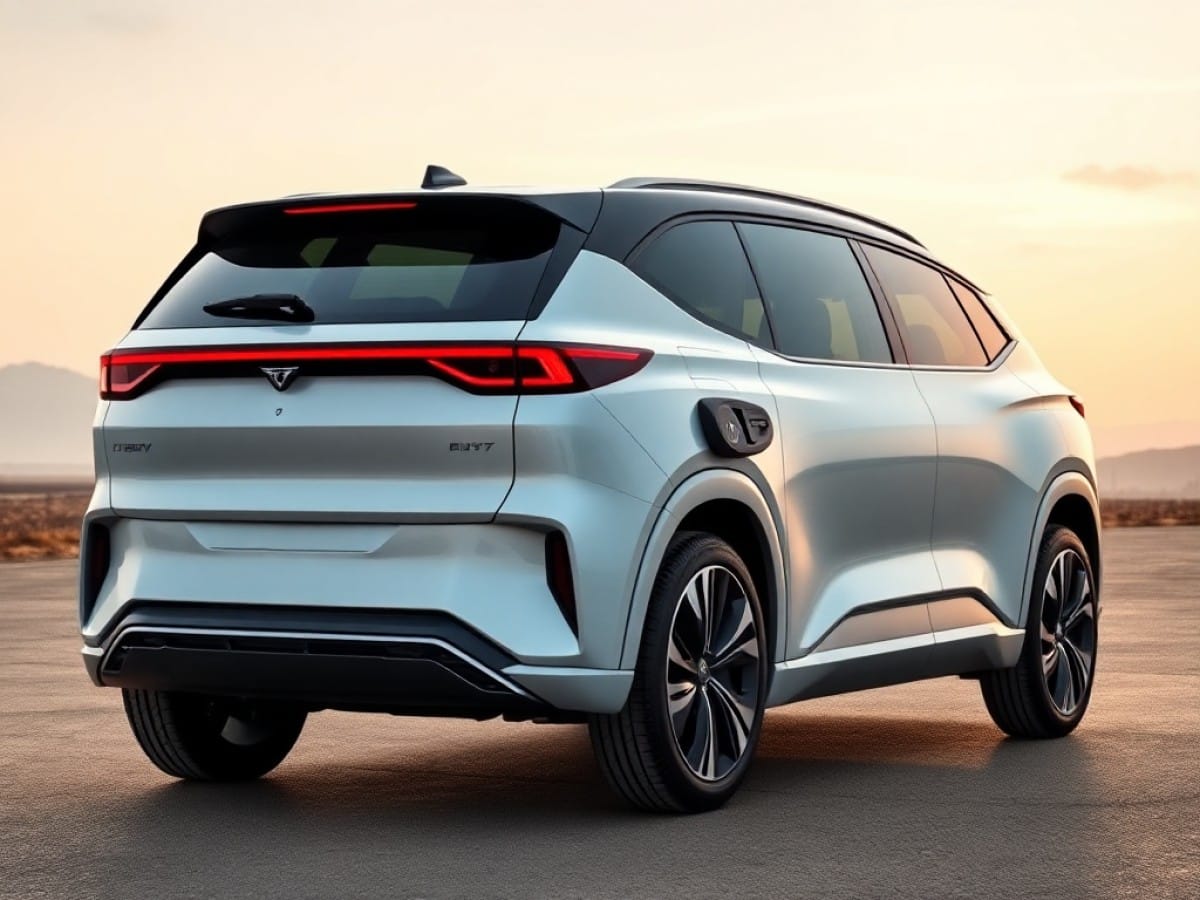
In a market dominated by the sameness of SUVs, the Xpeng P7+ stands out as a breath of fresh air. This ambitious electric vehicle aims to decisively outshine the Tesla Model S by offering a price that’s half as much and charging capabilities that are twice as fast. But has it succeeded in its bold ambitions? Here’s our detailed review.
Scientists confirm: This is the most effective way to get your cat’s attention, according to new research
Elderly Couple Refuses Reserved Seats—Viral Train Standoff Sparks Fiery Debate on Courtesy
For those looking for a sizable electric car without spending a fortune or opting for an SUV, the choices in Europe’s electron-powered car market are quite limited. High-end models like the Audi A6 e-tron, BMW i5, and Mercedes EQE, not to mention the Tesla Model S which recently ended its nearly 15-year run, are the usual suspects. However, the Xpeng P7+ does not exactly claim to be a premium model, despite its sometimes significant technological lead over other high-end sedans.
From French manufacturers, besides the DS N°8—which stands to sedans as a range-extender vehicle does to electric cars—there isn’t much else on offer. The uniqueness that once defined the French automotive industry has faded over the past few years.
In short, if you are in the market for a large sedan—over 4.90 meters—the Tesla Model 3, BMW i4, and the new Mercedes CLA might fall short. Currently, the only other contender that seems credible enough to compete with today’s focus, the Volkswagen ID.7, is Xpeng P7+.
Technical Specifications
The Xpeng P7+, a model we are already familiar with from our reviews at Survoltés, was recently tested in Barcelona, Spain. Here are its key specifications:
| Model | Xpeng P7 Plus (2026) |
|---|---|
| Dimensions | 5.07 x 1.94 x 1.51 meters |
| Power (horsepower) | 313 horsepower |
| 0 to 100 km/h | 6.2 seconds |
| Autonomy Level | Semi-autonomous driving (level 2) |
| Top Speed | 200 km/h |
| Main Screen Size | 15.6 inches |
| Car-side Connector | Type 2 Combo (CCS) |
| Entry-level Price | €45,990 |
Design: Unusual Yet Not Unique
If you search for the XPeng P7+ on Google Images, you’ll likely encounter a variety of styles. To set the context: the P7 is not new, nor is the P7+ variant, which has been marketed in China and which we have extensively tested on open roads.
However, the 2026 P7+ model, designed specifically for the international market, brings some changes. Its lineage with the former P7+ is evident, especially with the continuous light signature at the front, a hallmark of the brand’s “Robot Face” style.
On closer inspection, the front bumper has been redesigned with a more angular and aggressive black blade that includes active flaps for thermal management. This approach isn’t particularly original, as the visual identity doesn’t significantly stand out from other Chinese brands—it’s quite generic, one might say.
At the rear, the design is more original. The look is sharply chiseled, a descriptor sometimes given to Lamborghini supercars, except that since the unveiling of the new Prius by Toyota, it works here too. The XPeng P7+ features a continuous, much thinner LED strip, adding a modern touch that’s less common overall.
The XPeng P7+ boasts a drag coefficient (Cx) of 0.206, a competitive figure close to the Tesla Model S’s 0.208 at the end of its production, or the Mercedes EQE’s 0.22.
Interior Space: Welcoming and Spacious
With a length of over 5 meters and a wheelbase of 3 meters, the P7+ prioritizes space. The legroom in the back is exceptional, though not optimal. For instance, there are no footwells under the front seats, and due to the batteries under the floor, the floor itself is quite high for a sedan, giving the impression of having one’s knees up to one’s chin.
Worse, for tall individuals, such as your 1.82-meter-tall reviewer, the tablet positioned on the back of the front seats is too low and hits the knees. Fortunately, one can tilt the backrest and seat depth of the front seat via the small 8-inch touchscreen located in the back—but only if the front passenger agrees!
Infotainment: Heavily Inspired by Tesla
Inside, the central screen of 15.6 inches and the digital instrumentation on a 10.25-inch screen borrowed from the new Chinese P7 are present, but the P7+ goes a step further with the introduction of a heads-up display (HUD), previously missing. It’s beautifully executed and helps keep your eyes on the road.
In terms of computing power, Xpeng has opted for a new Turing chip: three times more powerful than its predecessor, it provides a smooth and responsive interface, capable of handling the data flow from the vehicle’s sensors. The system’s fluidity is comparable to that of top smartphones.
However, the layout and menus are very reminiscent of Tesla’s—only better, in our opinion. Where adjusting the ventilation in a Tesla might require an advanced degree, Xpeng has chosen to retain more traditional controls. The same goes for some functions, with several physical controls on the steering wheel enhancing ergonomics.
Driving Aids: Comprehensive but Not Yet Fully Functional
The driving aids (ADAS) deserve their own discussion. During our test, the vehicles were production models, not pre-series. Xpeng informed us that an update was soon to arrive to correct some inaccuracies in the driving aids, similar to what happened with MG at the launch of the MG4 or BYD with the Dolphin.
Indeed, an update is needed, and quickly, because when the semi-autonomous XPilot driving system is activated, it works quite well. However, when it’s not active and you leave on ADAS such as lane departure warning or lane keeping assist, driving becomes very unpleasant, even dangerous, with sometimes violent jolts in the steering which can be quite startling.
An update will obviously fix these issues soon, but the system isn’t perfect yet. It likely works well in China, where the car has been successful for some time now, but Europe, with its specific regulations, requires some adjustments to satisfy European legislators who tend to restrict these ADAS. This results in sometimes poorly adjusted aids if they are not fine-tuned.
Driving: Dispelling Myths About Chinese Cars
Chinese manufacturers have successfully shed the low-quality image associated with “Made in China” products, but they now face other “issues,” namely chassis parts that are sometimes far from European standards. This is still true today for some models we’ve tested recently, but not for Xpeng.
The range available in France is structured around three versions with distinct performances:
– **Standard Range Pro**: Rear-wheel drive with **245 hp** (180 kW). The 0 to 100 km/h is achieved in 6.9 seconds.
– **Long Range Pro**: More powerful rear-wheel drive with **313 hp** (230 kW), achieving 0 to 100 km/h in 6.2 seconds.
– **Performance AWD Pro**: The dynamic version with all-wheel drive has **503 hp** (370 kW) and completes 0 to 100 km/h in 4.3 seconds.
In China, the car also comes with a range extender version featuring a 1.5-liter gasoline engine that acts as a generator for the battery, providing an electric range of 450 kilometers and 1,550 km in hybrid mode—a record for sedans with range extenders.
In France, we do not (yet?) have this version. For our test, only the Long Range Pro versions were available. This was more than enough to note that the car was well-designed in terms of chassis. The standard adaptive suspension provides a good level of comfort for this sedan without sacrificing dynamism.
Do not expect a speed demon despite the 313 hp under the hood—the weight of 2.16 tons does not help, but the overall package is quite convincing at this level, with well-controlled body roll and a car that holds together well even during somewhat spirited cornering. The Michelin Pilot Sport EV tires also contribute significantly to this good road behavior, with good lateral stability and well-contained rolling noise.
Autonomy, Consumption, and Charging
This is where the P7+ really excels. The car is based on an 800-volt architecture with LFP (Lithium Iron Phosphate, cobalt-free) batteries.
– **61.7 kWh battery** (Standard): **455 km** WLTP range.
– **74.9 kWh battery** (Long Range & Performance): **530 km** WLTP range (500 km for the Performance version).
In terms of pure range, this isn’t very impressive for a fully electric sedan, especially at a time when some European models easily exceed 700 km WLTP, flirt with 800, or even surpass 900 (soon) for others.
While the range may seem modest compared to some rivals with larger battery capacities (750 km for the Tesla Model 3 Long Range), Xpeng has chosen to play another card: **charging speed**. With peak charging power ranging from **350 kW** for the smaller battery to **446 kW** for the larger one, going from 10 to 80% takes just **12 minutes**. In practical terms, on a Paris – Marseille trip, the charging stop becomes quicker than a restroom break and a quick coffee.
And the good news is, we were able to test this charging speed somewhat. Our route allowed for a charging stop at a Fastned station near Barcelona, with chargers capable of up to 400 kW peak. We stopped at 57%, and the car still managed to reach **over 310 kW peak** within a few seconds, without preheating and without an excessively low battery level. **We reached 80% in less than 7 minutes**.
In terms of consumption, Xpeng announces WLTP figures that are disappointing compared to Tesla, ranging from **15.2 kWh/100 km** for the entry-level model to **17.4 kWh/100 km** for the Performance version. These consumption figures are higher than those of a Tesla Model Y. This is broadly what we noted on our route, which included highway driving at 120 km/h (often less due to traffic), secondary roads at a relatively calm pace, and urban areas.
Pricing, Availability, and Competition
The French prices have just been revealed, and they are particularly competitive for such a well-equipped 5-meter sedan:
– **Standard Range Pro**: **€45,990**;
– **Long Range Pro**: **€49,990**;
– **Performance AWD Pro**: **€53,990**.
With an entry price of €45,990 (Xpeng estimates that in France, the base version will represent only 10% of orders), the P7+ directly challenges the Tesla Model 3 Rear-Wheel Drive, while offering a more spacious interior, a hatchback, and a significantly more efficient 800-volt architecture.
The question is whether the reduced range of the base version will be a stumbling block for buyers, or whether the ultra-fast charging will sufficiently compensate—especially since the Model 3 starts at €36,990 in the base Rear-Wheel Drive version with 534 km of range.
At this price, the Chinese sedan is simply unbeatable, especially considering its standard equipment. There are only two options: metallic paint and a tow hitch.
Just compare the P7+ with competing electric sedans to see how aggressively priced it is. The Mercedes CLA, nearly 30 cm shorter but with better range (694 to 792 km), starts at **€58,200** in AMG Line without matching the P7+’s level of equipment.
The same goes for the Volkswagen ID.7, offered at **€62,690** in the Pro S Life Max with lower equipment and a maximum charging rate of 200 kW. As for the DS N°8, the French model impresses with its 750 km range, but its crossover positioning comes at a high price: count **€70,900** in the FWD 245 hp Étoile version, which is €20,000 more than the Chinese model, for a DC charging power (160 kW) almost three times lower. At this price level, the Xpeng beats all its competitors hands down.
Similar Posts
- Driving the Xpeng P7+: Experience Tesla Model S Luxury at a Model 3 Price
- Xpeng G9 vs Tesla: Can This Chinese Electric Car Replace the Icon After a 4,000km Test Drive?
- Discover the Polestar 4 Electric: A Game-Changing Car Missing One Key Feature!
- Dacia Spring Review: Is France’s Cheapest Electric Car Still Overpriced?
- I Drove 1000 km in a Polestar 2: Here’s Why It Beats the Tesla Model 3

Maya Singh is a senior editor covering tablets and hybrid devices. Her work explores how these tools reshape digital productivity and learning. She also contributes to feature editorials on emerging tech.