
Scientists confirm: This is the most effective way to get your cat’s attention, according to new research
Elderly Couple Refuses Reserved Seats—Viral Train Standoff Sparks Fiery Debate on Courtesy
At Xiaomi, while the Poco series smartphones cater to gamers, and the Xiaomi 15, Xiaomi 15T, Xiaomi 15T Pro, and Xiaomi 15 Ultra represent the high end of the manufacturer’s offerings, the Redmi Note 15 models are significantly more wallet-friendly, with prices ranging from 200 to 500 euros.
This year’s Xiaomi Redmi Note series includes 5 models:
- Redmi Note 15 4G
- Redmi Note 15 5G
- Redmi Note 15 Pro 4G
- Redmi Note 15 Pro 5G
Why You Should Never Reheat These Foods in the Microwave – The Hidden Dangers Experts Warn About
I tried the top 5 guard dogs—here’s what makes these breeds the ultimate protectors
Today, we are focusing on the Redmi Note 15 Pro+, the new flagship of the Redmi series, which we have thoroughly analyzed.
How does it differ from its sibling, the currently available Redmi Note 15 Pro 5G, priced at 380 euros? Do the features of the Pro+ model justify a 120 euro price difference? Here are our findings.
Technical Specifications
| Model | Xiaomi Redmi Note 15 Pro Plus 5G |
|---|---|
| Dimensions | 78.31 mm x 163.34 mm x 8.19 mm |
| Screen Size | 6.83 inches |
| Resolution | 2772 x 1280 pixels |
| Pixel Density | 447 ppi |
| Technology | AMOLED |
| SoC | Qualcomm Snapdragon 7s Gen 4 |
| Graphics Chip | Qualcomm Adreno 810 |
| Internal Storage | 256, 512 GB |
| Rear Camera | Sensor 1: 200 MP, Sensor 2: 8 MP |
| Front Camera | 32 MP |
| Wi-Fi | Wi-Fi 6E |
| Bluetooth | 5.4 |
| 5G | Yes |
| NFC | Yes |
| Fingerprint Sensor | Under the screen |
| Connector Type | USB Type-C |
| Battery Capacity | 6500 mAh |
| Weight | 207.1 g |
| Colors | Black, Blue, Brown |
| Product Sheet |
Design
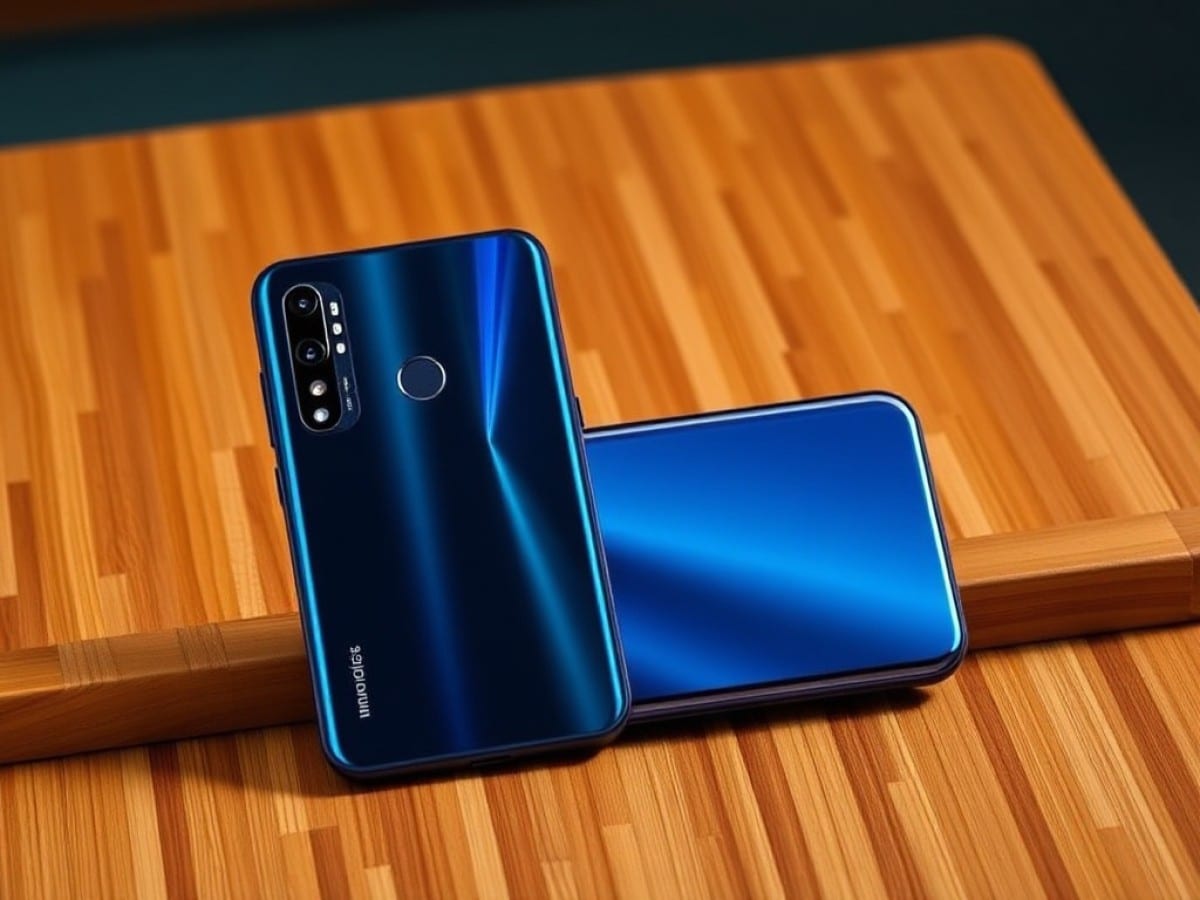
The Xiaomi Redmi Note 15 Pro+ sports an appealing look with its aluminum frame, scratch-resistant Gorilla Victus 2 glass screen, and a fiberglass back. This back offers a surface that is less prone to smudging, at least on the blue model we received.
Two other colors are available: black and Mocha. The latter is distinguished by its faux leather covering. It’s also noteworthy that the titanium gray color of the Redmi Note 15 Pro has been discontinued.
The smartphone weighs 207 grams and measures 16.3 x 7.8 x 0.8 cm, offering a comfortable grip thanks in part to the subtly rounded edges of the back and screen.
The edges of the smartphone are slightly softer than those of the Redmi Note 15 Pro, making the handling of the Redmi Note 15 Pro+ a bit more pleasant.
At first glance, the smartphone is not afraid of water and dust (it is IP68 certified), nor drops from a maximum height of 2.5 m (SGS 5-star certification). It should therefore withstand rough or clumsy use in all weathers and settings (it should survive immersion in a pool or bathtub).
The rest is standard: an under-display fingerprint reader, a tiny opening housing the front camera sensor, a large but not too thick optical block, the USB-C port, and the power button located below the volume control button.
Screen
For the display, there is no change between the screen of the Redmi Note 15 Pro+ and that of the Redmi Note 15 Pro. The technical specifications are the same:
- 6.83-inch OLED display
- Resolution of 2772 x 1280 pixels
- Maximum frequency of 120 Hz (60 Hz and dynamic modes also available)
- Brightness of 3200 nits in peak HDR
Once placed on the smartphone’s screen, our Calibrite Display Pro HL probe recorded the following values, using the CalMAN Ultimate software from Portrait Displays:
- Base brightness SDR / HDR: 600 nits.
- Brightness in Automatic mode: 1008 nits (SDR) / 3168 nits (HDR).
- In Sunlight mode, brightness climbs to 808 nits.
- Average Delta E SDR of 3.09 (with P3 profile)
- Average Delta E HDR of 6.45
- Average color temperature of 6857 K (P3 profile)
- Coverage of the DCI-P3 color space at 99%
All these results provide important information: the display is bright and particularly well-calibrated. Incidentally, we also note that these values are almost the same as those measured on the screen of the Redmi Note 15 Pro, confirming that the two OLED panels are identical.
In any case, these good results and the fact that the screen is certified HDR10+ / Dolby Vision should allow for optimal enjoyment of movies and series available in streaming, regardless of the VOD service consulted.
Finally, like its little brother, the screen of the Redmi Note 15 Pro+ can be used with wet fingers, which is always practical in the rain.
Performance
The performance of the Xiaomi Redmi Note 15 Pro+ is powered by the Qualcomm Snapdragon 7s Gen 4 processor. It’s noted that its sibling, the Redmi Note 15 Pro, is equipped with the Dimensity 7400 Ultra from Mediatek, while the Redmi Note 14 Pro+ had the Snapdragon 7s Gen 3.
The processor is complemented by 8 GB of memory and 256 GB of storage, or 12 GB of memory and 512 GB of storage.
In terms of computing performance (CPU), it is observed that the Snapdragon 7s Gen 4 is very slightly faster than the Snapdragon 7s Gen 3, which is itself very slightly more efficient than the Dimensity 7400 Ultra.
In fact, compared to the latter, the Snapdragon 7s Gen 4 displays an advantage of about +18% for the Antutu v10 score. Moreover, the difference is about the same (+17%) for the single-core Geekbench score, +10% for the multi-core score.
However, it is less fast than the Snapdragon 8 Gen 3, present for example in the Xiaomi Poco F7 Pro or the Redmagic 10 Air, or even than the Snapdragon 8s Gen / Gen 4 (found in the Xiaomi Poco F7 or the OnePlus Nord 5).
Even after the release of the latest models, the previous generations of Samsung Galaxy remain excellent references. Find the entire Samsung Galaxy range at reduced prices in refurbished condition on Back Market.
On the other hand, the Adreno 810 GPU of the Snapdragon 7s Gen 4 is clearly more powerful than the Mali-G615 of the Dimensity 7400 Ultra. Indeed, a higher score of 17% is observed with the Wild Life test of the 3D Mark application (and +10% with the Wild Life Extreme test). The increase is even 20% with the Geekbench 6 graphics performance test.
And this is confirmed when playing Fortnite. Indeed, the Xiaomi Redmi Note 15 Pro+ manages to lock the frame rate at 60 frames per second, regardless of the situations, and with the best possible display quality (Epic mode), which was not the case during our test of the Redmi Note 15 Pro.
Moreover, the management of temperature and long-term performance proves to be most effective, since no throttling was detected and the processor did not exceed 78 degrees, even after an hour of intensive computing.
Finally, the Snapdragon 7s Gen 4 proves to be formidable in terms of energy efficiency, as we will see later, during the autonomy tests.
Software
Android 15, HyperOS 2, Gemini / Gemini Live, floating window, split screen (for simultaneous display of two applications), system updates assured for 4 years and 6 years for security updates… The software environment of the Redmi Note 15 Pro+ is almost identical to that of the Redmi Note 15 Pro.
With one exception: the Redmi Note 15 Pro+ offers certain AI functions related to productivity and communication, which its little brother lacks:
- AI Writing
- AI Interpreter
- AI Voice Recognition
- Dynamic wallpapers (AI brings some of your photos to life by turning them into a very realistic video of a few seconds).
Not to mention the AI photo retouching functions: ultra HD, beautify AI, extend, erase, remove reflection, change the sky, crop an object to copy it onto another photo.
Photography
The Redmi Note 15 Pro+ offers the same configuration as the Redmi Note 15 Pro in terms of wide-angle and ultra-wide-angle lenses and sensors (the only ones present on the back!).
The only difference between the two smartphones lies in the definition of the front camera sensor: 32 megapixels, compared to 20 megapixels on the Redmi Note 15 Pro.
Wide-angle
The wide-angle lens, equivalent to a 23 mm with an aperture of f/1.7, is paired with a 200-megapixel sensor, with optical stabilization (OIS)
Although it is possible to capture photos in very high resolution, they are by default taken at 12.5 megapixels, i.e., 4080 x 3060 pixels (16-in-1 Pixel Binning technology).
The interface allows for capturing dynamic shots, previewing photos with different filters, and adjusting image brightness.
Portrait
The Portrait mode is quite effective. In addition to being able to modify the aperture and focal length (1x or 2x), there are options to automatically beautify the photographed subject and apply colorimetric filters.
Ultra wide-angle
In ultra wide-angle mode, the 8-megapixel sensor produces less precise images (with a resolution of 3264 x 2448 pixels). However, they are still of fairly good quality in broad daylight.
Zoom
The Xiaomi Redmi Note 15 Po+ does not have a telephoto lens, like the vast majority of smartphones sold around 500 euros. Among the few exceptions are, for example, the Nothing Phone (3a) Pro and – more recently – the Xiaomi 15T.
Therefore, one must rely on the performance of a digital zoom, if one wishes to capture an object or a person in closer detail than with the basic wide-angle. Only the focal lengths of 46 mm (2x zoom) and 94 mm (4x zoom) are offered in the photo module interface.
This is normal, because up to a 4x magnification factor, the shots are satisfactory, with minimal loss of detail (hardly visible, even on a large screen).
It is possible to use a greater digital zoom, for example 10x. In this case, it is better not to display the images obtained on a large screen, as a very noticeable drop in quality would be observed. However, these photos can still be deceptive on a smartphone screen.
However, if one attempts to use a 20x or even 30x zoom (the maximum), the images generated are then clearly disappointing (and this is quite normal for a digital zoom).
Selfie
Thanks to the 32-megapixel sensor, selfies benefit from beautiful precision (resolution of 6528 x 4896 pixels). Moreover, everyone can improve their image by activating various beautification options (skin smoothing, face contours, nose width, etc.).
And if the Portrait mode is activated, manual adjustment of the aperture allows for refining the blur effect applied to the background. However, as is often the case, protruding hair is then erased without mercy.
Night Photos
When ambient light is very low, the smartphone knows that it must increase the exposure time (there is no specific Night mode). It is therefore necessary to remain as still as possible during these few seconds.
Ultimately, the observation regarding the quality of night photos is the same as for the Redmi Note 15 Pro, and that’s a pity:
- In wide-angle mode, fairly beautiful photos are obtained.
- With a 2x zoom, not much precision is lost (the photos can be viewed on a smartphone).
- The ultra wide-angle mode is to be avoided.
- The same goes for selfies (the photos are most often blurry)
Video
For video sequences, the
Similar Posts
- Xiaomi Redmi Pad 2 Pro Review: Balanced Tablet with Some Flaws
- Xiaomi 15T and 15T Pro Launch Date Revealed: Here’s What We Know!
- Xiaomi Redmi Note 15 Pro 5G Review: More Power, Longer Battery Life – Can It Compete with Honor & Samsung?
- Xiaomi 15T Review: High-End Smartphone Overshadowed by Poco Contender
- Huawei Pura 80 Ultra Review: Incredible Camera, But Does It Offset Its Flaws?

Maya Singh is a senior editor covering tablets and hybrid devices. Her work explores how these tools reshape digital productivity and learning. She also contributes to feature editorials on emerging tech.