
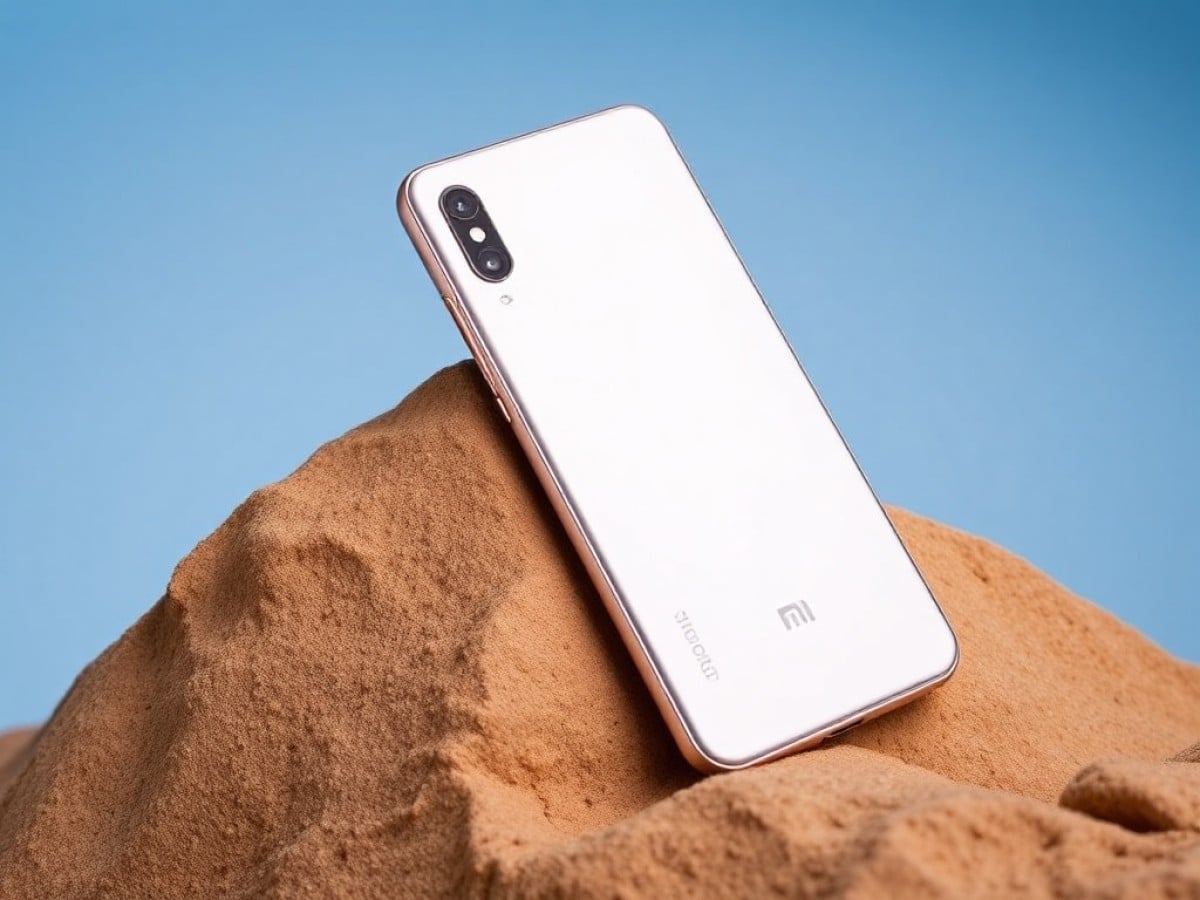
Xiaomi introduces its most affordable smartphone: the Redmi 15C, priced at only €153. This low price does not promise miracles. The question remains, do we get what we pay for?
Scientists confirm: This is the most effective way to get your cat’s attention, according to new research
Elderly Couple Refuses Reserved Seats—Viral Train Standoff Sparks Fiery Debate on Courtesy
Xiaomi has updated its Redmi lineup and now offers three variants: the high-end Redmi 15 Pro, the mid-range Redmi 15, and the entry-level Redmi 15C, which we are reviewing here.
Despite its launch price of €153, the Redmi 15C boasts several impressive features, such as a 6.9-inch screen with a refresh rate of up to 120 Hz, 33W fast charging, a MediaTek Dimensity 6300 SoC, and a 6000 mAh battery. Let’s see what it truly offers for this budget-friendly price.
Technical Specifications
| Model | Xiaomi Redmi 15C |
|---|---|
| Dimensions | 81.07 mm x 173.16 mm x 8.2 mm |
| Manufacturer Interface | HyperOS |
| Screen Size | 6.9 inches |
| Resolution | 1600 x 720 pixels |
| Pixel Density | 254 ppi |
| Display Technology | LCD |
| SoC | Mediatek Helio G81-Ultra |
| Graphics Processor | Mali-G52 MC2 |
| Internal Storage | 128, 256 GB |
| Rear Camera | 50 Mp primary sensor |
| Front Camera | 8 Mp |
| Video Recording Definition | 1080p @ 30 fps |
| Wi-Fi | Wi-Fi 5 (ac) |
| Bluetooth | 5.4 |
| 5G | No |
| NFC | Yes |
| Fingerprint Sensor | Side-mounted |
| Connector Type | USB Type-C |
| Battery Capacity | 6000 mAh |
| Weight | 211 g |
| Colors | Black, Blue, Green |
| Product Sheet | Link |
Design
Like the Redmi 15, the Redmi 15C features a large 6.9-inch screen. This provides a vast display area, not with a central punch-hole as seen on the Redmi 15, but with a waterdrop notch. The bezels are quite noticeable, resulting in an 84% screen-to-body ratio.
The dimensions are generous: 173.16 mm tall, 81.07 mm wide, and 8.2 mm thick. However, the weight is reasonably contained at 211 grams, with a balanced build.
The side frames are flat with a metallic effect. On the right edge, the volume and power buttons are present, but their relief is too discreet, which might lead to minor handling errors in daily use. Despite good positioning, this is a device that will often require two-handed operation.
The left edge houses the dual SIM tray. On the bottom edge, you’ll find the mono speaker, USB-C port, and a 3.5 mm headphone jack—a plus for users of wired headphones.
The design of the Redmi 14C with its round camera block and vibrant colors is almost missed here. The Redmi 15C opts for a more understated approach. The back is flat and entirely plastic, featuring a smooth surface that isn’t too slippery. However, it’s advised to secure your grip on warmer days. The Redmi 15C is available in black, green, and purple.
A positive aspect is that the surface doesn’t capture fingerprints too easily, unless you’ve just eaten a greasy meal. The square camera module slightly protrudes and its frame is elegantly designed, appearing more as an organic extension of the casing rather than a harsh addition.
Once placed on a flat surface, the device is not very stable. It tips over when you press on any part of the screen other than the bottom third, making it uncomfortable to use on a table, except for typing.
Overall, this is a well-constructed smartphone with neat finishes and an appreciated IP64 certification, making it resistant to severe splashes.
Display
The Redmi 15C’s display features a 6.9-inch LCD panel with a resolution of 1600 × 720 pixels, resulting in a pixel density of 257 ppi—providing a decent display for this price range. The refresh rate is fixed at either 60 Hz or up to 120 Hz, depending on your preference.
Using our CalMAN Ultimate software from Portrait Displays, we measured the performance of this screen. In Standard display mode (the most effective), we recorded a Delta E of 3.43, compared to the reference value of 3.
The measured color temperature was 5837 K, with 6500 K being ideal. Regarding the color space, it performs very well for a €153 mobile, covering 120% of the BT 709, 81% of the DCI-P3, and 55% of the BT 2020. In everyday use, we get a clean image, with colors that are sometimes a bit too warm but generally satisfactory.
The measured contrast ratio is 1579:1, good for a sub-€200 LCD smartphone. The SDR brightness, measured at a maximum of 653 nits and 689 nits in HDR, allows comfortable indoor use of the Redmi 15C, but definitely not in direct sunlight. HDR content is not really highlighted here.
Performance
The Redmi 15C relies on a MediaTek Dimensity 6300 SoC. It is paired with 4 GB of LPDDR4X RAM and UFS 2.2 storage, available in 128 or 256 GB depending on the model. A Mali-G57 GPU handles the 3D rendering. In terms of raw performance, it’s not the fastest on the market but performs well in this price bracket.
In use, Android runs correctly, and most common apps operate without major issues. However, minor stutters are frequently felt, especially when switching from one app to another. This is not a device designed for demanding users or creatives. It meets basic needs, provided you don’t expect great responsiveness. For gaming, it’s best to forget about 3D titles. On Fortnite, for example, the frame rate varies between 1 and 15 fps at best, and this does not prevent multiple lags. Clearly, don’t expect a smooth experience on 3D games, unless they are very light.
However, the Redmi 15C stands out for its thermal stability. Even after an hour of intense use, throttling does not exceed 15%, and only during very short sequences.
The Dimensity 6300 may not be the most powerful SoC, but it is optimally utilized here. Additionally, heat emissions are contained, which never interfere with use, even extended use, including for users sensitive to temperature.
Software
On the software side, Xiaomi remains true to its formula: Android 15 with HyperOS 2. The interface is clear, pleasant to navigate, and offers numerous customization options. It only lacks the 3D animated wallpapers present on more powerful models from the brand. The system runs stably, with generally correct fluidity, within the limits imposed by the Dimensity 6300.
In terms of artificial intelligence, the Redmi 15C is limited to Gemini and Circle to Search, without other notable features. As often with Xiaomi, a wave of bloatware awaits you at the first startup. It’s possible to block some of it during installation, but about ten useless apps will remain to be uninstalled manually.
The update policy remains decent in this price range, with 4 years of Android support and 6 years of security patches.
Photography
The camera setup on the Redmi 15C is basic. At the rear, we find a 50 MP wide-angle sensor with an aperture of f/1.8.
It is supported by a second module called “auxiliary lens,” but Xiaomi provides no concrete details about its function or technical characteristics. Thus, it’s mostly a symbolic dual module. At the front, an 8 MP camera with an aperture of f/2.0 handles selfies.
Wide-angle
The main sensor of the Redmi 15C fulfills its role, with its share of limitations. First observation: the smartphone struggles to handle peaks of brightness, which leads to frequent underexposure. This flaw was already noted on the Redmi 15, with an image a bit darker than it should be. Contrast management remains correct, but the lack of sharpness affects the rendering of some micro-details.
These are not well represented, and overall, the level of detail is decent but no more. Digital noise does not wait to settle in, although it is discreet when brightness is good, and the digital smoothing is sometimes too aggressive. As long as we remain on the phone’s screen, the rendering passes well, but a larger display quickly highlights the limits of the processing.
At night, the sensor quickly shows its weaknesses, even in a well-lit scene, such as a playground or statue, which benefit from strong urban lighting. The processing overuses smoothing, digital noise installs quickly, and the colorimetry slightly shifts towards orange. As soon as the light really decreases, the photos become even noisier and lack relief.
The shots remain sometimes usable, but nothing more. At €153, this is acceptable. However, those looking to capture beautiful night scenes will need to turn to a more ambitious model and thus revise their budget.
Portrait
The portrait mode of the Redmi 15C already offers quality outlining. Very few errors are noted, and when we did have them, it was with the tester’s daughter’s hair, which is quite curly and rather lively. The colorimetry is similar to that of the main sensor, rather natural, but with a tendency to be a bit darker than it should be.
We still observe a bit of smoothing, however, the beard hairs, the texture of the jacket or shirt, for example, are correctly rendered. The bokeh effect is quite well controlled, but its progressiveness lacks fluidity.
Zoom
The Redmi 15C offers 100% digital zoom. From the x2 zoom, we note that the color profile is a bit clearer than what is observed at x1. The contrasts remain relatively stable, but the loss of precision is already noticeable.
Digital noise discreetly makes its presence felt, without completely ruining the image, and the result remains usable.
At x4, the limitations become more evident. The image becomes even clearer, well beyond reality, and thus the color fidelity takes another hit. Digital noise becomes much more visible, especially in complex areas like the clock, where the edges lack sharpness. Despite this, in good lighting conditions, a photo at x4 can still be useful for quick sharing or occasional viewing.
However, the x8 and x10 zooms clearly exceed the reasonable capabilities of the sensor. Digital noise explodes, textures are blurred. The image loses all sharpness, and micro-details disappear completely.
For normal use, they are best avoided. Digital zoom on the Redmi 15C provides some services but remains limited by nature.
In low light, digital zoom quickly shows its limits. From x2 zoom, the sensor struggles to capture enough light. Digital noise immediately sets in. Bright areas remain readable but lack precision.
The dark areas become messy. Smoothing is visible, and some details appear blurry.
At x4, all defects are amplified. Noise, smoothing, and loss of sharpness make the image difficult to use.
If the x2 zoom remains acceptable in some cases, the x4 does not. And as soon as this threshold is exceeded, all higher levels of zoom reproduce the same defects even more pronounced.
Selfie
The selfie sensor does quite a good job. The outlining, clean, was only challenged by the tester’s daughter’s unruly hair. The level of detail is very correct, as long as you don’t zoom in too much on the image. A slight cropping remains perfectly possible for a publication on social networks.
If the beard hairs fare well and the skin smoothing is not excessive, textile textures appear with less finesse. Finally, the bokeh effect is clean and quite progressive.
Audio
The single speaker of the Redmi 15C quickly shows its limitations. The sound output is clearly unbalanced, with a marked dominance of the highs and upper mids. Bass frequencies are almost absent, and anything below this spectrum seems muffled. The lack of definition further accentuates this weakness, with messy highs.
When pushing the volume, saturation quickly becomes apparent. The volume itself also lacks power, which doesn’t help much. This makes the presence of a 3.5 mm jack even more valuable if you do not use a Bluetooth headset.
Network and Communication
The Redmi 15 supports all 4G frequencies available in France. It allows the use of two SIMs or a SIM and a microSD card. For geolocation, functions are ensured by GPS, Beidou, Galileo, and GLONASS technologies. Additionally, NFC technology is supported, along with Bluetooth 5.4 and Wi-Fi 6.
Battery
The 6000 mAh battery of the Redmi 15C offers comfortable autonomy. In our normal usage tests, the smartphone easily lasts a full day of work and can even stretch into the evening if you don’t overuse features like gaming, for example. In intensive use, the battery life drops more sharply, around 8 to 10 hours. The PCMark battery test confirms this trend with a score of 10h58.
Using the viewing of the movie Wonder Woman 84 (duration: 2h30) as a basis, with brightness calibrated to 250 nits and volume set to 50%, the Redmi 15C lasts between 12 and 17 hours. The performance is solid, even if we expected a bit better.
In case of a complete discharge, 33W fast charging is available. It allows you to recover 7% of the battery in 5 minutes, 17% in 15 minutes, and nearly 45% in 30 minutes. It takes just over 1h15 for a full recharge.
Pricing and Availability
The Xiaomi Redmi 15C is available in black, green, and purple. It is priced at €153 for the 4 GB + 128 GB version and €183 for the 4 GB + 256 GB version.
Similar Posts
- Xiaomi Redmi Pad 2 Pro Review: Balanced Tablet with Some Flaws
- Xiaomi Redmi Note 15 Pro+ Review: A Convincing Smartphone Challenged by Xiaomi’s Classics
- Xiaomi Redmi 15 5G Review: Best Battery Life for Just €200!
- Xiaomi 15T and 15T Pro Launch Date Revealed: Here’s What We Know!
- Xiaomi Redmi Note 15 5G Review: Stunning Screen and Battery, But Ads Spoil the Experience

Maya Singh is a senior editor covering tablets and hybrid devices. Her work explores how these tools reshape digital productivity and learning. She also contributes to feature editorials on emerging tech.