
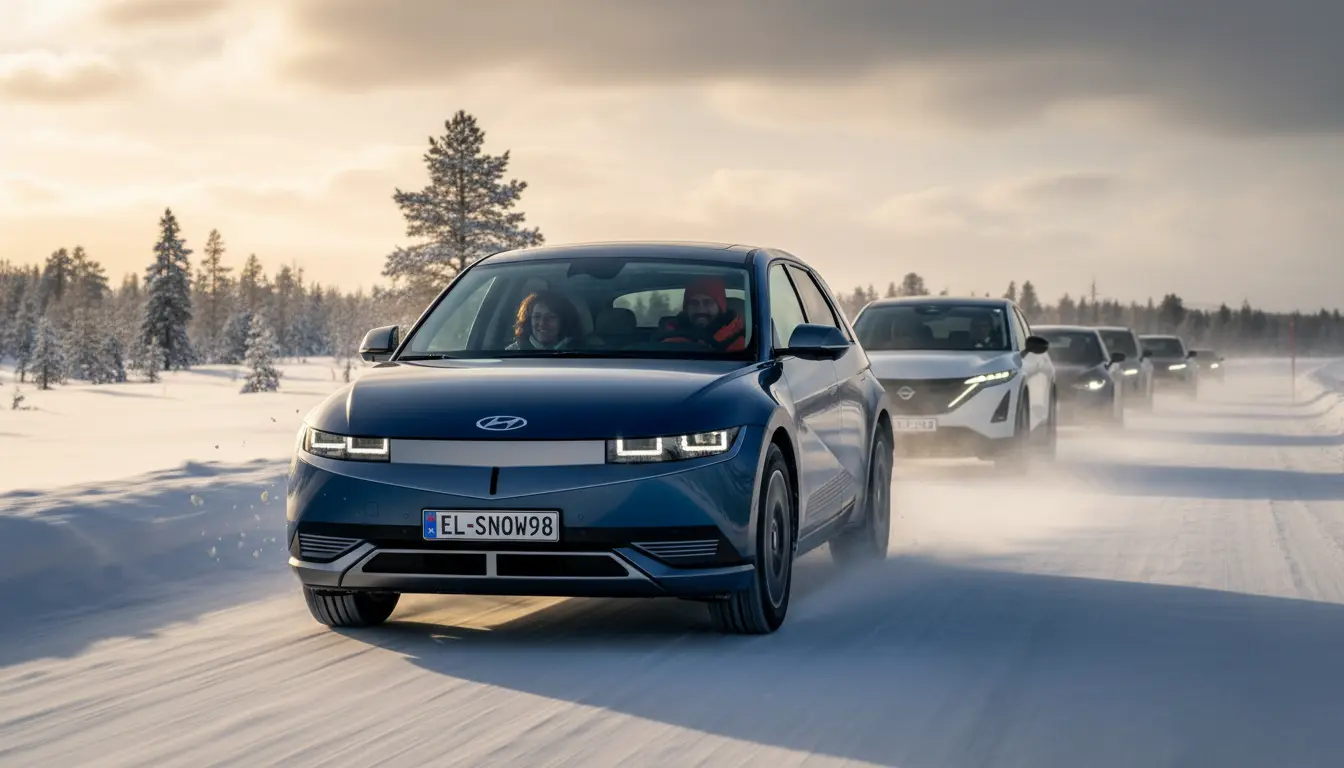
Norway just dropped a shocker in the auto world—98.3% of new cars registered in September 2025 are fully electric! No, that’s not a typo. In a country that gives you -40°C winters and more snow than you could shake a ski pole at, this clean-car revolution seems almost science fiction. So, how did Norway pull this off—polar bears as charging station assistants? Not exactly. Let’s dig into their electric success.
Scientists confirm: This is the most effective way to get your cat’s attention, according to new research
Elderly Couple Refuses Reserved Seats—Viral Train Standoff Sparks Fiery Debate on Courtesy
Smashing Records in the Land of Fjords
September 2025 wasn’t just another chilly month for Norwegians—it was record-breaking. A whopping 98.3% of all new private cars registered were pure electric, hitting a milestone never seen before in a single month. The first nine months of the year have already averaged 95% electric for new cars. According to data from the Norwegian Public Roads Administration (OFV), this puts Norway nearly at its political goal: from 2025, all new cars sold should be zero-emission.
Now, you might think Scandinavians have superpowers, but Norway’s formula is very real, very human—and, yes, very well engineered.
Price, Privilege, and a Pinch of Carrot and Stick
So what’s hiding under Norway’s electric hood? A rather clever recipe:
- Combustion cars are hit with sky-high import taxes, making them far more expensive than their electric rivals.
- Electric vehicles (EVs), on the other hand, get a free ride on those taxes. Until 2022, EVs were also fully exempt from Norway’s 25% value-added tax (VAT). Since 2023, that VAT exemption only applies to cars costing less than €42,600.
- Specific rules are in place to boost EV uptake among company fleet and leasing operators.
But wait—there’s more! Norwegians have long enjoyed extra perks for driving electric. For a time, EVs paid no road tolls, got discounts on ferries and parking, and could even sneak through bus lanes. These privileges have been slowly scaled back as the electric parade grew massive, but they certainly gave Norwegians a reason to flip the switch to electric early on.
As Cecilie Knibe Kroglund, State Secretary for the Ministry of Transport, puts it: Norway used “the stick for fossil-fuel cars, and the carrot for electric vehicles.” Add to that the fact Norway has no domestic car makers—less political wrangling over industry fallout—and you have a cocktail for fast, decisive action.
Not Just Perks: Beating the Arctic With Smarts (and Infrastructure)
Cold feet? Not a problem in Norway, even when batteries have to brave polar temperatures. Despite harsh winters and big distances between cities, Norway has built a dense, efficient network of charging points. This solves that all-too-familiar EV worry: what if the battery dies in the middle of a fjord blizzard?
Test drivers in Norway have observed that locals usually charge only the energy they need for their trip, keeping charging points available—with low wait times and efficient use across the network. Most EVs sold come with thermal management systems that preheat batteries before charging, keeping range losses in freezing conditions to a minimum.
And Norway doesn’t just trust marketing brochures: the Norwegian Automobile Federation (NAF) carries out real-world range tests, including winter trials. These results, often more realistic than official WLTP figures, get international attention and help shape auto makers’ battery strategies—sometimes leading brands to run their own tests on snowy Norwegian roads.
Why You Should Never Reheat These Foods in the Microwave – The Hidden Dangers Experts Warn About
I tried the top 5 guard dogs—here’s what makes these breeds the ultimate protectors
Electrifying Growth—And a Few Grounded Realities
Norway’s unique approach is paying off with real numbers:
- Over 113,000 new cars were registered in the first nine months of 2025, a 23.5% jump compared to 2024.
- Registrations in September alone saw more than a 10% rise over the previous year.
- Tesla tops the charts, making up nearly a third of September’s market. The Model Y? Norway’s best-seller again, with 4,132 units snapped up.
To put things in perspective: elsewhere, even the biggest markets see far fewer Model Ys hitting the streets, making Norway’s scale simply unmatched. Many look to copy the Norwegian recipe, but duplicating it in larger countries with different geographies is not exactly plug-and-play.
Conclusion: Cold, Calculated, and Seriously Electric
Norway’s electrifying achievement is no accident, but the product of bold policy, social buy-in, and infrastructure built to survive an arctic apocalypse. If you thought EVs were only for temperate cities and short commutes, Norway just left you in the (very eco-friendly) dust. The lesson? Sometimes you need both carrot and stick to spark genuine change—and maybe a thermal battery or two for those winter mornings.
Similar Posts
- PayPal Targets Apple Pay: Mobile Payment Showdown Looms in Germany
- Electric Nio Firefly Under €30K: Stunning Drive, But Two Major Issues for Europe!
- iPhone 17 to Supercharge Battery Life and Charging Speed: Anticipated Changes Revealed!
- Tested: Peugeot 3008 Dual Motor Electric – Unveiling the French SUV’s 4×4 Version!
- PayPal Targets Apple Pay: Strategic Expansion into European Market!

Jordan Park writes in-depth reviews and editorial opinion pieces for Touch Reviews. With a background in UI/UX design, Jordan offers a unique perspective on device usability and user experience across smartphones, tablets, and mobile software.