
Scientists confirm: This is the most effective way to get your cat’s attention, according to new research
Elderly Couple Refuses Reserved Seats—Viral Train Standoff Sparks Fiery Debate on Courtesy
Open-clip earbuds cater to a specific audience: those who want to listen to podcasts or music while staying aware of their surroundings. Runners, urban cyclists, and fitness enthusiasts find many uses for these.
The challenge with this type of product lies in reproducing low frequencies: since the ear canal is not blocked, the sound pressure in the bass is naturally limited. Motorola has entered this market with a straightforward approach and competitive pricing.
Motorola Moto Buds LoopTechnical Specifications
Why You Should Never Reheat These Foods in the Microwave – The Hidden Dangers Experts Warn About
I tried the top 5 guard dogs—here’s what makes these breeds the ultimate protectors
Motorola Moto Buds Loop
-
Boulanger
119 € -
Fnac
150 € -
Darty
150 €
All Motorola Earbuds
This test was conducted with earbuds loaned by Motorola
Motorola Moto Buds LoopDesign
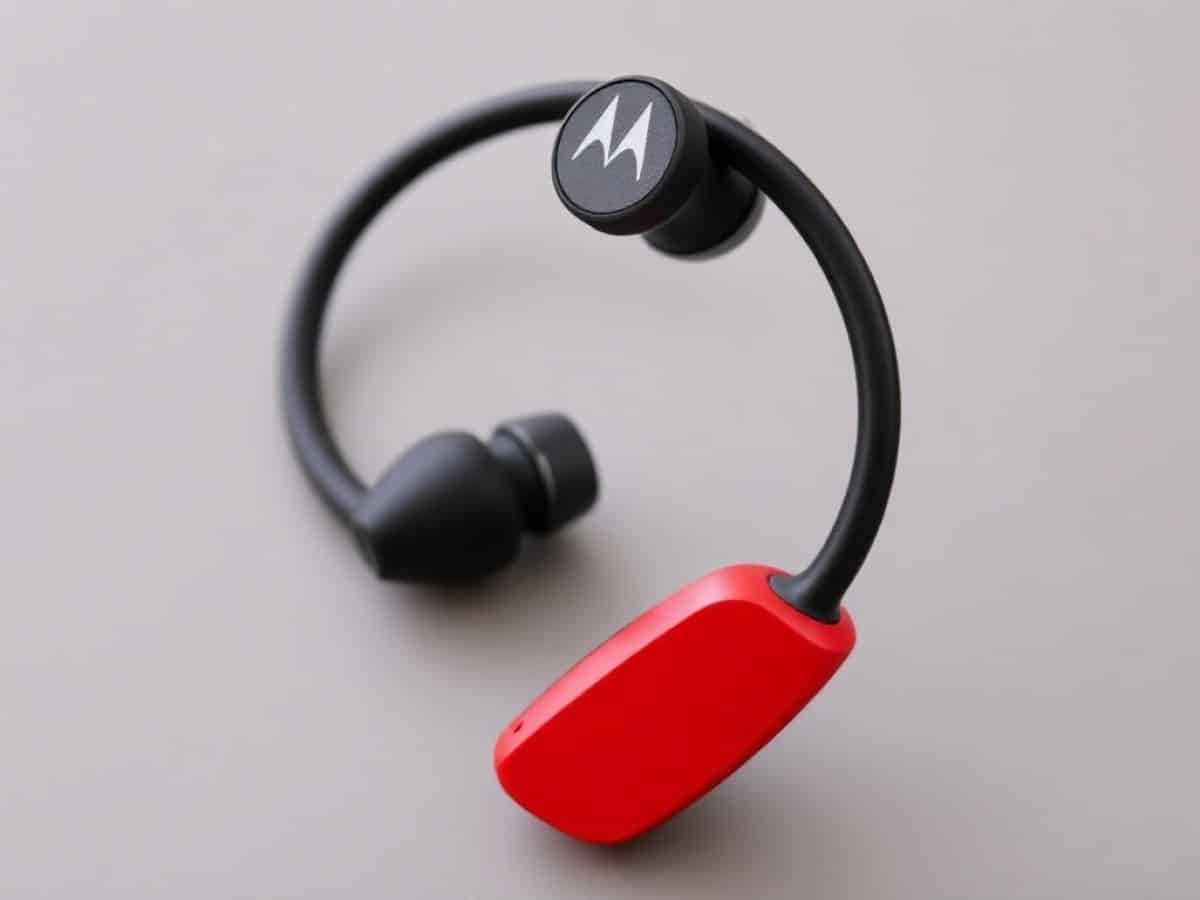
The Motorola Buds Loop feature an ear-clip design that prioritizes stability above all. There’s no insertion into the ear canal, nor is there bone conduction here: the earbuds attach to the ear’s helix, just in front of the ear canal which remains entirely open. This approach enhances both safety—keeping you aware of surrounding noises—and secure fit during intense workouts.
In hand, the Buds Loop display their compact size and distinctive hook-shaped design. The band contours around the upper edge of the helix while the module containing the driver naturally positions itself facing the entrance of the ear canal.
The metal mesh that protects the speaker is clearly visible, as are the touch-sensitive areas on the bulging part of each earbud. Once in place, the earbud perfectly conforms to the concha of the ear, and the band almost disappears behind the helix—a discreet design that still carries a technical look.
Materials and Build
Each earbud is feather-light, weighing just a few grams, and once attached to the ear, they are nearly imperceptible. The flexible band combines reinforced plastic and a memory metal core: it’s both supple and durable, ensuring a stable fit without excessively compressing the helix. The matte silicone covering on the contact areas with the skin provides a pleasant touch and does not irritate, even during a long run. Flawless.
The main structure combines matte black plastic and a metal mesh to protect the drivers. Notably, there are two magnetic contact points for charging on each earbud. The ensemble is certified IP55: the earbuds are resistant to dust and splashes of water—sweat or moderate rain—making them perfectly suited for physical exertion.
Ergonomics and Fit
Installation is simple and intuitive. Just slide the earbuds onto the cartilage until the driver aligns with the ear canal. The flexible band then allows for fine adjustments to optimize the perception of low frequencies, which is highly dependent on this alignment. Once the music starts, a few micro-adjustments are sufficient to find the balance point. The fit is exemplary: throughout our test, whether running or making sudden movements, the earbuds did not shift at all.
A Non-IP Certified Charging Case
The charging case has a relatively elongated format that easily slips into a pocket. Its horizontal hinge opening makes it easy to handle the earbuds. An LED indicator shows the charging status. Only a USB-C port is present—no wireless charging here. Note: the case itself is not certified against water, so it’s important to dry the earbuds well before storing them after a workout.
Motorola Moto Buds LoopA Basic App
The Buds Loop controls rely on touch input. You tap the surface to manage playback and calls. The Motorola app allows you to customize gestures for each side with four available actions: single tap (play/pause by default), double tap (next or previous track), triple tap (volume), and long press (voice assistant).
A pleasant surprise: the earbuds incorporate wear detection that automatically pauses playback when removed and resumes it when put back on. This feature is quite rare at this price level for open earbuds and works reliably. The “Ring My Earbuds” function helps locate misplaced earbuds by emitting a sound signal.
Multipoint pairing, referred to as “Dual Connection” in the app, allows simultaneous connection to two devices. Once activated, switching between a smartphone and a computer works properly.
The Motorola app (“Sound by Bose”, a nod to the technical collaboration between the two brands) is functional but not exceptional. It displays battery levels with precise percentages, offers firmware updates, and provides basic audio settings. The equalizer is limited to a “Boosted Bass” preset that can be turned on or off. There’s also an “Automatic Volume” mode that adjusts the level according to the environment, a “Gaming” mode to reduce latency, and an “Spatial Audio” option that seems to work only with the brand’s smartphones. The interface is basic but does its job without unnecessary complications.
In terms of connectivity, Bluetooth 5.3 provides a stable range of 10 meters. AAC and SBC codecs ensure broad compatibility with Android and iOS smartphones. A slight latency persists in gaming despite the dedicated mode, while video playback remains properly synchronized. However, there’s no support for Bluetooth Auracast.
Motorola Moto Buds LoopAudio: Inevitable Compromises
The Motorola Buds Loop exhibit typical performance for open earbuds at this price level, with the inherent compromises of the format.
The bass, the inevitable weak point due to the unsealed ear canal—and the fact that low frequencies are less directional—appears subdued and lacks depth. The impact of drums is not felt, and the extension towards sub-bass is almost non-existent. For a workout session with classic pop or rock tracks, this is acceptable. However, fans of electronic music or hip-hop will be disappointed.
The midrange is more convincing, with a decent definition that allows vocals to stand out clearly, without harshness. Acoustic instruments benefit from honest reproduction, without excessive dips or peaks. The treble is present without being harsh, with a certain brightness that adds clarity to cymbals and guitars. However, the projection can sometimes seem a bit artificial, typical of drivers that do not benefit from an acoustic coupling with the ear canal.
Analysis of the Frequency Response Curve
A look at the frequency response curve confirms the diagnosis. The sub-bass is practically absent: the curve literally plunges below 100 Hz, with a vertiginous drop reaching its lowest point around 30-40 Hz. At 60 Hz, the level is already very recessed; at 100 Hz (impacts), we just begin to regain a decent presence. This signature is characteristic of the open format and deprives the music of its foundation.
The lower midrange and midrange, however, exhibit exemplary behavior. Between 200 Hz and 2 kHz, the curve remains remarkably stable and flat, ensuring optimal intelligibility of voices and faithful reproduction of primary instruments. This is clearly the comfort zone of these earbuds.
In the upper spectrum, things get complicated. There’s a gradual rise starting from 3 kHz, with a first marked presence peak around 4-5 kHz, followed by a spectacular soaring around 7-8 kHz where the curve reaches its peak. This prominence in the treble brings brightness and detail but colors the recordings. However, there is no harshness, and this is a strong point of these earbuds. The extreme treble dips slightly before rising again towards 15-20 kHz, adding a touch of air at the top of the spectrum.
A Spacious Soundstage
This is often the strength of this type of earbuds: the soundstage is wide and airy. However, the dynamics are average, and thus the layering of sound planes is not strikingly precise. The stereo separation is very pronounced, and the depth in the frontal axis is also good. As soon as we venture into complex productions, the limitations become clear.
Listening Impressions
On “Espresso” by Sabrina Carpenter, the electronic kick drum sorely lacks body. The bassline, though central to this track, is stripped of its roundness and impact. The vocals pass through adequately thanks to the stable midrange, with acceptable presence, but the overall sound lacks punch and energy. The prominent treble highlights the hi-hats and production details, sometimes a bit too much.
With “Texas Hold ‘Em” by Beyoncé, the country-pop showcases the strengths and weaknesses of the Buds Loop. Acoustic guitars benefit from clear clarity in the mid-treble, and Beyoncé’s voice projects naturally. However, the double bass and low percussive elements are too recessed, depriving the track of its characteristic groove. It lacks anchoring.
“Cruel Summer” by Taylor Swift highlights the treble peak of the earbuds: the synths shine, production details stand out, but listening can become tiring at high volumes on the most intense passages. The midrange adequately carries the voice, while the kick drum of the drum set remains anemic. For such an energetic track, more impact would be desired.
Motorola Moto Buds LoopDecent Calls
The call performance of the Motorola Buds Loop is decent indoors. The integrated mics with basic noise reduction function acceptably in a quiet environment. The user’s voice is transmitted with enough clarity for occasional professional conversations.
However, as soon as the environment becomes noisy—outdoors, in transit, or in windy conditions—the quality noticeably degrades. Ambient noises are not sufficiently filtered, and the voice can sound distant or muffled. When listening, one is also disturbed by surrounding noises that mix with the voice of the interlocutor—a consequence of the open format. For occasional outdoor calls or home video conferences, this is sufficient. For intensive professional use on the move, comfort may often be compromised.
Motorola Moto Buds LoopVery Good Battery Life
Battery life is a solid point for the Motorola Buds Loop, making them well-suited for daily use.
Motorola claims up to 8 hours of continuous listening on a single charge. Our measurements confirm this performance: while listening to a pop/rock playlist at 50% of the maximum volume, we recorded about 8h30.
The charging case extends the experience with two additional full charges, bringing the total battery life to about 24 hours. The fast charging feature (10 minutes for 2 hours of listening) is an advantage.

Maya Singh is a senior editor covering tablets and hybrid devices. Her work explores how these tools reshape digital productivity and learning. She also contributes to feature editorials on emerging tech.