
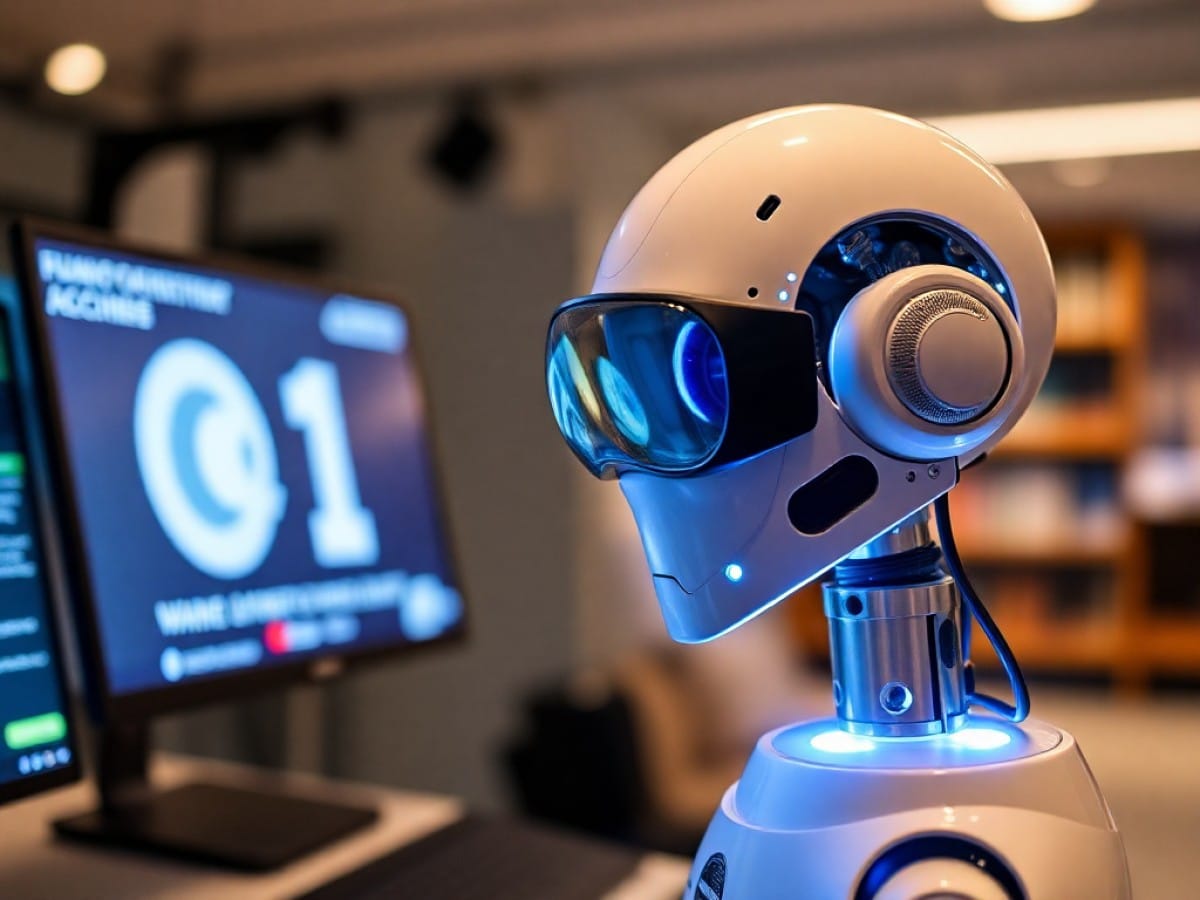
Have French creators embraced artificial intelligence (AI)? How has the creative community reacted to its integration? BDM spoke to some of these creative professionals to find out their practices, expectations, and concerns regarding AI.
Scientists confirm: This is the most effective way to get your cat’s attention, according to new research
Elderly Couple Refuses Reserved Seats—Viral Train Standoff Sparks Fiery Debate on Courtesy
In the realm of creative work, Adobe’s software and tools have become indispensable. However, a significant new factor has recently disrupted the workflows of many creators: artificial intelligence. Often perceived as an existential threat, AI is nevertheless utilized by 83% of French creators according to a study by Adobe and Harris Poll involving 16,000 creators, 2,006 of whom are in France. But what do the creators themselves think? BDM asked them directly.
From excitement to adoption: creators’ initial steps with AI
Three profiles, three creative worlds
Kumo Bryo (@kumo_bryo on TikTok), who identifies mainly as a photographer and also a videographer, uses TikTok and Instagram to showcase artistic portraits and behind-the-scenes looks at his projects: “How I do it, how I approach everything from lens selection to lighting management.” His content includes tutorials delivered in a fun way. His toolkit includes Photoshop, Lightroom, After Effects, and Premiere Pro.
Marie Elena (@marieelenasrn on Instagram) has “brought tech to cinema.” She creates highly narrative short films centered around “internal conflicts” depicted in a meticulously crafted aesthetic. Primarily active on Instagram for its community closeness, she mainly uses Premiere Pro and Lightroom Mobile: “I’m not originally a photographer, and it’s really easy to edit with this app,” she notes. YouTube currently serves as her reposting platform, although she aims to produce more short films there.
Vincent Balthasar, known as Balth (@balthhh on Instagram), a freelance director and content creator, collaborates with brands or covers events, particularly in “tech, sports, and increasingly, music.” On Instagram, he “shares his daily life through content creation, discussing the techniques he uses for his productions.” He edits on Premiere Pro, adds effects via After Effects, and designs his thumbnails in Photoshop.
An enthusiastic reception of artificial intelligence
When AI became part of their toolset, all three reacted with curiosity and excitement. “I found it incredible,” recalls Kumo Bryo, who is passionate about all things tech. For him, AI immediately became a supportive tool: “I often work alone, so it gives me time to delve deeper.”
For Marie Elena, the adoption was instantaneous: “It really excited me. I immediately got on board with ChatGPT. I signed up for the paid plan right away, downloaded the mobile app as soon as it was released… it’s truly my life assistant.” Balthhh also speaks of a self-taught enthusiasm: “It feeds my geek side. We like to dissect things, understand how they work. When new features come out, we’re curious to explore rather than push back.”
For these creators, AI first appeared as a new toolbox that stimulates and expands the realm of possibilities.
What practices for what benefits?
These three creators primarily use AI to optimize their workflow. This approach is indicative of a general trend: according to the Adobe study, French creators are integrating generative AI to retouch, adapt, and enhance their content.
At Kumo Bryo’s studio, AI is primarily used to structure voiceovers: “I write down all my ideas and then refine them with ChatGPT to make them cleaner and more concise.” However, his main use remains in photography, particularly with Firefly: “If I need to take a photo and there are lots of people, I don’t bother waiting for the perfect moment anymore. With the tools I have, I can remove people or background elements.” This saves valuable time: “It gives me room to go further.”
Marie Elena is on the same wavelength. While ChatGPT has become her “best friend,” she sparingly uses certain AI features integrated into tools to correct a slip-up, such as “extending a cut-off shot by a few seconds”, or to perform “automatic subtitle transcription,” which has “changed her life a bit.”
While Balthhh enjoys “torturing his mind to find ideas,” he acknowledges that certain support tools are extremely helpful. Automatic transcription and subtitling are also “incredibly useful” to him, as is audio enhancement (Enhancer), which has “saved quite a few projects.” Additionally, features like Generative Extend in Photoshop are “small joys” for adapting visuals to different platform formats, a point his fellow creators agree on. Lastly, a feature like “Media Intelligence” helps him easily locate clips or interview elements among what can quickly become a vast library in major projects.
All three emphasize that in their profession, they often manage the entire production chain: “You can’t always control everything,” reminds Balthhh. AI allows them to secure results while remaining independent in creation and production.
In the end, is AI a source of worry or inspiration?
Concerns and questions…
As AI has become a part of their daily lives, their attitudes have evolved and become more nuanced. While the tool continues to fascinate, it also challenges some established norms. “I can understand why it might be frightening,” admits Kumo Bryo, although he personally feels “no particular concern,” even in the long term.
Marie Elena’s perspective has also shifted. Having spent a lot of time mastering tools and techniques, she is sometimes frustrated to see how AI features liberate users from a long learning phase, often self-taught. She worries about highly visual, creative professions and also about public trust: “On social media, it’s sometimes increasingly difficult to differentiate a real video from a fake one.” This concern is intensified by the fact that, according to the Adobe study, 66% of French creators worry about how their content might be used to train AI models.
Balthhh also anticipates a profound transformation of the industry, without necessarily predicting the disappearance of professions. “It’s going to revolutionize the creation industry,” he believes, envisioning an increasingly clear distinction between “handmade” and “made with AI.” However, to him, the essence lies elsewhere: “Not to lose the intention through AI. As long as we use AI to serve our intentions, it’s cool.” Refusing these technologies outright would be, in his words, “fighting the inevitable.”
…But unwavering motivation
These concerns have not dampened their desire to create. On the contrary. “It’s an incredible boost,” smiles Kumo Bryo, thrilled to be able to push some ideas further. Like the time he brought “a door into a forest for a three-second shot”: a level of madness he embraces, made possible, he says, by the time saved through AI. “I move so much faster on other things that I can really reach the peak of my creativity and do some crazy stuff.”
“It’s a booster,” adds Marie Elena, for whom technical assistance allows aiming for “the highest quality content possible,” especially for creators who are used to working solo. She even enjoys imagining blurring the lines between reality and AI, to sow doubt despite productions made from scratch. “For now, it’s mainly a source of motivation!”
For Balthhh too, AI represents a new, stimulating playground: “It allows us to go even further in our artistic approach.” It also offers “a certain comfort, facing client demands, deadlines…” Thus, while AI raises and will continue to raise questions about the future of creative professions, it currently acts for them as a creativity accelerator and an ally in their ambitions.
Similar Posts
- Study Reveals: How Developers Will Use AI in 2025!
- CapCut Joins LinkedIn: Unleashes a Wave of AI Tools for Creators
- Instagram CEO Fights AI: A Push to Value Human Content More
- TikTok Awards 2025: French Creativity Takes the Spotlight!
- Meta Unveils Anti-Plagiarism Tool: Protecting Creators’ Reels from Copycats

Jordan Park writes in-depth reviews and editorial opinion pieces for Touch Reviews. With a background in UI/UX design, Jordan offers a unique perspective on device usability and user experience across smartphones, tablets, and mobile software.