
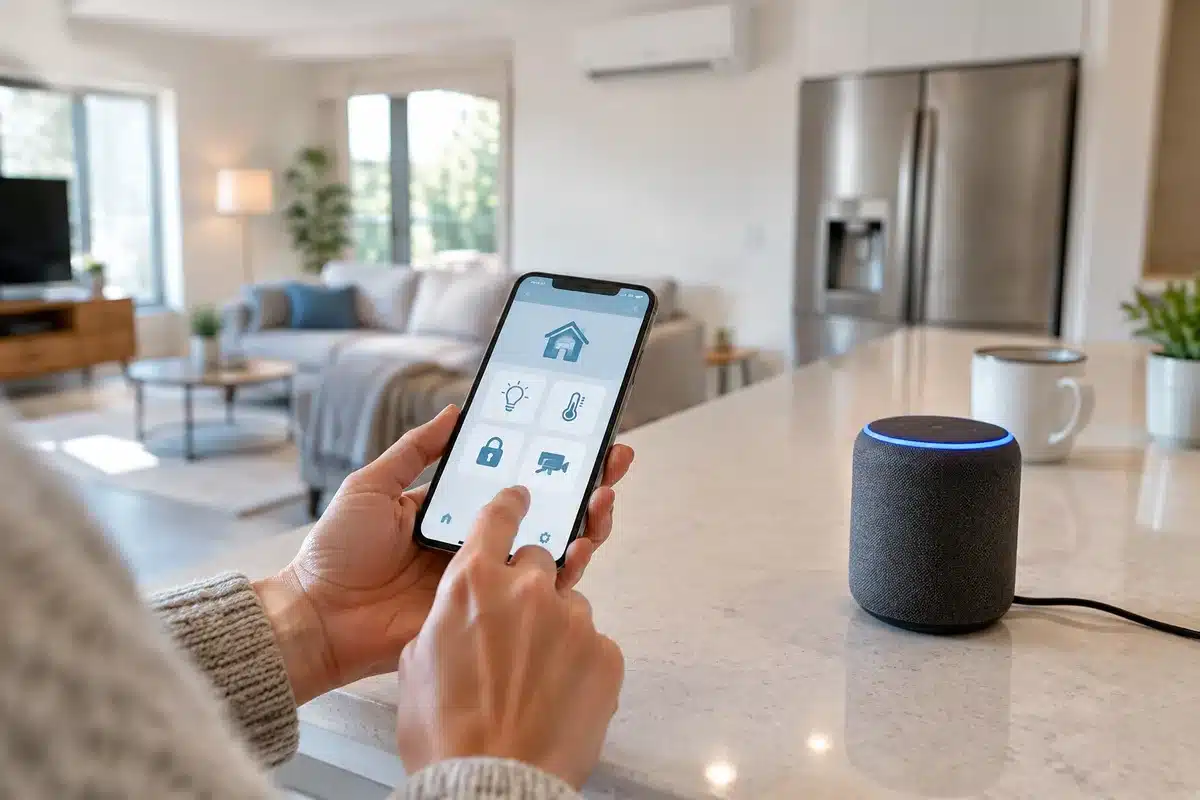
The Jetsons popularized a vision of the future where robotic helpers kept the household running — cleaning, cooking and keeping things secure. That fantasy, embodied by the robotic maid “Rosie,” is edging closer to reality, particularly across Latin America, where connected-home technologies are gaining traction.
Scientists confirm: This is the most effective way to get your cat’s attention, according to new research
Elderly Couple Refuses Reserved Seats—Viral Train Standoff Sparks Fiery Debate on Courtesy
At the recent Tech Summit, Samsung highlighted how connectivity within Mexican homes has surged over the past decade, driving a faster uptake of smart appliances. The company pointed to Mexico as a priority market in the rollout of its AI-driven smart home ecosystem.
“In Mexico, connectivity for Samsung products in the home has tripled,” said Bona Lee, vice president and head of the CX Insight group at Samsung Electronics.
Samsung’s figures show a dramatic rise in internet access among Mexican households: penetration climbed from 29% in 2013 to 71.5% in 2023 — a 146% increase over ten years. That broader access to the internet is an important enabler for consumers to bring connected devices and automation into everyday life.
Market research from Statista suggests the smart home market in Mexico will be worth about $2 billion this year, and forecasts that adoption could reach 95.2% by 2029 — meaning only around 0.8% of households would lack a connected smart product.
Samsung also reported that the Wi‑Fi connection rate for its appliances in Latin America rose 19% year over year, a growth pace roughly double the global average. The region saw an even more pronounced jump — 251.7% — in the use of AI-enabled products, underlining strong demand for tailored, automated and energy-conscious experiences.
“SmartThings is Samsung’s platform and is used by nearly 65 million people in Latin America,” said Diego Buteler, product director for the Digital Appliances division at Samsung Electronics Latin America.
Within that ecosystem, Mexico ranks seventh worldwide in registered users and sits among the top 10 countries for monthly active users — Brazil is second globally, trailing only the United States.
Samsung emphasized that AI integration lets appliances learn from user behavior, conserve resources like water and energy, and deliver real-time, personalized suggestions. Practical examples include air conditioners that automatically turn on when someone arrives at home and refrigerators that recommend recipes based on the items inside.
Why You Should Never Reheat These Foods in the Microwave – The Hidden Dangers Experts Warn About
I tried the top 5 guard dogs—here’s what makes these breeds the ultimate protectors
“I’m convinced that Latin America is the most attractive region in the world right now,” Lee added.
Statista attributes Mexico’s smart home growth to favorable macro trends such as rising urbanization and technological advancements. Still, national statistics from INEGI show that in 2024 about 26% of Mexican households — some 10.2 million homes — had at least one smart device connected to the internet or a local network.
That total represents an increase of 2.5 million households compared with 2023, but it remains lower than the user figures cited by the South Korean company.
Similar Posts
- Free Internet for Wellbeing: Here’s How to Apply!
- Google Cloud and UNAM Unveil Cutting-Edge Data Teaching Tools: Revolutionize Learning Now!
- Dreame Cyber X: the first robot vacuum cleaner that magically climbs stairs
- Aliro Unveils New Standard for Smart Locks: Revolutionizing Security in 2023!
- Apple and LG Team Up to Launch Smart Home Range: First Devices May Arrive Soon

Lucas Monroe tracks the latest trends in mobile and 5G innovation. His work spans hardware analysis, telecom breakthroughs, and ecosystem development in next-gen connectivity.