
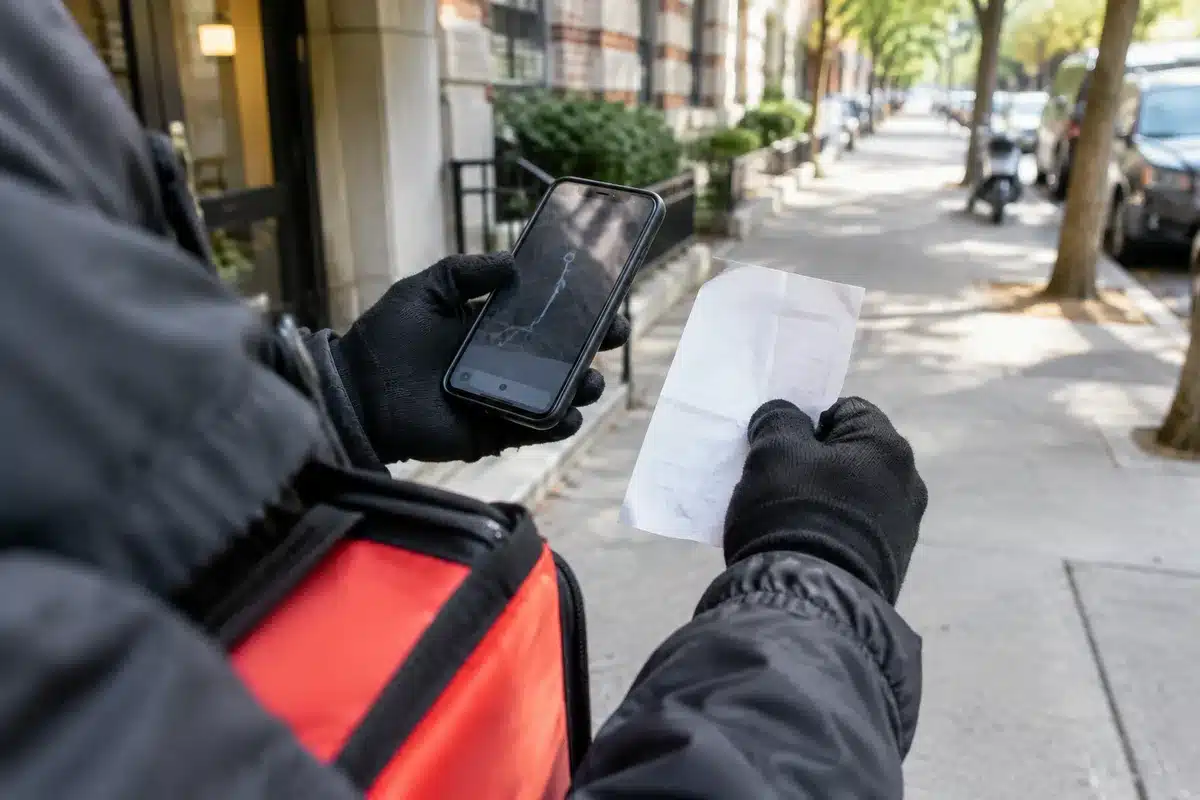
It has been more than a year since the labor reform intended to formalize the employment situation of platform workers came into force, yet couriers and drivers continue to face barriers in obtaining social security benefits. The latest dispute centers on Uber, whose couriers say there may be inconsistencies in how their income is being reported. According to these workers, bonuses and incentives are not being correctly reflected in the app’s pay breakdowns, and because these items are omitted from reported earnings, many fall short of the threshold required to qualify for full social security coverage.
Scientists confirm: This is the most effective way to get your cat’s attention, according to new research
Elderly Couple Refuses Reserved Seats—Viral Train Standoff Sparks Fiery Debate on Courtesy
A group called Hermandad Delivery collected complaints from 50 workers and presented them to the authorities. The collective says that during the first half of 2026 the amounts reported by the platform were between 19% and 25% lower than the actual earnings, based on the workers’ comparisons of their own payment records.
In an interview with Expansión, Frida Villegas, who leads the collective, said that in some cases bonuses and incentives can account for as much as half of a courier’s income — a situation she says is particularly common among women. Villegas added that this pattern is repeated among her colleagues and other workers, who have signed a statement supporting the complaints.
“I do believe they amount to about half of the fare because, trust me, fares are very low right now,” Villegas said, explaining that incentives have become a crucial part of earnings as per-delivery payments have declined.
Platforms typically offer bonuses, challenges and other rewards for completing a certain number of orders or working during specific time windows. Villegas, however, pointed out that some of these targets are difficult to meet and the pay-outs don’t always justify the extra effort. “They’re so absurd and sometimes for very little,” she said, characterizing some incentive schemes.
The new framework that extends social security to app-based workers grants full coverage to those who meet the net monthly income threshold established by the regulation. Official figures, however, show that most people registered under this arrangement do not reach that requirement.
As of the end of September 2026, the Mexican Social Security Institute (IMSS) reported that 1,841,772 people had benefited from the reform, but only 207,387 exceeded the income threshold required to access all five of the Institute’s insurance coverages.
That represents roughly 11.3% of the total; the remaining workers retain protection only for work-related risks arising while they perform tasks through the platforms.
Zoé Robledo, director general of the IMSS, confirmed at the presidential press briefing on October 27 that the institute is reviewing platform-reported records together with the Tax Administration Service (SAT) and the Ministry of Labor and Social Welfare (STPS). Robledo stressed that bonuses and incentives should be included as part of the salary used to calculate worker contributions, and that any verified omission could lead to payments of back contributions, fines and interest.
Why You Should Never Reheat These Foods in the Microwave – The Hidden Dangers Experts Warn About
I tried the top 5 guard dogs—here’s what makes these breeds the ultimate protectors
What are Uber and other platforms saying about the contributions?
Uber had already addressed similar accusations in September 2026, when drivers and couriers claimed the company excluded bonuses, incentives and platform request fees from the wages reported to the IMSS.
The company responded that the new labor regulation for digital platforms is novel and technically complex, and said it adjusted its processes as authorities clarified the application criteria.
However, Uber did not specify whether bonuses and request fees are now included in the contributions for all its workers, nor did it explain the discrepancies alleged in the records. Expansión asked Uber for an updated statement regarding the new complaints and the audits announced by the IMSS but had not received a reply by the time this article went to press.
The outlet also asked other market competitors for comment. DiDi told Expansión that it is complying with the labor reform’s obligations and has implemented measures to integrate workers into the new scheme.
“Since the reform took effect in December, at DiDi we have put into practice measures to comply with the legal framework, informing our community transparently and benefitting thousands of people in the country. The wellbeing of those who are part of the platform is non-negotiable; we reiterate our commitment to Mexico and call for a fair ecosystem where all parties respect the law,” the company said in an official statement.
inDrive did not provide a response.
Villegas noted that workers do not yet have enough evidence to claim that platforms beyond Uber are committing the same potential irregularities. She mentioned Rappi as an example of a company that, in her view, has made progress in meeting certain labor obligations. Among the collective’s claims, Rappi stands out as the only firm they know of that has made payments related to profit-sharing distributions.

Couriers deliver 50 signatures to the Presidency and demand sanctions
Faced with the alleged discrepancies, Hermandad Delivery and other workers began collecting signatures to request government intervention. Villegas said she handed a letter to President Claudia Sheinbaum that included 50 names backing the petition.
The group asks authorities to clarify which components should be included in workers’ incomes, to review the platforms’ records and to establish mechanisms that allow verification of contributions.
They also demand that, should investigations confirm irregularities, companies pay the missing contributions and face appropriate penalties. “There should be compensation, a sanction or some action for this app so it doesn’t end with ‘oh, we made a mistake,’” Villegas said.
She argued that an administrative correction alone would be insufficient if workers lost benefits or were excluded from full coverage because of discrepancies in reported income. “There are colleagues who might meet the threshold but are being reported for less, and some of us were even missing by a peso, so we don’t qualify,” she explained.
Villegas requested that authorities set uniform criteria for platforms and strengthen audits to prevent companies from using opaque calculation methods that are hard for workers to understand.
The organization does not rule out filing formal complaints or pursuing other legal avenues, although during the interview Villegas did not confirm that Hermandad Delivery has already initiated a court case.
Similar Posts
- Mexico’s Delivery Market Booms: MSMEs Propel Country to #2 Globally
- French Influencers: Behind Millions of Views Lies a Worrisome Platform Dependency
- AI Can Order Your Uber: The Hidden Feature Nobody Uses
- Facebook Offers Thousands to Lure TikTok, YouTube Stars: Social Media Battle Escalates!
- Instagram CEO Fights AI: A Push to Value Human Content More

Lucas Monroe tracks the latest trends in mobile and 5G innovation. His work spans hardware analysis, telecom breakthroughs, and ecosystem development in next-gen connectivity.